• Fri frakt över 249 kr
  • •
  • Snabba leveranser
  • •
  • Billiga böcker
Kundservice

Du är på sajten för privatpersoner.

Företag, bibliotek eller offentlig verksamhet?

Du handlar på classic.bokus.com, där alla dina funktioner finns intakta.
Till classic.bokus.com
Bokus logotyp. Gå till startsidan.
  • Erbjudanden
  • Student
  • Topplistor
  • Barn & ungdom
  • Bokus Play
  • E-böcker
  • Ljudböcker
  • Pocketböcker
  • Spel & pussel

Upp till 25% på utvalda nyheter →

Sidfot

Mina sidor

    Hjälp

    • Kundservice
    • Vanliga frågor och svar
    • Frakt och leverans
    • Retur vid ångerrätt
    • Reklamera vara
    • Betalning
    • Köpvillkor
    • Allmänna villkor
    • Information om webbplatsens tillgänglighet

    Om Bokus

    • Om oss
    • Pressrum
    • För studenter
    • För företag
    • För bibliotek och offentlig verksamhet
    • För leverantörer
    • Hållbarhet

    Populärt

    • Aktuella erbjudanden
    • Presentkort
    • Studentlitteratur
    • Nya böcker
    • Topplistor
    • Signerade böcker
    • Engelska böcker

    Inspiration

    • Boktips
    • BookTok
    • Populära bokserier
    • Barnbokskaraktärer
    • Populära författare
    Logotyp för Bokus
    Följ oss på Facebook (extern länk)Följ oss på Instagram (extern länk)Följ oss på YouTube (extern länk)Följ oss på TikTok (extern länk)
    bokus @ CookiesAnpassa cookiesIntegritetspolicyKöpvillkor
    Till Citymail hemsida (extern länk)Till Budbee hemsida (extern länk)Till Postnord hemsida (extern länk)Till Schenker hemsida (extern länk)Till Early Bird hemsida (extern länk)Till Walleys hemsida (extern länk)
    1. Historia och arkeologi
    2. Historia
    3. Militärhistoria
    4. Andra världskriget

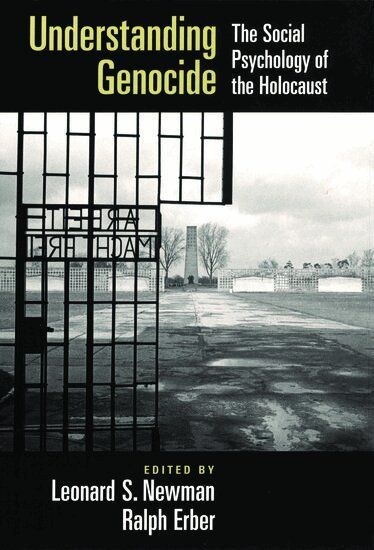
    Understanding Genocide

    The Social Psychology of the Holocaust

    AvLeonard S. Newman,Christopher R. Browning

    Inbunden, Engelska, 2002

    1 216 kr

    Skickas . Fri frakt över 249 kr.

    Beskrivning

    When and why do groups target each other for extermination? How do seemingly normal people become participants in genocide? Why do some individuals come to the rescue of members of targeted groups, while others just passively observe their victimization? And how do perpetrators and bystanders later come to terms with the choices that they made? These questions have long vexed scholars and laypeople alike, and they have not decreased in urgency as we enter the twenty-first century. In this book--the first collection of essays representing social psychological perspectives on genocide and the Holocaust-- prominent social psychologists use the principles derived from contemporary research in their field to try to shed light on the behavior of the perpetrators of genocide. The primary focus of this volume is on the Holocaust, but the conclusions reached have relevance for attempts to understand any episode of mass killing. Among the topics covered are how crises and dificult life conditions might set the stage for violent intergroup conflict; why some groups are more likely than others to be selected as scapegoats; how certain cultural values and beliefs could facilitate the initiation of genocide; the roles of conformity and obedience to authority in shaping behavior; how engaging in violent behavior makes it easier to for one to aggress again; the evidence for a "genocide-prone" personality; and how perpetrators deceive themselves about what they have done. The book does not culminate in a grand theory of intergroup violence; instead, it seeks to provide the reader with new ways of making sense of the horrors of genocide. In other words, the goal of all of the contributors is to provide us with at least some of the knowledge that we will need to anticipate and prevent future such tragic episodes.

    Produktinformation

    • Utgivningsdatum:2002-10-10
    • Mått:166 x 243 x 30 mm
    • Vikt:685 g
    • Format:Inbunden
    • Språk:Engelska
    • Antal sidor:376
    • Förlag:OUP USA
    • ISBN:9780195133622

    Utforska kategorier

    • Andra världskriget inom Historia och arkeologi
    • Socialpsykologi och gruppsykologi inom Psykologi och pedagogik
    • Allmän historia och världshistoria inom Historia och arkeologi

    Recensioner i media

    "The well-researched, provocative essays in this volume look at the Holocaust, and genocide in general, from the viewpoint of social psychology" --Choice"The well-researched, provocative essays in this volume look at the Holocaust, and genocide in general, from the viewpoint of social psychology" --Choice

    Innehållsförteckning

    • Foreword ; Part I: Becoming a Perpetrator ; 1. The Psychology of Bystanders, Perpetrators, and Heroic Helpers ; 2. What is a 'Social-Psychological' Account of Perpetrator Behaviour? The Person Versus the Situation in Goldhagen's Hitler's Willing Executioners ; 3. Authoritarianism and the Holocaust: Some Cognitive and Affective Implications ; 4. Perpetrator Behaviour as Destructive Obedience: An Evaluation of Stanley Milgram's Perspective, the Most Influential Social-Psychological Approach to the Holocaust ; Part II: Beyond the Individual: Groups and Collectives ; 5. Sacrifice Lambs Dressed in Wolves' Clothing: Envious Prejudice, Ideology, and the Scapegoating of Jews ; 6. Group Processes and the Holocaust ; 7. Examining the Implications of Cultural Frames on Social Movements and Group Action ; 8. Population and Predators: Preconditions for the Holocaust from a Control-Theoretical Perspective ; 9. The Zoomorphism of Human Collective Violence ; Part III: Dealing with Evil ; 10. The Holocaust and the Four Roots of Evil ; 11. Instigators of Genocide: Examining Hitler from a Social Psychological Perspective ; 12. Perpetrators with a Clear Conscience: Lying Self-Deception and Belief Change ; 13. Explaining the Holocaust: Does Social Psychology Exonerate the Perpetrators? ; 14. Epilogue: Social Psychologists Confront the Holocaust