• Fri frakt över 249 kr
  • •
  • Snabba leveranser
  • •
  • Billiga böcker
Kundservice

Du är på sajten för privatpersoner.

Företag, bibliotek eller offentlig verksamhet?

Du handlar på classic.bokus.com, där alla dina funktioner finns intakta.
Till classic.bokus.com
Bokus logotyp. Gå till startsidan.
  • Erbjudanden
  • Nyheter
  • Student
  • Topplistor
  • Barn & ungdom
  • Bokus Play
  • E-böcker
  • Pocketböcker
  • Spel & pussel

10% rabatt på allt med kod: NYSTART10 →

Sidfot

Mina sidor

    Hjälp

    • Kundservice
    • Vanliga frågor och svar
    • Frakt och leverans
    • Retur vid ångerrätt
    • Reklamera vara
    • Betalning
    • Köpvillkor
    • Allmänna villkor
    • Information om webbplatsens tillgänglighet

    Om Bokus

    • Om oss
    • Pressrum
    • För studenter
    • För företag
    • För bibliotek och offentlig verksamhet
    • För leverantörer
    • Hållbarhet

    Populärt

    • Aktuella erbjudanden
    • Presentkort
    • Studentlitteratur
    • Nya böcker
    • Topplistor
    • Signerade böcker
    • Engelska böcker

    Inspiration

    • Boktips
    • BookTok
    • Populära bokserier
    • Barnbokskaraktärer
    • Populära författare
    Logotyp för Bokus
    Följ oss på Facebook (extern länk)Följ oss på Instagram (extern länk)Följ oss på YouTube (extern länk)Följ oss på TikTok (extern länk)
    bokus @ CookiesAnpassa cookiesIntegritetspolicyKöpvillkor
    Till Citymail hemsida (extern länk)Till Budbee hemsida (extern länk)Till Postnord hemsida (extern länk)Till Schenker hemsida (extern länk)Till Early Bird hemsida (extern länk)Till Walleys hemsida (extern länk)
    1. Samhälle och politik
    2. Samhälle och kultur
    3. Sociala grupper och identitet
    4. Genusvetenskap

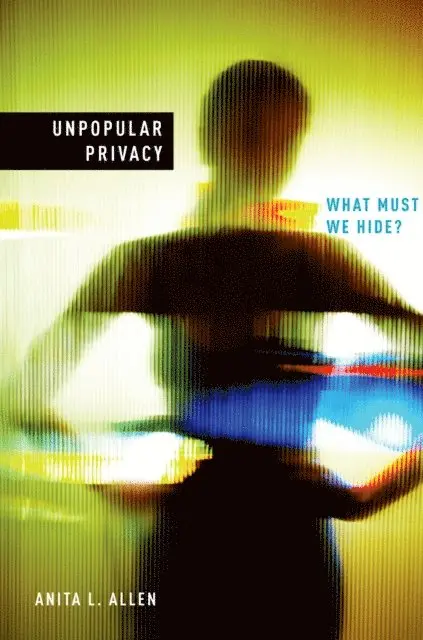
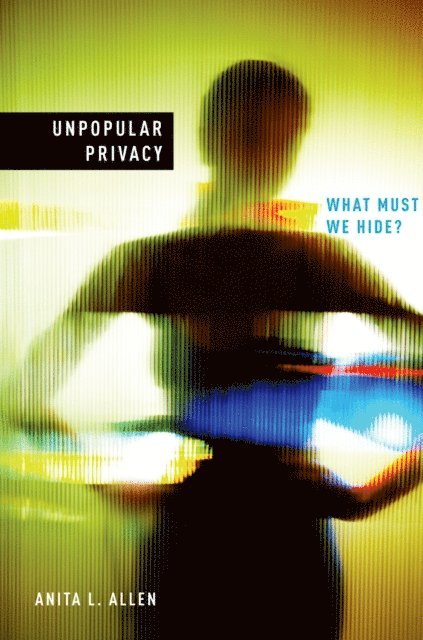
    Unpopular Privacy

    What Must We Hide?

    AvAnita Allen

    Inbunden, Engelska, 2011

    Del i serien Studies in Feminist Philosophy

    1 027 kr

    Beställningsvara. Skickas inom 5-8 vardagar. Fri frakt över 249 kr.

    Fler format och utgåvor

    E-bok

    675 kr

    E-bok

    675 kr

    Beskrivning

    Can the government stick us with privacy we don't want? It can, it does, and according to this author, may need to do more of it. Privacy is a foundational good, she argues, a necessary tool in the liberty-lover's kit for a successful life. A nation committed to personal freedom must be prepared to mandate inalienable, liberty-promoting privacies for its people, whether they eagerly embrace them or not. The eight chapters of this book are reflections on public regulation of privacy at home; isolation and confinement for punitive and health reasons; religious modesty attire; erotic nudity; workplace and professional confidentiality; racial privacy; online transactions; social networking; and the collection, use and storage of electronic data. Most books about privacy law focus on rules designed to protect popular forms of privacy. Popular privacy is the kind that people tend to want, believe they have a right to, and expect governments to secure. Typical North Americans and Europeans embrace privacy for home-life, telephone calls, e-mail, health records, and financial transactions. This unique book draws attention to unpopular privacy-- privacies disvalued or disliked by their intended beneficiaries and targets-and the best reasons for imposing them. Examples of unwanted physical and informational privacies with which contemporary Americans have already lived? Start with laws designed to keep website operators from collecting personal information from children under 13 without parental consent; the anti-nudity laws that force strippers to wear pasties and thongs; the 'Don't Ask Don't Tell' rules that kept gays out of the US military; and the myriad employee and professional confidentiality rules-- including insider trading laws-- that require strict silence about matters whose disclosure could earn us small fortunes. Conservative and progressive liberals agree that coercion and paternalism should be the exceptions rather than the rule. Better to educate, incentivize and nudge than to force. But what if people continue to make self-defeating bad choices? What are the exceptional circumstances that warrant coercion, and in particular, coercing privacy? When can government turn privacies into duties, especially duties of self-care? Early modern societies went wrong, imposing unequal conditions of forced modesty and confinement on women and others groups, giving privacy and imposed privacies a bad rap. But now may be a time for imposed privacies of another sort-imposed privacies that are liberating rather than dominating. A role for coercive and paternalistic regulation may be called for in view of the Great Privacy Give-Away. The public turns over vast amounts of personal information in exchange for the ease of online shopping, browsing and social networking, protected in some instances by little more than a pro forma privacy policy pasted on a home page. The public uploads and stores information 'in the cloud,' and have become more and more dependent upon electronic telecommunications and personal archiving exposed to public and private surveillance. Have they lost the taste for privacy? Do they fail to understand the implications of what is happening? This book offers insight into the ethical and political underpinnings of public policies mandating privacies that people may be indifferent to or despise. Privacy institutions and practices play a role in sustaining the capable free-agents presupposed by liberal democracy. Physical sanctuaries and data protection by law confers and preserve opportunities for making and acting on choices. Imposing privacy recognizes the extraordinary importance of dignity, reputation, confidential relationships, and preserving social, economic and political options throughout a lifetime.

    Produktinformation

    • Utgivningsdatum:2011-11-24
    • Mått:162 x 241 x 23 mm
    • Vikt:503 g
    • Format:Inbunden
    • Språk:Engelska
    • Serie:Studies in Feminist Philosophy
    • Antal sidor:280
    • Förlag:OUP USA
    • ISBN:9780195141375

    Utforska kategorier

    • Genusvetenskap inom Samhälle och politik
    • Filosofiska discipliner inom Filosofi och religion

    Mer om författaren

    Anita Allen is Professor of Law and Philosophy, University of Pennsylvania.

    Recensioner i media

    Allens book includes much that is worth recommending. She is sensitive to the challenge that digital technology presents to entrenched privacy norms ... Allens discussion of lifelogs, described above, is particularly effective at stressing this point and, despite its unsatisfying conclusion, makes the beginning of the case for paternalist protections of privacy.

    Innehållsförteckning

    • Preface IntroductionChapter 1: Privacies Not Wanted1. Everyday Meanings of Privacy2. Privacy Law 3. Are Paternalistic Privacy Policies Justified?4. Should there be a Right to Waive Privacy Protection?5. When and why Impose Unpopular Privacy6. Feminist Skepticism7. Libertarian Skepticism8. The Context9. Neglected Rights, Forgotten Duties 10. Opportunity Imperative or Experience Imperative?11. Justification and Practical Limits12. Constraining State Domination13. Conclusion Part I: Physical Privacies--Place and BodyChapter 2: Isolation and Confinement 1. Solitude2. Getting Away, Hiding Away3. Stuck at Home: Flaneur and Hausfrau4. Sanctuary5. Interrupted: Do Not Call6. Put Away: Imprisonment 7. Shut Away: Quarantine 8. ConclusionChapter 3: Modesty 1. The Hijab2. Using Law against Norms, Niqab 3. Modesty, the Analysis 3.1 General Modesty 3.2 Bodily (and Sexual) Modesty4. Modesty Rights 4.1 Religious Freedom 4.2 Individuality 4.3 Uniformity and Public Service 4.4 A Peculiar Modesty, Bias in US Law 5. Undressing Girls or Addressing Social Problems?6. ConclusionChapter 4: Nudity 1. Barnes Case: Legal Moralism2. City of Erie Case: Harm Principle3. Canadian Cases 3.1 Tremblay: Community Tolerance 3.2 Mara: Look, Don't Touch4. Modesty on the Run 4.1 Conditions of Work 4.2 Mutual Disrespect5. ConclusionPart II: Information Privacies Chapter 5: Confidentiality 1. The Practice of Confidentiality 1.1 Relationships and Occupations 1.2 Documents, Records, Spaces 1.3 Overlapping and Conflicting Directives 2. Law, Coercion and Justice 2.1 Law-making as Practical Compromise 2.2 Sanction and Deterrence3. The Right to Say What You Know4. Paid for Silence5. Flourishing in a Free Society 6. Confidentiality in Context7. Health Care 7.1 Laws Mandating Health Privacy 7.2 Mental Health 7.3 Waiver 7.4 Exception8. Conclusion Chapter 6: Racial Privacy 1. What is "Sensitive Data"? 2. A Missing Jurisprudence 2.1 An Unpopular Referendum 2.2 Recognition in the Courtroom 2.3 Profiling in New Hampshire 2.4 Lessons from Georgia 2.5 Politics and Race in Illinois 2.6 Racial Privacy Outweighed3. Ambivalence and Paradox4. Secrets and Sensitivities5. Persecution6. Political Liberalism: The Question of Impartiality7. Private Association and Civil Rights8. ConclusionChapter 7: The Privacy Give-Away1. The Federal Privacy Statutes2. Many Statutes, Inadequate Protection3. Practical Obscurity: A Swam Song After the Web4. Give Away, Take Away 5. Life Logs6. Conclusion: Caring About Not Caring About PrivacyChapter 8: Popular Paternalism 1. Paternalistic Mandates2. A Job for the Nanny State3. The Children's Internet Privacy Law4. Fair Information Practices5. A Law in Action6. Why Age 13?7. Is the Paternalism Justified?8. Do Young Adults Need Paternalistic Laws, Too?Afterword