• Fri frakt över 249 kr
  • •
  • Snabba leveranser
  • •
  • Billiga böcker
Kundservice

Du är på sajten för privatpersoner.

Företag, bibliotek eller offentlig verksamhet?

Du handlar på classic.bokus.com, där alla dina funktioner finns intakta.
Till classic.bokus.com
Bokus logotyp. Gå till startsidan.
  • Erbjudanden
  • Nyheter
  • Student
  • Topplistor
  • Barn & ungdom
  • Bokus Play
  • E-böcker
  • Pocketböcker
  • Spel & pussel

Må bättre, för mindre! Upp till 50% rabatt på hälsoböcker

Sidfot

Mina sidor

    Hjälp

    • Kundservice
    • Vanliga frågor och svar
    • Frakt och leverans
    • Retur vid ångerrätt
    • Reklamera vara
    • Betalning
    • Köpvillkor
    • Allmänna villkor
    • Information om webbplatsens tillgänglighet

    Om Bokus

    • Om oss
    • Pressrum
    • För studenter
    • För företag
    • För bibliotek och offentlig verksamhet
    • För leverantörer
    • Hållbarhet

    Populärt

    • Aktuella erbjudanden
    • Presentkort
    • Studentlitteratur
    • Nya böcker
    • Topplistor
    • Signerade böcker
    • Engelska böcker

    Inspiration

    • Boktips
    • BookTok
    • Populära bokserier
    • Barnbokskaraktärer
    • Populära författare
    Logotyp för Bokus
    Följ oss på Facebook (extern länk)Följ oss på Instagram (extern länk)Följ oss på YouTube (extern länk)Följ oss på TikTok (extern länk)
    bokus @ CookiesAnpassa cookiesIntegritetspolicyKöpvillkor
    Till Citymail hemsida (extern länk)Till Budbee hemsida (extern länk)Till Postnord hemsida (extern länk)Till Schenker hemsida (extern länk)Till Early Bird hemsida (extern länk)Till Walleys hemsida (extern länk)
    1. Filosofi och religion
    2. Religion och tro
    3. Religion: allmänt

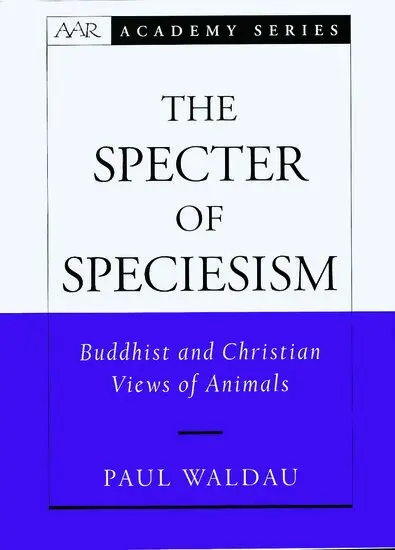
    The Specter of Speciesism

    Buddhist and Christian Views of Animals

    AvPaul Waldau

    Inbunden, Engelska, 2003

    Del i serien AAR Academy Series

    1 421 kr

    Beställningsvara. Skickas inom 5-8 vardagar. Fri frakt över 249 kr.

    Beskrivning

    This new study looks at how non-human animals have been viewed in the Buddhist and Christian religious traditions. The concept of speciesism, coined in 1970 as an analogy to racism and discussed almost exclusively within philosophical circles, is used to explore very basic questions about which animals, human or otherwise, were significant to early Buddhists and Christians. Drawing on scriptures and interpretive traditions in Christianity and Buddhism, Waldau argues that decisions about human ethical responsibilities in both religions are deeply rooted in ancient understandings of the place of humans in the world and our relationships with other animals in an integrated cosmos. His study offers scholars and others interested in the bases for ethical decisions new insights into Christian and Buddhist reasoning about animals as well as what each might have to offer to the current discussions about animal rights and environmental ethics.

    Produktinformation

    • Utgivningsdatum:2003-10-09
    • Mått:160 x 236 x 33 mm
    • Vikt:594 g
    • Format:Inbunden
    • Språk:Engelska
    • Serie:AAR Academy Series
    • Antal sidor:320
    • Förlag:OUP USA
    • ISBN:9780195145717

    Utforska kategorier

    • Religion: allmänt inom Filosofi och religion
    • Buddhism inom Filosofi och religion
    • Kristendom inom Filosofi och religion

    Mer om författaren

    Paul Waldau holds a doctorate in ethics from Oxford University, a law degree from UCLA, and a Master's Degree from Stanford University. He is currently Assistant Clinical Professor at Tufts University School of Veterinary Medicine, where he is on the faculty of the Center for Animals and Public Policy. He teaches courses entitled "Jurisprudence Ethics" and "The Human-Animal bond." He is also an adjunct faculty member at Boston College Law School and Harvard Law School, where he teaches animal law courses.

    Recensioner i media

    "Paul Waldau offers us what may be the most in-depth and scholarly analysis todate on the subject of speciesism as deeply embedded in both Christianity and Buddhism. His data are both convincing and disturbing."-The Journal of the American Academy of Religion