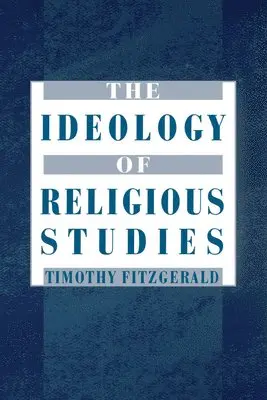
Häftad, Engelska, 2004
The Ideology of Religious Studies: The Ideology of Religious Studies
Av Fitzgerald
829 kr
Beställningsvara. Skickas inom 5-8 vardagar. Fri frakt över 249 kr.
Beskrivning
This book argues that 'religion' is not a genuine analytical category since it does no useful work in helping us to understand the world we live in. While it appears to have something important and meaningful to say about societies and cultures and personal experiences, when one looks at its actual use in a wide spectrum of descriptives and analytical contexts it becomes clear that so much is included in the term that it becomes indistinguishable from "culture." By failing to specify any distinctive kind of experience or social institution, it inhibits and hinder the flow of intellectual development in the humanities. According to author Timothy Fitzgerald, long-standing debates about the validity of `religion` as an analytical category that have been taking place in the religious studies community have been circular. One reason for this is that the ideological distinction between "religion" and the "the secular" has been so comprehensively institutionalized in western social systems that it appears as being "in the nature sof thing." However, many religions scholars themselves have had serious doubts about what constitutes their field of study. After failing to arrive at any consensus about what definitional criteria distinguish religion from non-religion, or at what analytical level the term is being used, many scholars have virtually claimed that "religion" is self-validating. In other words, its meaningfulness is guaranteed by its use. The term is so comprehensively embedded in the language game, Fitzgerald argues, that it inevitably appears self-justifying to those who employ it and, indeed, to those who are employed by it. This book widen the cross-disciplinary and cross-cultural scope of the analysis, looking at texts, ostensibly about "religion," produced by religionists, anthropologists, historians, and others. By analysing its multiples uses, Fitzgerald demonstrates that the continued faith in the category as an analytical tool and as the basis for distinct academis departments is illusory and cannot be justified by any supposed analytical gains. He shows the confusios caused in the analysis of social institutions in India and Japan by the adoption of the modern western distinction between religion and non-religion, and the consequent conflist in those cultures between indigenous and western political, juridical, and intellectual values. By critically rethinking "religion," scholars can contribute to the wider task of reconstructing western categories, thus opening the academic agenda to new insight and understanding about human values and institutions.
Produktinformation
- Utgivningsdatum: 2004-12-11
- Mått: 229 x 154 x 17 mm
- Vikt: 426 g
- Format: Häftad
- Språk: Engelska
- Serie: The Ideology of Religious Studies
- Antal sidor: 272
- Förlag: OUP USA
- ISBN: 9780195167696
Utforska kategorier
Betyg & recensioner
0 recensioner
Inga recensioner tillgängliga.