• Fri frakt över 249 kr
  • •
  • Snabba leveranser
  • •
  • Billiga böcker
Kundservice

Du är på sajten för privatpersoner.

Företag, bibliotek eller offentlig verksamhet?

Du handlar på classic.bokus.com, där alla dina funktioner finns intakta.
Till classic.bokus.com
Bokus logotyp. Gå till startsidan.
  • Erbjudanden
  • Nyheter
  • Student
  • Topplistor
  • Barn & ungdom
  • Bokus Play
  • E-böcker
  • Pocketböcker
  • Spel & pussel

10% rabatt på allt med kod NYSTART10 →

Sidfot

Mina sidor

    Hjälp

    • Kundservice
    • Vanliga frågor och svar
    • Frakt och leverans
    • Retur vid ångerrätt
    • Reklamera vara
    • Betalning
    • Köpvillkor
    • Allmänna villkor
    • Information om webbplatsens tillgänglighet

    Om Bokus

    • Om oss
    • Pressrum
    • För studenter
    • För företag
    • För bibliotek och offentlig verksamhet
    • För leverantörer
    • Hållbarhet

    Populärt

    • Aktuella erbjudanden
    • Presentkort
    • Studentlitteratur
    • Nya böcker
    • Topplistor
    • Signerade böcker
    • Engelska böcker

    Inspiration

    • Boktips
    • BookTok
    • Populära bokserier
    • Barnbokskaraktärer
    • Populära författare
    Logotyp för Bokus
    Följ oss på Facebook (extern länk)Följ oss på Instagram (extern länk)Följ oss på YouTube (extern länk)Följ oss på TikTok (extern länk)
    bokus @ CookiesAnpassa cookiesIntegritetspolicyKöpvillkor
    Till Citymail hemsida (extern länk)Till Budbee hemsida (extern länk)Till Postnord hemsida (extern länk)Till Schenker hemsida (extern länk)Till Early Bird hemsida (extern länk)Till Walleys hemsida (extern länk)
    1. Psykologi och pedagogik
    2. Psykologi
    3. Barnpsykologi och utvecklingspsykologi

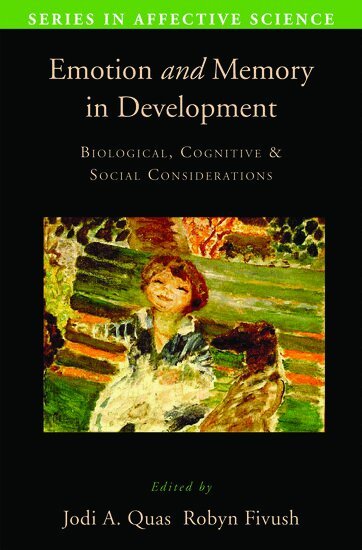
    Emotion in Memory and Development

    Biological, Cognitive, and Social Considerations

    AvJodi A. Quas,Jodi Quas

    Inbunden, Engelska, 2009

    Del i serien Series in Affective Science

    1 222 kr

    Beställningsvara. Skickas inom 5-8 vardagar. Fri frakt över 249 kr.

    Beskrivning

    The question of how well children recall and can discuss emotional experiences is one with numerous theoretical and applied implications. Theoretically, the role of emotions generally and emtional distress specifically in children's emerging cognitive abilities has implications for understanding how children attend to and process information, how children react to emotional information, and how that information affects their development and functioning over time. Practically speaking, increasing numbers of children have been involved in legal settings as victims or witnesses to violence, highlighting the need to determine the extent to which children's eyewitness reports of traumatic experiences are accurate and complete. In clinical contexts, the ability to narrate emotional events is emerging as a significant predictor of psychological outcomes. How children learn to describe emotional experiences and the extent to which they can do so coherently thus has important implications for clinical interventions.

    Produktinformation

    • Utgivningsdatum:2009-04-30
    • Mått:236 x 163 x 40 mm
    • Vikt:916 g
    • Format:Inbunden
    • Språk:Engelska
    • Serie:Series in Affective Science
    • Antal sidor:448
    • Förlag:OUP USA
    • ISBN:9780195326932

    Utforska kategorier

    • Barnpsykologi och utvecklingspsykologi inom Psykologi och pedagogik
    • Kognitiv psykologi inom Psykologi och pedagogik

    Recensioner i media

    "...valuable...empircal data."--PsycCRITIQUES

    Innehållsförteckning

    • I. Stress and Memory, Empirical Evidence ; 1. Remembering Traumatic Childhood Experiences: An Attachment Theory Perspective Yoojin Chae, Christin M. Ogle, and Gail S. Goodman ; 2. Children's Understanding and Remembering of Stressful Experiences Lynne Baker-Ward, Peter A. Ornstein, and Lauren P. Starnes ; 3. Injuries, Emergency Rooms, and Children's Memory: Factors Contributing to Individual Differences Carole Peterson and Kelly L. Warren ; 4. Stress and Autobiographical Memory Functioning Andrea Follmer Greenhoot, Rebecca J. Johnson, John-Paul Legerski, and Laura A. McCloskey ; II. Stress, Coping, and Parent-Child Narratives ; 5. Coping and Memory: Automatic and Controlled Processes in Adaptation to Stress Bruce E. Compas, Laura K. Campbell, Kristen E. Robinson, and Erin M. Rodriguez ; 6. Mother-child Emotion Dialogues: A Window into the Psychological Secure Base David Oppenheim and Nina Koren-Karie ; 7. Mother-child Reminiscing in the Context of Secure Attachment Relationships: Lessons in Understanding and Coping with Negative Emotions Deborah Laible and Tia Panfile ; 8. Creating a Context for Children's Memory: The Importance of Parental Attachment Status, Coping, and Narrative Skill for Co-Constructing Meaning Following Stressful Experiences Jessica McDermott Sales ; III. Stress, Physiology, and Neurobiology ; 9. An Integrated Model of Emotional Memory: Dynamic Transactions in Development Kristen Weede Alexander and Karen Davis O'Hara ; 10. Development and Social Regulation of Stress Neurobiology in Human Development: Implications for the Study of Traumatic Memories Kristen L. Wiik and Megan R. Gunnar ; 11. Stress Effects on the Brain System Underlying Explicit Memory Leslie J. Carver and Annette Cluver ; 12. Physiological Stress Responses and Children's Event Memory Allison R. Wallin, Jodi A. Quas, and Ilona S. Yim ; IV. Integration and New Directions ; 13. Co-constructing Memories and Meaning over Time Robyn Fivush ; 14. Relationships, Stress, and Memory Ross A. Thompson ; 15. Complications Abound, and Why that's a Good Thing Patricia J. Bauer ; 16. Emotion and Memory in Development: Clinical and Forensic Implications Karen Salmon and Rowena Conroy