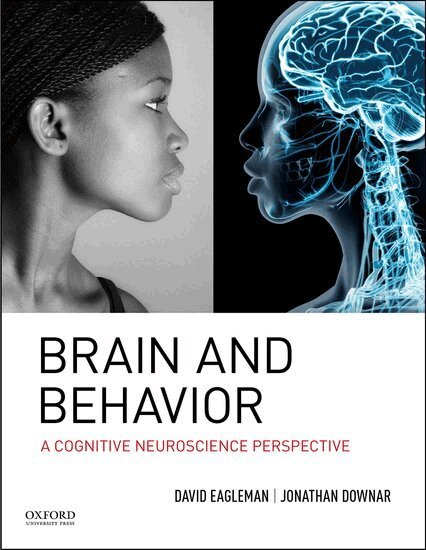
Brain and Behavior
A Cognitive Neuroscience Perspective
AvDavid Eagleman,Jonathan Downar
3 029 kr
Beställningsvara. Skickas inom 5-8 vardagar. Fri frakt över 249 kr.
Fler format och utgåvor
Beskrivning
Produktinformation
- Utgivningsdatum:2018-09-27
- Mått:282 x 218 x 27 mm
- Vikt:1 678 g
- Format:Inbunden
- Språk:Engelska
- Antal sidor:688
- Förlag:OUP USA
- ISBN:9780195377682
Utforska kategorier
Mer om författaren
David Eagleman is a neuroscientist, New York Times best-selling author, and Guggenheim Fellow who holds joint appointments in the Departments of Neuroscience and Psychiatry at Baylor College of Medicine in Houston, Texas. Dr. Eagleman's areas of research include time perception, vision, synesthesia, and the intersection of neuroscience with the legal system.Jonathan Downar is the director of the MRI-Guided rTMS Clinic at the University Health Network Hospital in Toronto, Canada, and a scientist at the Toronto Western Research Institute. He currently holds appointments with the Department of Psychiatry and the Institute of Medical Science at the University of Toronto.
Recensioner i media
The Neuroplasticity chapter contains all of the information that is contained in the Cognitive Neuroscience book I currently use, and goes well beyond that book. I love the seamless integration of human, animal, and cellular levels of analysis. The case studies are gripping. The writing is excellent and engaging and the figures are beautiful.
Innehållsförteckning
- *Every chapter ends with the following: Conclusion, Key Principles, Key Terms, Review Questions, and Critical-Thinking Questions ContentsPreface Part I: The Basics Chapter 1: IntroductionLearning ObjectivesStarting Out: A Spark of Awe in the DarknessWho Are We?The Mission of Cognitive NeuroscienceNeuroscience Is a Relatively New FieldIn Pursuit of PrinciplesThe Functions behind the FormWhich Parts Matter?What Is the Brain For?How We Know What We KnowConnectional MethodsCorrelational Methods Research Methods: Magnetic Resonance ImagingLesion MethodsStimulation MethodsA Toolbox of Complementary MethodsThinking Critically about the BrainIs the Brain Equipped to Understand Itself?Biases and Pitfalls in Human CognitionA Toolbox of Critical-Thinking TechniquesThe Big Questions in Cognitive NeuroscienceWhy Have a Brain at All? (Chapter 2)How Is Information Coded in Neural Activity? (Chapter 3)How Does the Brain Balance Stability against Change? (Chapter 4)Why Does Vision Have So Little to Do with the Eyes? (Chapter 5)How Does the Brain Stitch Together a Picture of the World from Different Senses? (Chapter 6)How Does the Brain Control Our Actions? (Chapter 7)What Is Consciousness? (Chapter 8)How Are Memories Stored and Retrieved? (Chapter 9)Why Do Brains Sleep and Dream? (Chapter 10)How Does the Human Brain Acquire Its Unique Ability for Language? (Chapter 11)How Do We Make Decisions? (Chapter 12)What Are Emotions? (Chapter 13)How Do We Set Our Priorities? (Chapter 14)How Do I Know What You're Thinking? (Chapter 15)What Causes Disorders of the Mind and the Brain? (Chapter 16)The Payoffs of Cognitive NeuroscienceHealing the Disordered BrainEnhancing Human AbilitiesBlueprints for Artificial CognitionBrain-Compatible Social Policies Chapter 2: The Brain and Nervous SystemLearning ObjectivesStarting Out: The Brains of Creatures Great and SmallAn Overview of the Nervous SystemWhy Put Your Neurons in a Brain at All?The Common Features of Every Central Nervous SystemGetting Oriented in the BrainThe Peripheral Nervous SystemSeparate Systems for the Inner and Outer EnvironmentsA Nervous System with Segmental OrganizationThe Spinal CordCircuits within a Segment: Spinal Reflexes Case Study: Christopher Reeve, 1952-2004Complex Circuits across Segments: Central Pattern Generators The Bigger Picture: In Search of a Cure for Spinal Cord InjuryThe BrainstemMedulla Oblongata and Pons Neuroscience of Everyday Life: Why Do We Get the Hiccups?MidbrainMost Cranial Nerves Emerge from the BrainstemThe CerebellumCircuitry of the "Little Brain"Functions of the Little BrainThe Diencephalon: Hypothalamus and ThalamusHypothalamus: A Keystone Structure in HomeostasisThalamus Case Study: Waking the BrainThe Telencephalon: Cerebral Cortex and Basal GangliaCerebral Cortex Basal Ganglia Research Methods: Cytoarchitecture of the CortexUniting the Inside and Outside WorldsThe Limbic SystemThe Ventricular System and Brain FunctionConclusionKey PrinciplesKey TermsReview QuestionsCritical-Thinking Questions Chapter 3: Neurons and SynapsesLearning ObjectivesStarting Out: The Kabuki Actor and the PufferfishThe Cells of the BrainNeurons: A Close-Up ViewMany Different Types of NeuronsGlial Cells Research Methods: Visualizing Neurons and Their ProductsSynaptic Transmission: Chemical Signaling in the BrainRelease of Neurotransmitter at the SynapseTypes of NeurotransmittersReceptorsPostsynaptic Potentials The Bigger Picture: Psychoactive DrugsSpikes: Electrical Signaling in the BrainAdding Up the SignalsHow an Action Potential TravelsMyelinating Axons to Make the Action Potential Travel FasterAction Potentials Reach the Terminals and Cause Neurotransmitter Release Case Study: Multiple Sclerosis Neuroscience of Everyday Life: The Magic of a Local AnestheticWhat Do Spikes Mean? The Neural CodeEncoding Stimuli in SpikesDecoding Spikes Research Methods: Recording Action Potentials with ElectrodesIndividuals and PopulationsPopulations of NeuronsForming a Coalition: What Constitutes a Group?Open Questions for Future Investigation Chapter 4: Neuroplasticity Learning ObjectivesStarting Out: The Child with Half a BrainThe Brain Dynamically Reorganizes to Match Its InputsChanges to the Body Plan Case Study: Phantom Sensation Research Methods: Mapping Out the BrainChanges to Sensory InputThe Brain Distributes Resources Based on RelevanceThe Role of BehaviorThe Role of Relevance: Gating Plasticity with Neuromodulation Neuroscience of Everyday Life: Pianists and Violinists Have Different Brains Case Study: The Government Worker with the Missing BrainThe Brain Uses the Available TissueMaps Adjust Themselves to the Available Brain TissueCortical Reorganization after Brain DamageA Sensitive Period for Plastic ChangesA Window of Time to Make Changes Case Study: Danielle, the Feral Child in the WindowThe Sensitive Period in LanguageNeuromodulation in Young BrainsHardwiring versus World ExperienceAspects of the Brain Are PreprogrammedExperience Changes the BrainBrains Rely on Experience to Unpack Their Programs CorrectlyThe Mechanisms of ReorganizationNeurons Compete for Limited SpaceCompetition for NeurotrophinsRapid Changes: Unmasking Existing ConnectionsSlow Changes: Growth of New ConnectionsChanging the Input Channels Case Study: The Man Who Climbs with his Tongue The Bigger Picture: Adding New Peripherals Part II: How the Brain Interacts with the World Chapter 5: VisionLearning ObjectivesStarting Out: Vision Is More Than the Eyes Visual Perception What Is It Like to See? Signal Transduction Anatomy of the Visual System Sensory Transduction: The Eye and Its Retina Case Study: The Bionic RetinaPath to the Visual Cortex: The Lateral Geniculate Nucleus The Visual Cortex Two Eyes Are Better Than One: Stereo Vision Neuroscience of Everyday Life: Random-Dot StereogramsHigher Visual Areas Secondary and Tertiary Visual Cortex: Processing Becomes More ComplexVentral Stream: What an Object Is The Bigger Picture: Reading the Movies in Our MindsDorsal Stream: How to Interact with the World Case Study: The World in SnapshotsAttention and the Dorsal Stream Comparing the Ventral and Dorsal Processing Streams The Bigger Picture of the Visual Brain Case Study: The Blind Woman Who Could See, Sort OfPerception Is Active, Not Passive Interrogating the Scene with Our Eyes The Blind Spot Seeing the Same Object Different Ways: MultistabilityBinocular Rivalry: Different Images in the Two Eyes We Don't See Most of What Hits Our Eyes: Fetching Information on a Need-to-Know BasisVision Relies on Expectations Change Blindness Saving Resources by Embedding Prior ExperienceUnconscious Inference Activity from Within Feedback Allows an Internal Model Chapter 6: Other SensesLearning ObjectivesStarting Out: The Man with the Bionic EarDetecting Data from the World Hearing Research Methods: PsychophysicsThe Outer and Middle Ear Converting Mechanical Information into Electrical Signals: The Inner Ear Neuroscience of Everyday Life: The Undetectable Cell PhoneThe Auditory Nerve and Primary Auditory Cortex The Hierarchy of Sound Processing Sound Localization Balance The Somatosensory System Touch Temperature Pain Case Study: The Pain of a Painless ExistenceProprioception Interoception The Somatosensory Pathway Chemical Senses Taste Smell The Sense of Flavor Pheromones The Brain Is Multisensory SynesthesiaCombining Sensory Information The Binding Problem The Internal Model of the World Case Study: The Paralyzed Supreme Court Justice Who Claimed He Could Play FootballTime Perception Chapter 7: The Motor SystemLearning ObjectivesStarting Out: "'Locked-In Syndrome"'MusclesSkeletal Muscle: Structure and FunctionThe Neuromuscular JunctionThe Spinal CordLower Motor NeuronsSpinal Motor Circuits: ReflexesSpinal Motor Circuits: Central Pattern GeneratorsDescending Pathways of Motor ControlThe CerebellumThe Circuitry of the CerebellumMotor Functions of the CerebellumNonmotor Functions of the CerebellumThe Motor CortexMotor Cortex: Neural Coding of MovementsMotor Cortex: Recent Controversies The Bigger Picture: Neural Implants for Motor ControlThe Prefrontal Cortex: Goals to Strategies to Tactics to ActionsThe Functional Organization of the Prefrontal Cortex in Motor ControlSensory FeedbackMirror Neurons in Premotor CortexControl Stages of the Motor HierarchyBasal GangliaComponents of the Basal GangliaCircuitry of the Basal GangliaDiseases of the Basal GangliaMedial and Lateral Motor Systems: Internally and Externally Guided Movement ControlOrganization of Medial Motor AreasFunctions of Medial and Lateral Motor Systems Neuroscience of Everyday Life: Why Can't I Multitask?Did I Really Do That? The Neuroscience of Free Will Research Methods: Neurosurgical Stimulation Case Study: Alien Hand Syndrome Part III: Higher Levels of Interaction Chapter 8: Attention and ConsciousnessLearning ObjectivesStarting Out: The Stream of ConsciousnessAwareness Requires AttentionChange BlindnessInattentional Blindness Neuroscience of Everyday Life: Stage MagicApproaches to Studying Attention and AwarenessAttentional Orienting Paradigms: Aiming the "Spotlight" of AttentionThe Oddball Paradigm: Monitoring a Physiological Measure of AttentionUncoupling Sensory Input from Perception: Sensory RivalryNeural Mechanisms of Attention and AwarenessSeeking the Correlates of ConsciousnessHemineglect: A Disorder of Attention and Awareness Case Study: Unaware of Half of the WorldNeural Correlates of Attention: A Single Network, or Many? Case Study: Whose Arm Is This, Anyway?Sites of Attentional Modulation: Neurons and Neural PopulationsThe Biased-Competition Model of AttentionAttention and Single Neurons: Enhancing the SignalAttention and Local Groups of NeuronsSynchronization, Attention, and AwarenessComa and Vegetative State: Anatomy of the Conscious StateWhy Should Synchronization Matter?Unconsciousness: Coma and Vegetative State Case Study: Waking the Brain Midbrain and Thalamus: Key Players in the Conscious StateAnesthesia and Sleep: Rhythms of ConsciousnessSleep: Unraveling the Rhythm of ConsciousnessAnesthesia: Reversible, Artificial UnconsciousnessTheories of ConsciousnessDualism: The Mind-Body ProblemFunctionalist Theories of ConsciousnessConsciousness and the Integration of Information Chapter 9: MemoryLearning ObjectivesStarting Out: "The Woman Who Cannot Forget"The Many Kinds of MemoryWorking and Long-Term MemoryImplicit MemoryExplicit MemoryTravels in Space and Time: The Hippocampus and Temporal Lobe Case Study: Gone but Not Forgotten: Henry Molaison, 1926-2008A Map of the Medial Temporal LobeEpisodic MemorySpatial MemoryTheories of Hippocampal FunctionUnifying the Functions of the HippocampusRemembering the Future: Prospection and ImaginationHow We Imagine Future Experiences Research Methods: Localizing Human Brain FunctionThe Circuitry of Prospection and Recollection Neuroscience of Everyday Life: Simonides and the Champions of MemoryProspection in Other SpeciesModels of ProspectionThe Confabulation of RealityConfabulation in the Injured Brain Case Study: The Woman with a Thirty-Year-Old BabyThe Anatomy of Spontaneous ConfabulationConfabulation in the Normal BrainThe Anatomy of a False Memory The Bigger Picture: Scanning for the TruthThe Mechanisms of MemoryGeneral Mechanisms of Learning and MemoryMemory as Synaptic ChangeLong-Term Potentiation and Depression of Synaptic ConnectionsThe NMDA ReceptorConsolidation and ReconsolidationAssociative Neural NetworksBeyond Synaptic Plasticity: The Frontiers of Memory MechanismsWhole Neurons as a Substrate for Memory?New Neurons for New MemoriesSpines: Another Structural Basis for Memory?Looking inside the Cell: Memory in Chemical Reactions Case Study: The Flies with Photographic MemoryEpigenetics: Making a Single Genome Play Different TunesThe Mysteries of MemoryAre the Roles Of LTP and LTD Overstated?The Timing of SpikesThe Limitations of Neural NetworksNeural Networks: Solving the Wrong Problem?Remembering Relationships, Not FeaturesThe Future of Memory Research Chapter 10: SleepLearning ObjectivesStarting Out: Caught between Sleeping and WakingSleep and the BrainThe Brain Is Active during Sleep Research Methods: Electroencephalography The Neural Networks of SleepThe Brain during REM SleepThe Circadian RhythmEntrainment of the Circadian Rhythm by Light CuesThe Circadian Rhythm Is Not Fixed Case Study: The Shifted Circadian RhythmThe Circadian Rhythm and Napping The Bigger Picture: Schools and Circadian RhythmsWhy Do Brains Sleep?Four Theories of Sleeping: Restoration, Survival, Simulation, LearningRehearsalForgettingInsight and the Restructuring of InformationDreamingDream Content The Neuroscience of Everyday Life: Lucid DreamingCan Dreams Shed Light on Consciousness?Dreams of the Future and How to Study ThemSleep Deprivation and DisordersSleep Deprivation Case Study: Staying AwakeInsomnia Hypersomnia Case Study: The Family Who Couldn't SleepParasomnias Chapter 11: Language and LateralizationLearning ObjectivesStarting Out: The Stuttering KingSpeech, Language, and CommunicationAphasia: The Loss of Language Case Study: The Woman Who Couldn't Find Her WordsBroca's AphasiaWernicke's Aphasia Case Study: The Woman Who Makes Up WordsA Language NetworkThe Larger Picture of Language-Specific RegionsDyslexiaStutteringLateralization: The Two Hemispheres Are Not IdenticalTests for DominanceApraxiaHemispheric DifferencesTwo Brains in One? The Case of the Split-Brain PatientsThinking about Cerebral AsymmetryDevelopment of LanguageLearning Language from ExperienceInnate Language TendenciesSocially and Emotionally Directed Learning Research Methods: The Baby with No Privacy Part IV: Motivated Behaviors Chapter 12: Decision MakingLearning ObjectivesStarting Out: A Fatal Mistake, at the Highest Place on EarthHow Do We Decide What to Do?The Scorpion and the Frog The Search for a "Physics" of Human DecisionsHomo economicus and Rational Choice TheoryThe Predictably Irrational Homo sapiensHomo sapiens versus Homo economicusConfused by UncertaintyThe Framing Effect and the Endowment EffectThe Illusory Value of ProcrastinationWhere Do Our Irrational Decisions Come From? Decision Making in Other SpeciesDo Irrational Decisions Come from Irrational People?One Brain, Two SystemsHow the Brain DecidesThe Neural Mechanisms of Delay Discounting Neural Mechanisms of Decisions under RiskThe Neural Basis of the Endowment EffectThe Neural Basis of the Framing EffectThe Common Currency of Subjective Value Comparing Apples to Oranges Research Methods: Charting the Landscape of Subjective ValueA Consistent Neural Basis for Subjective ValueEvaluation and the Orbitofrontal Cortex One Currency, But Many Markets The Neuroscience of Everyday Life: Snack Food or Brussels Sprouts?A Hierarchy of Internally Guided Decision Making Internally and Externally Guided Decision Making Values into GoalsGoals into PlansPlans into Behavior and ActionModulators of Decision Making Strategic Use of Decision-Making Systems Neurotransmitter Effects on Decision Making The Bigger Picture: How to Avoid the Scorpion's Sting Chapter 13: EmotionsLearning ObjectivesStarting Out: Sadness, at the Flip of a SwitchEarly Theories of EmotionEmotional Expressions: Signposts on a Landscape of Inner StatesThe James-Lange Theory of Emotion: A Bottom-Up TheoryThe Cannon-Bard Theory: A Top-Down Theory Case Study: Pathological Laughter and CryingTwo-Factor Theories: Reconciling Central and Peripheral Influences on EmotionCore Limbic Structures: Amygdala and HypothalamusHypothalamus: Internal States, Homeostatic Drives Case Study: An Internal Growth of RageDo Hypothalamic Circuits Generate Inner Emotional Experiences?Amygdala: Externally Generated States and DrivesThe Amygdala and Emotional Experience Case Study: The Woman Who Knows No FearHippocampus: Emotional MemoriesVentral Striatum: Pleasure and RewardBringing It All Together: The Circuit of Papez and the Ring of Limbic Cortex The Bigger Picture: The Ethics of Brain Stimulation in Human BeingsThe Limbic Cortex and EmotionsThe Interoceptive Insula: The "Feeling" Side of EmotionsCingulate Cortex: A Motor Cortex for the Limbic System Neuroscience of Everyday Life: Mental EffortVentromedial Prefrontal Cortex: A Generator of Gut FeelingsLimbic Association Cortex: Modulation of EmotionThe Mechanisms of Emotional ReappraisalBrain Injury, Brain Stimulation, and Emotion RegulationNeurochemical Influences on Emotion Case Study: A Cure Born of Desperation Serotonin and MoodNorepinephrine and MoodGABA and Anxiety Chapter 14: Motivation and Reward Learning ObjectivesStarting Out: "More Important Than Survival Itself"Motivation and SurvivalAddiction: An Illness of MotivationWhy Motivation MattersFeelings: The Sensory Side of MotivationThe Circuitry of Motivation: Basic DrivesHypothalamus and Homeostatic DrivesAmygdala and External-World DrivesMidbrain Dopamine Neurons and the Common Currency of MotivationReward, Learning, and the BrainDefining RewardLearning from Reward Using Prediction Error"Liking" Is Different from "Wanting"Opioids and the Sensation of PleasureOpioids, Opioid Receptors, and Opioid FunctionsOpioids and RewardDopamine, Learning, Motivation, and RewardDopamine Functions in Motivation and RewardUnifying the Functions of Dopamine Research Methods: Measuring Neurotransmitter Levels in the BrainNeurotransmitters Are Messengers, Not FunctionsAddiction: Pathological Learning and MotivationAddictive Substances Have Distorted Reward Value Neuroscience of Everyday Life: The Pursuit of HappinessAddiction Is a Result of Pathological LearningThe Circuitry and Chemistry of AddictionUnlearning AddictionThe Challenge of Treatment Case Study: Pathological Gambling in a Patient with Parkinson's DiseaseExisting Approaches to TreatmentFuture Approaches to Treatment The Bigger Picture: Finding the Motivation to Change Chapter 15: Social CognitionLearning ObjectivesStarting Out: Why Risk Your Life for a Yellow T-shirt?Social PerceptionWhat's in a Face?Do I Look Like a Liar to You? Neuroscience of Everyday Life: A Poker FaceSocial Knowledge and the Temporal PoleSocial Signals and the Superior Temporal SulcusSocial Thinking: Theory of MindWhat Is Theory of Mind?Neural Mechanisms of Theory of MindMirror Neurons and Theory of MindDisorders of Theory of MindSocial Feelings: Empathy and Its Many ComponentsAn Emotional Theory of MindEmpathy, Sympathy, and CompassionNeural Mechanisms of Emotional Mimicry and ContagionNeural Mechanisms of Empathy, Sympathy, and AntipathyDisorders of EmpathySocial Emotions, Motivations, and BehaviorSocial Emotions from Theory of Mind Case Study: Acquired SociopathySocial Emotions from Social ValuesSocial Reward and Social AversionThe Anatomy of a LieNeurotransmitters and Social Behavior Research Methods: Transcranial Direct Current Stimulation An Ancient and Fundamental SystemOxytocinVasopressin The Bigger Picture: The Brave New World of the "Cuddle Hormone"?The Social SelfThe Wondrous Self-Awareness of the Human BrainForms of Self-AwarenessWhy Bother with Self-Awareness?Neural Correlates of Self-AwarenessDisorders of Self-AwarenessSelf-Awareness and Social Cognition Case Study: The Man in the Mirror Part V: Disorders of Brain and Behavior Chapter 16: Neurological and Psychiatric DisordersLearning ObjectivesStarting Out: Epilepsy: "The Sacred Disease"Alzheimer's Disease: Burning Out with Age?Frontotemporal Dementia: Like a Cancer of the Soul Case Study: Ravel and "Bolero"Huntington's Disease: A Genetic Rarity, in Two SensesTourette Syndrome: A Case of Involuntary Volition?Obsessive-Compulsive Disorder: Neurological or Psychiatric? Research Methods: Voxel-Based MorphometrySchizophrenia: A Dementia of the YoungBipolar DisorderDepression: A Global BurdenImpact of Depression Case Study: A Lifetime Studying, and Living with, Bipolar DisorderCauses of DepressionNeurochemical Effects of Depression on the BrainFunctional Effects of Depression on the BrainTreatment of Depression