• Fri frakt över 249 kr
  • •
  • Snabba leveranser
  • •
  • Billiga böcker
Kundservice

Du är på sajten för privatpersoner.

Företag, bibliotek eller offentlig verksamhet?

Du handlar på classic.bokus.com, där alla dina funktioner finns intakta.
Till classic.bokus.com
Bokus logotyp. Gå till startsidan.
  • Erbjudanden
  • Nyheter
  • Student
  • Topplistor
  • Barn & ungdom
  • Bokus Play
  • E-böcker
  • Pocketböcker
  • Spel & pussel

10% studentrabatt med kod TERM26

Sidfot

Mina sidor

    Hjälp

    • Kundservice
    • Vanliga frågor och svar
    • Frakt och leverans
    • Retur vid ångerrätt
    • Reklamera vara
    • Betalning
    • Köpvillkor
    • Allmänna villkor
    • Information om webbplatsens tillgänglighet

    Om Bokus

    • Om oss
    • Pressrum
    • För studenter
    • För företag
    • För bibliotek och offentlig verksamhet
    • För leverantörer
    • Hållbarhet

    Populärt

    • Aktuella erbjudanden
    • Presentkort
    • Studentlitteratur
    • Nya böcker
    • Topplistor
    • Signerade böcker
    • Engelska böcker

    Inspiration

    • Boktips
    • BookTok
    • Populära bokserier
    • Barnbokskaraktärer
    • Populära författare
    Logotyp för Bokus
    Följ oss på Facebook (extern länk)Följ oss på Instagram (extern länk)Följ oss på YouTube (extern länk)Följ oss på TikTok (extern länk)
    bokus @ CookiesAnpassa cookiesIntegritetspolicyKöpvillkor
    Till Citymail hemsida (extern länk)Till Budbee hemsida (extern länk)Till Postnord hemsida (extern länk)Till Schenker hemsida (extern länk)Till Early Bird hemsida (extern länk)Till Walleys hemsida (extern länk)
    1. Kultur
    2. Konstböcker
    3. Konsthistoria

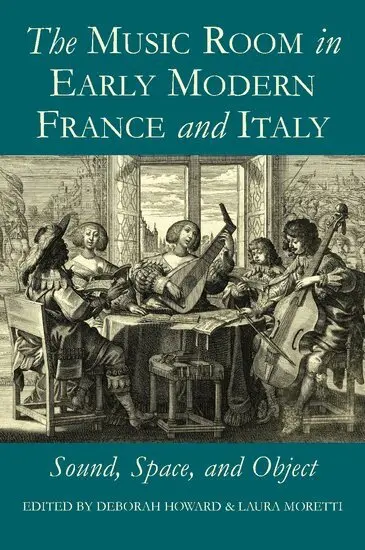
    The Music Room in Early Modern France and Italy

    Sound, Space and Object

    AvHoward,Deborah Howard

    Inbunden, Engelska, 2012

    Del 176 i serien Proceedings of the British Academy

    1 222 kr

    Beställningsvara. Skickas inom 5-8 vardagar. Fri frakt över 249 kr.

    Beskrivning

    This interdisciplinary book investigates the use of secular space for music making in Early Modern France and Italy. The fact that many artists of the time also had musical skills underlines the close relationship between music and the visual arts. This era is remarkable for the growing importance of music in domestic life, ranging from elaborate court festivities to family recreation. In parallel with the emergence of the theatre as a separate building type, music-making in elite circles became more specialised through the employment of paid musicians, as opposed to amateur participation by the inhabitants and their guests. Meanwhile, however, music printing and the mass-production of instruments, especially lutes, allowed music-making to diffuse down the social scale. We see how spaces specifically designed for music began to appear in private dwellings, while existing rooms became adapted for the purpose. At first, the number of rooms specifically identifiable as 'music rooms' was very small, but gradually over the following 150 years, specialised music rooms began to appear in larger residences in both France and Italy. A major theme is the relationship between the size and purpose of the room and the kinds of music performed - depending on the size, portability and loudness of different instruments; the types of music suited to spaces of different dimensions; the role of music in dancing and banqueting; and the positions of players and listeners. Musical instruments were often elaborately decorated to become works of art in their own right.

    Produktinformation

    • Utgivningsdatum:2012-06-14
    • Mått:165 x 241 x 25 mm
    • Vikt:792 g
    • Format:Inbunden
    • Språk:Engelska
    • Serie:Proceedings of the British Academy
    • Antal sidor:300
    • Förlag:OUP OXFORD
    • ISBN:9780197265055

    Utforska kategorier

    • Konsthistoria inom Kultur
    • Arkitekturhistoria inom Kultur
    • Musikvetenskap inom Kultur

    Recensioner i media

    This is an excellent and much-needed book. Early Music,

    Innehållsförteckning

    • Introduction: Music-making in Residenctiontial Space1. The Visual Dimension1: Patricia Fortini Brown: Seduction and Spirituality: The Ambiguous Roles of Music in Venetian Art2: Flora Dennis: When is a Room a Music Room? Sounds, Spaces, and Objects in Non-courtly Italian Interiors3: Tracy E. Cooper: The Place of Music in the Artist's Home2. The Spatial Dimension4: Sophie Pickford: Music in the French Domestic Interior (1500-1600)5: Deborah Howard: The Role of Music in the Venetian Home in the Cinquecento6: Rebecca Norris: Women on the Edge: The 'Saletta delle Dame' of the Palazzo Salvadego in Brescia3. The Aural Dimension7: Mimmo Peruffo: Balance on the Lute: The Role of the Strings8: Michael Lowe: The Lute: An Intrument for All Seasons9: Raf Orlowski: Assessing the Acoustic Performance of Small Music Rooms: A Short Introduction4. The Intellectual Dimension10: Giovanni Zanovello: 'With tempered notes, in the green hills and among rivers': Music, Learning, and the Symbolic Space of Recreation in the Manuscript Modena, Biblioteca Estense, Universitaria A.F.9.911: Guido Beltramini: Spaces for Music in Sixteenth-Century Paduan Noble Courts12: Michael Markham: Caccini's Stages: Identity and Performance Space in the Late Cinquecento Courts5. Courtly Contexts13: Laura Moretti: Spaces for Musical Performance in the Este Court in Ferrara (c 1440-1540)14: Iain Fenlon: Music Rooms in the Ducal Palace in Mantua: From Andrea Mantegna to Giovan Battista Bertani15: Tessa Murdoch: Queen Christina of Sweden as a Patron of Music in Rome in the Mid-Seventeenth Century6. The Development of Purpose-Built Spaces for Music16: Davide Bonsi: The Acoustic Analysis of Palladio's Teatro Olimpico, Vicenza17: Tarek Barreda: Music at Home: Spaces for Music in French Seventeenth-Century Residential Architecture18: Arnaldo Morelli: Spaces for Musical Performance in Seventeenth-Century Roman Residences