Inbunden, Engelska, 2027
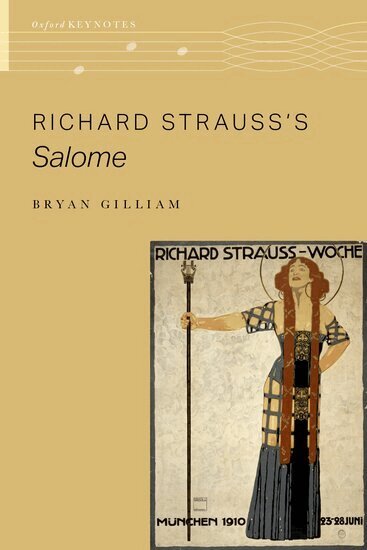
Richard Strauss's Salome
1300 kr
Kommande
Beskrivning
Salome--Richard Strauss's third opera and first triumph--remains one of the most notorious works in the twentieth-century repertoire. Premiered in Dresden in 1905, it quickly scandalized Europe with its lurid eroticism, religious critique, and sonic audacity. The infamous Dance of the Seven Veils, along with themes of incest, latent homoerotic desire, dismemberment, and necrophilia, established its reputation as opera's most shocking creation. Strauss often wraps these horrors in a shimmering, sensual orchestral fabric-a sonic sheath of aesthetic safety-that seduces us into inwardly delighting in what we see and hear.In the first single-authored, English-language book on Salome since 1907, Bryan Gilliam offers fresh insight into a work still capable of horrifying audiences more than 120 years after its premiere. Far from being simply Wagner's musical heir, Strauss rejects his metaphysical pretensions, wielding irony and dark humor to dismantle the sacred myths of Judeo-Christian tradition. Unlike Parsifal, John the Baptist is not redeemed but beheaded. Salome emerges not only as a sensational operatic spectacle but also as a biting cultural critique-one that still resonates powerfully today.
Produktinformation
- Utgivningsdatum: 2027-01-21
- Mått: 140 x 210 x undefined mm
- Format: Inbunden
- Språk: Engelska
- Serie: Oxford Keynotes
- Antal sidor: 192
- Förlag: OUP USA
- ISBN: 9780197694589
Utforska kategorier
Betyg & recensioner
0 recensioner
Inga recensioner tillgängliga.