• Fri frakt över 249 kr
  • •
  • Snabba leveranser
  • •
  • Billiga böcker
Kundservice

Du är på sajten för privatpersoner.

Företag, bibliotek eller offentlig verksamhet?

Du handlar på classic.bokus.com, där alla dina funktioner finns intakta.
Till classic.bokus.com
Bokus logotyp. Gå till startsidan.
  • Erbjudanden
  • Nyheter
  • Student
  • Topplistor
  • Barn & ungdom
  • Bokus Play
  • E-böcker
  • Pocketböcker
  • Spel & pussel

10% rabatt på allt med kod NYSTART10 →

Sidfot

Mina sidor

    Hjälp

    • Kundservice
    • Vanliga frågor och svar
    • Frakt och leverans
    • Retur vid ångerrätt
    • Reklamera vara
    • Betalning
    • Köpvillkor
    • Allmänna villkor
    • Information om webbplatsens tillgänglighet

    Om Bokus

    • Om oss
    • Pressrum
    • För studenter
    • För företag
    • För bibliotek och offentlig verksamhet
    • För leverantörer
    • Hållbarhet

    Populärt

    • Aktuella erbjudanden
    • Presentkort
    • Studentlitteratur
    • Nya böcker
    • Topplistor
    • Signerade böcker
    • Engelska böcker

    Inspiration

    • Boktips
    • BookTok
    • Populära bokserier
    • Barnbokskaraktärer
    • Populära författare
    Logotyp för Bokus
    Följ oss på Facebook (extern länk)Följ oss på Instagram (extern länk)Följ oss på YouTube (extern länk)Följ oss på TikTok (extern länk)
    bokus @ CookiesAnpassa cookiesIntegritetspolicyKöpvillkor
    Till Citymail hemsida (extern länk)Till Budbee hemsida (extern länk)Till Postnord hemsida (extern länk)Till Schenker hemsida (extern länk)Till Early Bird hemsida (extern länk)Till Walleys hemsida (extern länk)
    1. Historia och arkeologi
    2. Historia
    3. Asiens historia

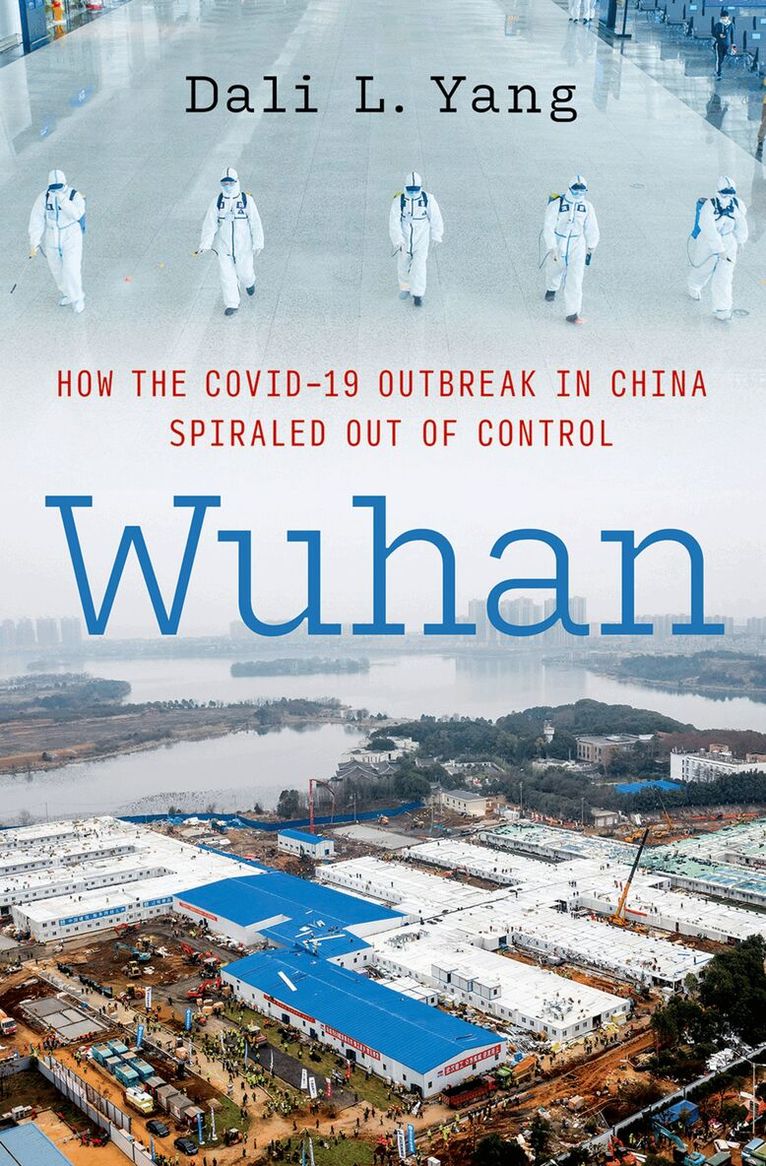
    Wuhan

    How the COVID-19 Outbreak in China Spiraled Out of Control

    AvDali L. Yang

    Inbunden, Engelska, 2024

    419 kr

    Beställningsvara. Skickas inom 5-8 vardagar. Fri frakt över 249 kr.

    Fler format och utgåvor

    E-bok

    325 kr

    E-bok

    325 kr

    Beskrivning

    The definitive account of the Chinese government's response to the initial Covid-19 outbreak in Wuhan.The Covid-19 pandemic, which began as an outbreak in Wuhan in late 2019, has claimed millions of lives and caused unprecedented disruptions. Despite its generation-defining significance, there has been a surprising lack of independent research examining the decisions and measures implemented in the weeks leading up to the Wuhan lockdown, as well as the missteps and shortcomings that allowed the novel coronavirus to spread with minimal hindrance.In Wuhan: How the COVID-19 Outbreak in China Spiraled Out of Control, Dali L. Yang scrutinizes China's emergency response to the Covid-19 outbreak in Wuhan, delving into the government's handling of epidemic information and the decisions that influenced the scale and scope of the outbreak. Yang's research reveals that China's health decision-makers and experts had an excellent head start when they implemented a health emergency action program to respond to the outbreak at the end of December 2019. With granular detail and compelling immediacy, Yang investigates the political and bureaucratic processes that hindered information flows and sharing, as well as the cognitive framework that limited understanding of the virus's contagiousness and hampered effective decisions.Yang's research uncovers that urgent warnings from sources outside Wuhan helped shift the Chinese health leadership's focus towards epidemic control. Once this shift occurred, China's party-state mobilized resources and enforced a lockdown in Wuhan. This lockdown was divided into two phases: providing additional medical resources and enforcing community-level lockdowns and home confinement. The 76-day lockdown contained the virus within China's borders, but the leadership and public later faced the challenge of reopening China in a world still grappling with SARS-CoV-2.Wuhan: How the COVID-19 Outbreak in China Spiraled Out of Control also critiques the Chinese authorities for prioritizing dominance and control in their response to the Wuhan outbreak. This preoccupation led to the suppression, distortion, and neglect of crucial disease information, fostering an atmosphere of organized silence. The punishment of whistleblowers and the banning of the immediate release of research findings on the novel coronavirus further contributed to this silencing. Yang emphasizes the importance of retaining public trust during a pandemic and underscores the need for transparency, openness to new information, and direct communication of risk with the public.

    Produktinformation

    • Utgivningsdatum:2024-03-01
    • Mått:165 x 226 x 48 mm
    • Vikt:726 g
    • Format:Inbunden
    • Språk:Engelska
    • Antal sidor:416
    • Förlag:OUP USA
    • ISBN:9780197756263

    Utforska kategorier

    • Asiens historia inom Historia och arkeologi
    • Relationer inom Hälsa och familj
    • Statsvetenskap och politisk teori inom Samhälle och politik

    Mer om författaren

    Dali L. Yang (Ph.D. 1993, Princeton) is the William C. Reavis Professor of Political Science at the University of Chicago. He has been a faculty member at the university since 1992. Yang's research primarily focuses on China's development, governance, and global influence. He has authored several notable books, including Calamity and Reform in China (Stanford, 1996) and Remaking the Chinese Leviathan (Stanford, 2004).In addition to his academic accomplishments, Yang has held various leadership positions at the University of Chicago. He was the founding Faculty Director of the Center in Beijing, chair of the Department of Political Science, and Senior Advisor on Global Initiatives.

    Recensioner i media

    Yang's expertise in Chinese bureaucratic politics and public health governance, along with the profound impact of infectious disease on his family story in China, shines through in this insightful and compelling narrative. His timely book provides a detailed account and accessible analysis of how the COVID-19 crisis unfolded in China.

    Innehållsförteckning

    • 1. Thinking About China's Response to the Covid-19 Outbreak2. The Party-State, Fragmented Authoritarianism, and the Health Emergency Response Regime 3. The Wuhan Alarm: Unusual Pneumonia Cases and a SARS-Like Coronavirus 4. The New Year's Eve Meeting: The Huanan Seafood Market and the Health Emergency Action Program5. The Stability Imperative and the Silencing of Doctors6. The NHC, Pathogen Verification, and Laboratory Regulation7. China CDC, the Huanan Seafood Market, and Epidemiological Tunnel Vision8. Fragmented authoritarianism, Inclusion-Exclusion Criteria, and Suppression of Case Submissions9. The Wall of Silence Surrounding Health Worker Infections10. Conducting Public Health Emergency Response in Stealth11. The Decision to Seal Wuhan Off12. <"The Battle for Wuhan> " 13. The Wuhan Lockdown: The Party-State and Community Enforcement of Home Confinement 14. Conclusion: How Did It Happen? What Could Have Been?