• Fri frakt över 249 kr
  • •
  • Snabba leveranser
  • •
  • Billiga böcker
Kundservice

Du är på sajten för privatpersoner.

Företag, bibliotek eller offentlig verksamhet?

Du handlar på classic.bokus.com, där alla dina funktioner finns intakta.
Till classic.bokus.com
Bokus logotyp. Gå till startsidan.
  • Erbjudanden
  • Nyheter
  • Student
  • Topplistor
  • Barn & ungdom
  • Bokus Play
  • E-böcker
  • Pocketböcker
  • Spel & pussel

10% rabatt på allt med kod NYSTART10 →

Sidfot

Mina sidor

    Hjälp

    • Kundservice
    • Vanliga frågor och svar
    • Frakt och leverans
    • Retur vid ångerrätt
    • Reklamera vara
    • Betalning
    • Köpvillkor
    • Allmänna villkor
    • Information om webbplatsens tillgänglighet

    Om Bokus

    • Om oss
    • Pressrum
    • För studenter
    • För företag
    • För bibliotek och offentlig verksamhet
    • För leverantörer
    • Hållbarhet

    Populärt

    • Aktuella erbjudanden
    • Presentkort
    • Studentlitteratur
    • Nya böcker
    • Topplistor
    • Signerade böcker
    • Engelska böcker

    Inspiration

    • Boktips
    • BookTok
    • Populära bokserier
    • Barnbokskaraktärer
    • Populära författare
    Logotyp för Bokus
    Följ oss på Facebook (extern länk)Följ oss på Instagram (extern länk)Följ oss på YouTube (extern länk)Följ oss på TikTok (extern länk)
    bokus @ CookiesAnpassa cookiesIntegritetspolicyKöpvillkor
    Till Citymail hemsida (extern länk)Till Budbee hemsida (extern länk)Till Postnord hemsida (extern länk)Till Schenker hemsida (extern länk)Till Early Bird hemsida (extern länk)Till Walleys hemsida (extern länk)
    1. Juridik
    2. Internationell rätt

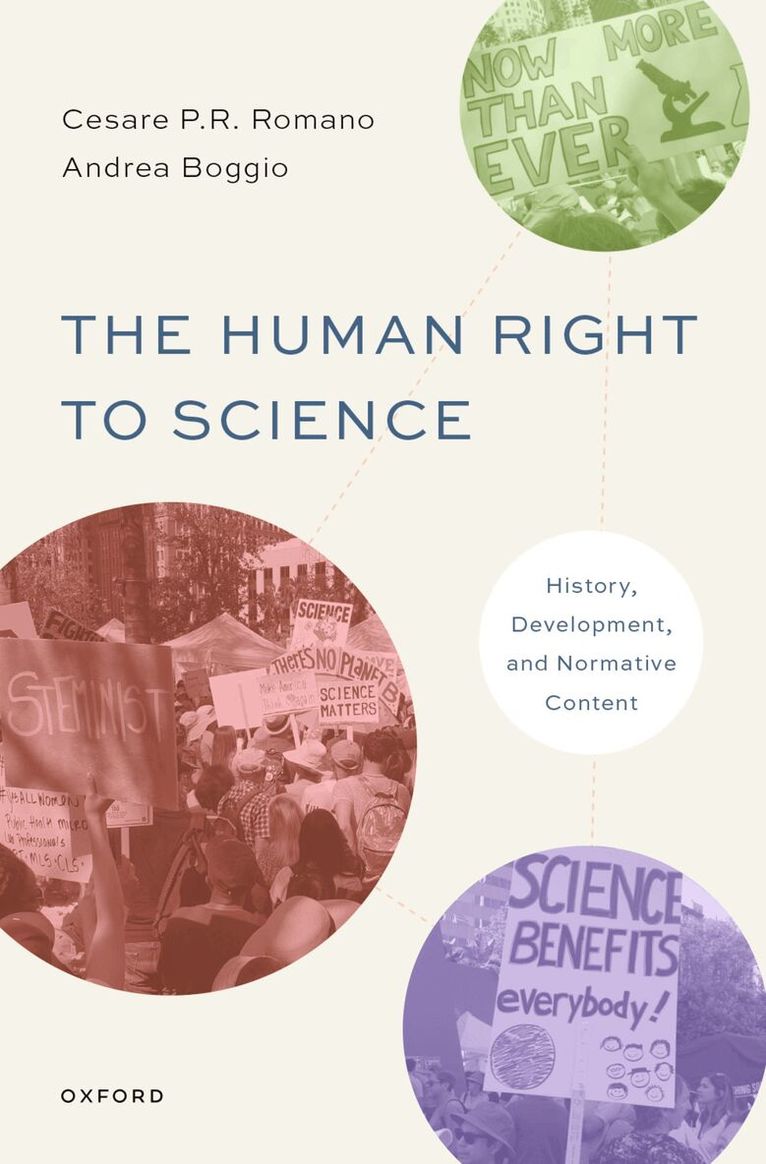
    The Human Right to Science

    History, Development, and Normative Content

    AvCesare P. R. Romano,Andrea Boggio

    Inbunden, Engelska, 2024

    2 166 kr

    Beställningsvara. Skickas inom 5-8 vardagar. Fri frakt över 249 kr.

    Beskrivning

    Recognized as early as 1948, the right to benefit from progress in science and its applications (known more succinctly as "the right to science") has long confounded international legal scholars and practitioners. While it is key to properly framing the relationship between science, technology, and society, the right to science continues to be poorly understood and very rarely invoked by those who could benefit from it.The Human Right to Science: History, Development, and Normative Content offers a thorough and systematic analysis of this pivotal human right. After discussing the aims, methodology, and key definitions, the book examines the historical origins of the right to science, from the American Declaration of Human Rights to the Universal Declaration of Human Rights and the International Covenant on Economic, Social, and Cultural Rights. It then turns to mapping the development of the right within the United Nations system (including UNESCO) and its spread to regional regimes. Finally, the book breaks down the normative content of the right to science into twenty-two distinct rights, grouped in four clusters: the right to scientific progress, to responsible scientific progress, to participate in scientific progress, and to benefit from scientific progress. For each, the book describes in detail the legal basis, content, corresponding obligations, and indicators. The book closes by recommending the adoption of a Science Treaty to fully realize the potential that the human rights framework can offer to the regulation of science and technology.Authored by two leading experts in international law and science policy, The Human Right to Science meticulously explores the right's origins, development, and normative content. In doing so, it uncovers previously unarticulated entitlements and obligations, offering new insights on human rights interconnections.

    Produktinformation

    • Utgivningsdatum:2024-12-19
    • Mått:157 x 231 x 63 mm
    • Vikt:1 361 g
    • Format:Inbunden
    • Språk:Engelska
    • Antal sidor:904
    • Förlag:OUP USA
    • ISBN:9780197768990

    Utforska kategorier

    • Internationell rätt inom Juridik
    • Politiskt förtryck inom Samhälle och politik
    • Lag och samhälle inom Juridik

    Mer om författaren

    Cesare Romanois a Professor of Law at Loyola Law School, Los Angeles (Loyola Marymount University) and a W. Joseph Ford fellow. Between 1996 and 2006 he created, developed, and managed the Project on International Courts and Tribunals, a joint undertaking of the Center on International Cooperation, New York University, and the Centre for International Courts and Tribunals, University College London, becoming a world-renowned authority in the field of international adjudication. In 2011, he put his knowledge of the law and procedure of international adjudicative bodies to the service of victims of human rights violations.He founded the International Human Rights Center at Loyola Law School, Los Angeles, and, since then, has litigated dozens of cases before variousinternational human rights bodies, including the first case to claim violation of the Right to Science (CESCR, S.C. and G.P. v Italy, 22/2017). In 2018, Professor Romano co-established Science for Democracy, a Brussels-based NGO whose goal is to promote the human right to science and the rights of science, and he has been the organization's Secretary General since 2023.Andrea Boggio is a Professor of Legal Studies in the Department of Politics, Law, and Society and a Fellow of the Center for Health and Behavioral Sciences at Bryant University. Professor Boggio has practiced law full-time both in Italy and the United States, working on litigation involving complex scientific evidence. He joined Bryant University after completing a post-doc in bioethics at the University ofGeneva and teaching applied ethics at Keele University in the United Kingdom. His expertise in the governance of scientific progress and emerging technologies has led to numerous consultancies for international bodies (i.e. UNESCO, WHO, CESCR, and OECD), human rights experts (i.e. the Special Rapporteur on Cultural Rights, the Special Rapporteur on the Right to Education, the Special Rapporteur on Toxics and Human Rights, and the Special Rapporteur on the Freedom of Opinion and Expression), and governments (i.e. Canada and Italy).

    Recensioner i media

    A necessary comprehensive monography authored by two leading international human rights scholars and practitioners." - Mikel Mancisidor, Professor of International Law, University of Deusto & Member of the UN Committee on Economic, Social and Cultural Rights

    Innehållsförteckning

    • Part I: Aims, Methodology and DefinitionsChapter 1: Methodology and Definitions Part II: The History of the Right to ScienceChapter 2: From the American Declaration to the Universal Declaration of Human RightsChapter 3: From the Universal Declaration to the Covenant on Economic, Social, and Cultural Rights Part III: Mapping the Right to Science in LawChapter 4: The UN and the Right to ScienceChapter 5: UNESCO and the Right to Science Chapter 6: Regional Human Rights Regimes and the Right to ScienceChapter 7: The Right to Science in National Constitutions Part IV: The Normative Content of the Right to ScienceChapter 8: Finding the Normative Content of the Right to Science: An IntroductionChapter 9: The Right to Scientific Progress and to Scientific Freedom Chapter 10: The Right to Responsible Scientific Progress (Scientific Responsibility)Chapter 11: The Right to Participate in Scientific ProgressChapter 12: The Right to Benefit from Scientific Progress Part V: ConclusionsChapter 13: The Future of the Right to Science