Inbunden, Engelska, 2027
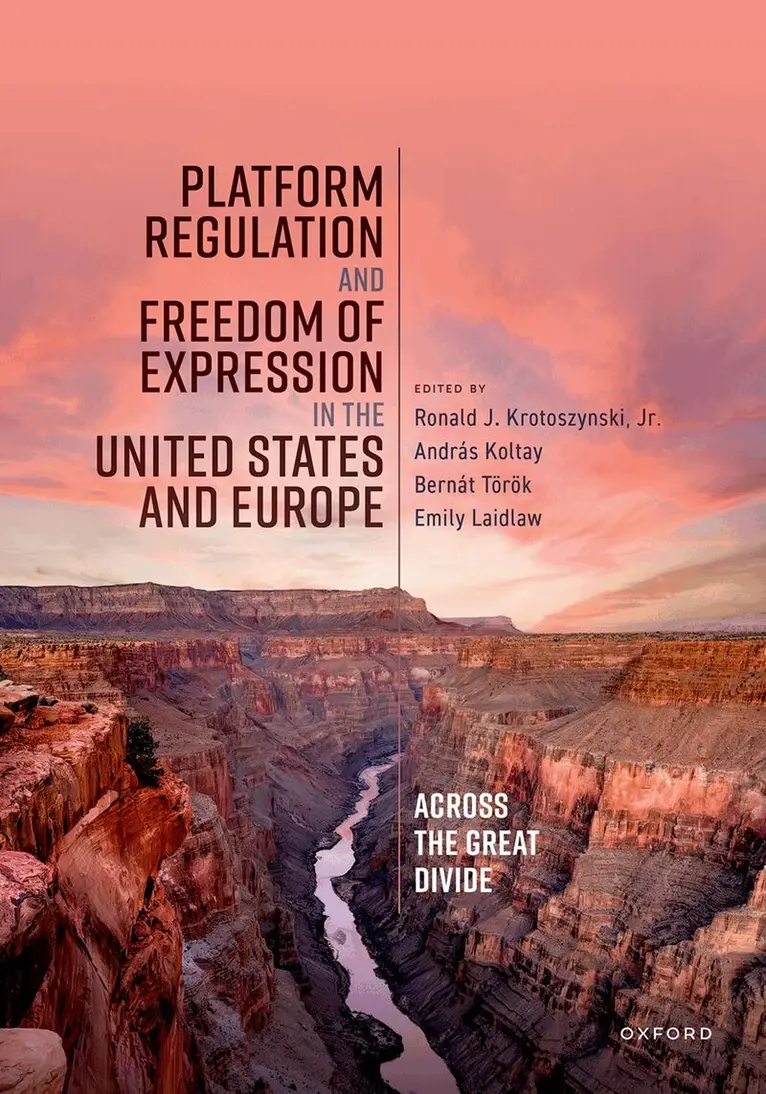
Platform Regulation and Freedom of Expression in the United States and Europe
Av Ronald J. Krotoszynski, Jr., András Koltay, Bernát Török, Emily Laidlaw
2564 kr
Kommande
Beskrivning
Platform Regulation and Freedom of Expression in the United States and Europe offers a timely examination of how today's dominant online platforms shape public discourse, information flows, and everyday life—and how democratic societies are struggling to regulate them. As social media, video-sharing platforms, and search engines become indispensable to civic participation and economic activity, they also generate increasingly complex legal and policy challenges that demand careful, comparative evaluation. This volume explores how the United States and Europe—long connected by shared democratic commitments yet separated by a “great divide” in constitutional approaches to speech—are confronting the regulatory dilemmas of the digital age. By situating the First Amendment alongside European free-expression doctrine, the book highlights both areas of overlap and deep structural differences, particularly in how each tradition conceives the state's role in safeguarding democratic deliberation. These contrasts provide a powerful lens for understanding the tensions that define contemporary platform governance. Moving from theory to practice, the book analyzes key policy developments on both sides of the Atlantic, including responses to disinformation and misinformation and emerging strategies to protect democratic institutions while respecting fundamental rights. Through this dual framework, the contributors map the evolving terrain of platform regulation and reveal the normative choices at stake. Rather than proposing a single solution, the volume seeks to clarify the terms of debate and encourage a shared understanding across legal and cultural contexts. By illuminating the sources of the “great divide” and offering pathways for constructive engagement, Platform Regulation and Freedom of Expression in the United States and Europe serves as an indispensable guide for scholars, policymakers, and practitioners committed to the future of free expression and digital democracy.
Produktinformation
- Utgivningsdatum: 2027-03-15
- Mått: 178 x 254 x undefined mm
- Format: Inbunden
- Språk: Engelska
- Antal sidor: 536
- Förlag: OUP USA
- ISBN: 9780197840979
Utforska kategorier
Betyg & recensioner
0 recensioner
Inga recensioner tillgängliga.