• Fri frakt över 249 kr
  • •
  • Snabba leveranser
  • •
  • Billiga böcker
Kundservice

Du är på sajten för privatpersoner.

Företag, bibliotek eller offentlig verksamhet?

Du handlar på classic.bokus.com, där alla dina funktioner finns intakta.
Till classic.bokus.com
Bokus logotyp. Gå till startsidan.
  • Erbjudanden
  • Nyheter
  • Student
  • Topplistor
  • Barn & ungdom
  • Bokus Play
  • E-böcker
  • Pocketböcker
  • Spel & pussel

10% rabatt på allt med kod: NYSTART10 →

Sidfot

Mina sidor

    Hjälp

    • Kundservice
    • Vanliga frågor och svar
    • Frakt och leverans
    • Retur vid ångerrätt
    • Reklamera vara
    • Betalning
    • Köpvillkor
    • Allmänna villkor
    • Information om webbplatsens tillgänglighet

    Om Bokus

    • Om oss
    • Pressrum
    • För studenter
    • För företag
    • För bibliotek och offentlig verksamhet
    • För leverantörer
    • Hållbarhet

    Populärt

    • Aktuella erbjudanden
    • Presentkort
    • Studentlitteratur
    • Nya böcker
    • Topplistor
    • Signerade böcker
    • Engelska böcker

    Inspiration

    • Boktips
    • BookTok
    • Populära bokserier
    • Barnbokskaraktärer
    • Populära författare
    Logotyp för Bokus
    Följ oss på Facebook (extern länk)Följ oss på Instagram (extern länk)Följ oss på YouTube (extern länk)Följ oss på TikTok (extern länk)
    bokus @ CookiesAnpassa cookiesIntegritetspolicyKöpvillkor
    Till Citymail hemsida (extern länk)Till Budbee hemsida (extern länk)Till Postnord hemsida (extern länk)Till Schenker hemsida (extern länk)Till Early Bird hemsida (extern länk)Till Walleys hemsida (extern länk)
    1. Historia och arkeologi
    2. Historia
    3. Historia: särskilda händelser och ämnen
    4. Socialhistoria och kulturhistoria

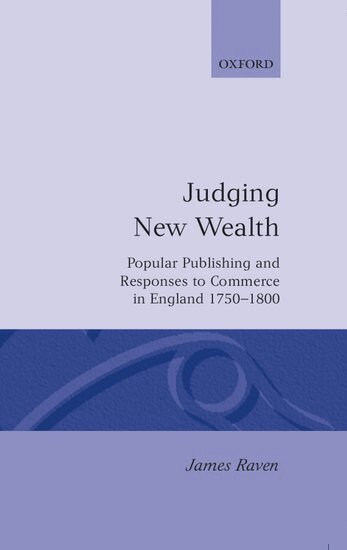
    Judging New Wealth

    Popular Publishing and Responses to Commerce in England, 1750-1800

    AvJames Raven

    Inbunden, Engelska, 1992

    3 997 kr

    Beställningsvara. Skickas inom 5-8 vardagar. Fri frakt över 249 kr.

    Beskrivning

    In this broad-ranging study, James Raven explores popular literature and the book trade in the second half of the eighteenth century. Based on intensive research into the production and sale of literature ranging from novels and magazines to courtesy books and fashionable tracts, the book examines the representation of the newly wealthy. Dr Raven challenges the notion that prejudice against the businessman was a late nineteenth-century phenomenon. He shows how, during a period of often bewildering change and instability, a competitive literature industry led reaction against excessive consumer spending, contributed to the definition of legitimate economic behaviour, and stimulated unprecedented attacks upon the social presumption of tradesmen.This is a scholarly and stimulating study which makes important contributions to debates on the supposed decline of the British industrial spirit and on the growing self-confidence of the middle class. Judging New Wealth adds very greatly to our understanding of late eighteenth-century England and its cultural and business climate.

    Produktinformation

    • Utgivningsdatum:1992-04-23
    • Mått:144 x 224 x 26 mm
    • Vikt:581 g
    • Format:Inbunden
    • Språk:Engelska
    • Antal sidor:340
    • Förlag:Clarendon Press
    • ISBN:9780198202370

    Utforska kategorier

    • Socialhistoria och kulturhistoria inom Historia och arkeologi
    • Europas historia inom Historia och arkeologi
    • Litteraturvetenskap inom Skönlitteratur

    Mer om författaren

    Raven is the author of British Fiction 1750-1770: A Chronological Check List of Prose Fiction (Delaware University Press, 1987) and The Commercialization of the Book (CUP, forthcoming).

    Recensioner i media

    Raven makes an interesting case, clearly supported with a wealth of evidence.

    Innehållsförteckning

    • Publishing profiles; booksellers and markets; promotion and defence; merchants, gentility and Christian conduct; defending trade in the provinces - the gentleman merchant and Mrs Gomersall of Leeds; vulgarity and social grammar; reactions to fashion and luxury; fears of ruination; pretensions to land; assumptive gentry and the threat to stability; historical perspectives.