Inbunden, Engelska, 2000
Epidemics and Genocide in Eastern Europe, 1890-1945
3489 kr
Skickas inom 7-10 vardagar
Beskrivning
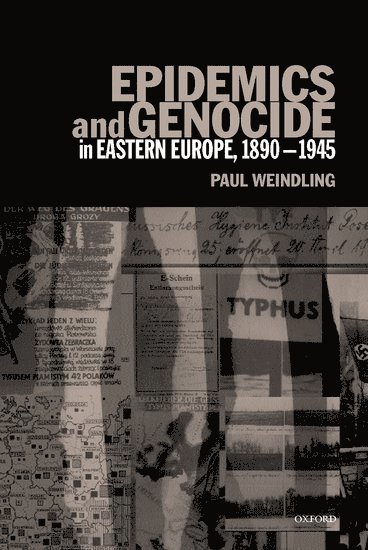
During the First World War, delousing became routine for soldiers and civilians following the recent discovery that the louse carried typhus germs. But how did typhus come to be viewed as a "Jewish disease" and what was the connection between the anti-typhus measures during the First World War and the Nazi gas chambers in the Second World War? In this powerful book, Professor Weindling draws upon wide-ranging archival research throughout East and Central Europe to the United States, to provide valuable new insight into the history of German medicine from its response to the perceived threat of typhus epidemics from its Eastern borders. He examines how German experts in tropical medicine took an increasingly racialised approach to bacteriology, regarding supposedly racially inferior peoples as carriers of the disease.So they came to view typhus as a "Jewish" disease. By the Second World War as migrants and deportees had become conditioned to expect the ordeal of delousing at border crossings, ports, railway junctions and on entry to camps, so sanitary policing became entwined with racialisation as the Germans sought to eradicate typhus by eradicating the perceived carriers. Typhus had come to assume a new and terrifying genocidal significance, as the medical authorities sealed the German frontiers against diseased undesirables from the east, and gassing became a favoured means of disease eradication.
Produktinformation
- Utgivningsdatum: 2000-02-03
- Mått: 164 x 242 x 31 mm
- Vikt: 978 g
- Format: Inbunden
- Språk: Engelska
- Antal sidor: 486
- Förlag: OUP OXFORD
- ISBN: 9780198206910
Utforska kategorier
Betyg & recensioner
0 recensioner
Inga recensioner tillgängliga.