• Fri frakt över 249 kr
  • •
  • Snabba leveranser
  • •
  • Billiga böcker
Kundservice

Du är på sajten för privatpersoner.

Företag, bibliotek eller offentlig verksamhet?

Du handlar på classic.bokus.com, där alla dina funktioner finns intakta.
Till classic.bokus.com
Bokus logotyp. Gå till startsidan.
  • Erbjudanden
  • Nyheter
  • Student
  • Topplistor
  • Barn & ungdom
  • Bokus Play
  • E-böcker
  • Pocketböcker
  • Spel & pussel

10% rabatt på allt med kod: NYSTART10 →

Sidfot

Mina sidor

    Hjälp

    • Kundservice
    • Vanliga frågor och svar
    • Frakt och leverans
    • Retur vid ångerrätt
    • Reklamera vara
    • Betalning
    • Köpvillkor
    • Allmänna villkor
    • Information om webbplatsens tillgänglighet

    Om Bokus

    • Om oss
    • Pressrum
    • För studenter
    • För företag
    • För bibliotek och offentlig verksamhet
    • För leverantörer
    • Hållbarhet

    Populärt

    • Aktuella erbjudanden
    • Presentkort
    • Studentlitteratur
    • Nya böcker
    • Topplistor
    • Signerade böcker
    • Engelska böcker

    Inspiration

    • Boktips
    • BookTok
    • Populära bokserier
    • Barnbokskaraktärer
    • Populära författare
    Logotyp för Bokus
    Följ oss på Facebook (extern länk)Följ oss på Instagram (extern länk)Följ oss på YouTube (extern länk)Följ oss på TikTok (extern länk)
    bokus @ CookiesAnpassa cookiesIntegritetspolicyKöpvillkor
    Till Citymail hemsida (extern länk)Till Budbee hemsida (extern länk)Till Postnord hemsida (extern länk)Till Schenker hemsida (extern länk)Till Early Bird hemsida (extern länk)Till Walleys hemsida (extern länk)
    1. Filosofi och religion
    2. Religion och tro
    3. Religion: allmänt

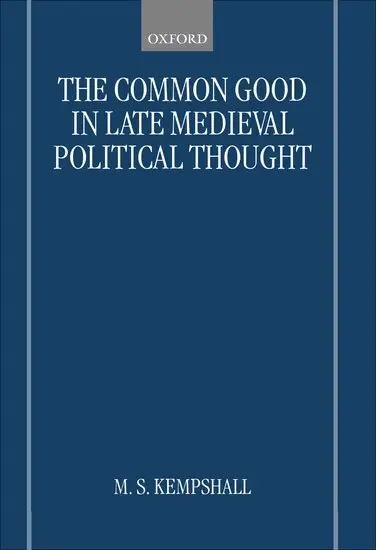
    The Common Good in Late Medieval Political Thought

    AvM. S. Kempshall

    Inbunden, Engelska, 1999

    4 731 kr

    Beställningsvara. Skickas inom 5-8 vardagar. Fri frakt över 249 kr.

    Beskrivning

    This study offers a major reinterpretation of medieval political thought by examining one of its most fundamental ideas. If it was axiomatic that the goal of human society should be the common good, then this notion presented at least two conceptual alternatives. Did it embody the highest moral ideals of happiness and the life of virtue, or did it represent the more pragmatic benefits of peace and material security? Political thinkers from Thomas Aquinas to William of Ockham answered this question in various contexts. In theoretical terms, they were reacting to the rediscovery of Aristotle's Politics and Ethics, an event often seen as pivotal in the history of political thought. On a practical level, they were faced with pressing concerns over the exercise of both temporal and ecclesiastical authority - resistance to royal taxation and opposition to the jurisdiction of the pope. In establishing the connections between these different contexts, The Common Good questions the identification of Aristotle as the primary catalyst for the emergence of 'the individual' and a 'secular' theory of the state. Through a detailed exposition of scholastic political theology, it argues that the roots of any such developments should be traced, instead, to Augustine and the Bible.

    Produktinformation

    • Utgivningsdatum:1999-05-20
    • Mått:162 x 242 x 27 mm
    • Vikt:787 g
    • Format:Inbunden
    • Språk:Engelska
    • Antal sidor:412
    • Förlag:OUP OXFORD
    • ISBN:9780198207160

    Utforska kategorier

    • Religion: allmänt inom Filosofi och religion
    • Statsvetenskap och politisk teori inom Samhälle och politik
    • Kristendom inom Filosofi och religion

    Recensioner i media

    This detailed analysis of the common good ... in scholastic philosophical and theological discourse throws critical light on the history of political ideas.

    Innehållsförteckning

    • Albertus Magnus: Aristotle and the Common Good ; Albertus Magnus: Common Good and Common Benefit ; Thomas Aquinas: Metaphysics and Hierarchy ; Thomas Aquinas: Love, Justice, and Virtue ; The Life of Virtue: Giles of Rome's De Regimine Principum ; Henry of Ghent: Self-Love and Inclusion ; Henry of Ghent: Authority, Obedience, and Resistance ; Godfrey of Fontaines: Love, Justice, and Virtue ; Godfrey of Fontaines: Authority, Obedience, and Resistance ; The Life of Virtue: Giles of Rome, James of Viterbo, and John of Paris ; Remigio dei Girolami: The Order of Love ; Remigio dei Girolami: Peace and Order ; Conclusion ; Bibliography