• Fri frakt över 249 kr
  • •
  • Snabba leveranser
  • •
  • Billiga böcker
Kundservice

Du är på sajten för privatpersoner.

Företag, bibliotek eller offentlig verksamhet?

Du handlar på classic.bokus.com, där alla dina funktioner finns intakta.
Till classic.bokus.com
Bokus logotyp. Gå till startsidan.
  • Erbjudanden
  • Nyheter
  • Student
  • Topplistor
  • Barn & ungdom
  • Bokus Play
  • E-böcker
  • Pocketböcker
  • Spel & pussel

10% studentrabatt med kod TERM26

Sidfot

Mina sidor

    Hjälp

    • Kundservice
    • Vanliga frågor och svar
    • Frakt och leverans
    • Retur vid ångerrätt
    • Reklamera vara
    • Betalning
    • Köpvillkor
    • Allmänna villkor
    • Information om webbplatsens tillgänglighet

    Om Bokus

    • Om oss
    • Pressrum
    • För studenter
    • För företag
    • För bibliotek och offentlig verksamhet
    • För leverantörer
    • Hållbarhet

    Populärt

    • Aktuella erbjudanden
    • Presentkort
    • Studentlitteratur
    • Nya böcker
    • Topplistor
    • Signerade böcker
    • Engelska böcker

    Inspiration

    • Boktips
    • BookTok
    • Populära bokserier
    • Barnbokskaraktärer
    • Populära författare
    Logotyp för Bokus
    Följ oss på Facebook (extern länk)Följ oss på Instagram (extern länk)Följ oss på YouTube (extern länk)Följ oss på TikTok (extern länk)
    bokus @ CookiesAnpassa cookiesIntegritetspolicyKöpvillkor
    Till Citymail hemsida (extern länk)Till Budbee hemsida (extern länk)Till Postnord hemsida (extern länk)Till Schenker hemsida (extern länk)Till Early Bird hemsida (extern länk)Till Walleys hemsida (extern länk)
    1. Samhälle och politik
    2. Politik och statsskick
    3. Politiskt förtryck

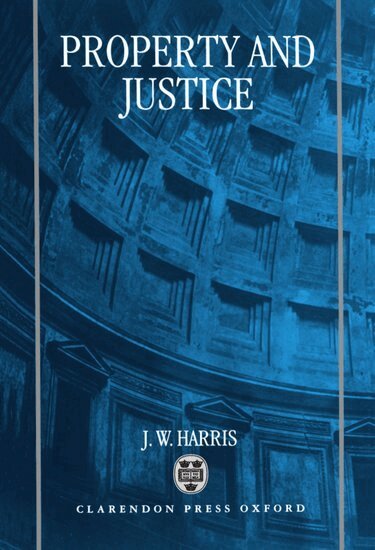
    Property and Justice

    AvJ. W. Harris

    Inbunden, Engelska, 1996

    1 385 kr

    Beställningsvara. Skickas inom 5-8 vardagar. Fri frakt över 249 kr.

    Fler format och utgåvor

    E-bok

    605 kr

    Häftad

    1 350 kr

    Beskrivning

    Property is a legal and social institution governing the use of most things and the allocation of some items of social welfare. As an institution, property is a complex organizing idea. Despite its complexity, property, as an organizing idea, is now very old and is now used worldwide. The oldest written records atttest to it. Few primitive peoples, whose societies have been researched by anthropologists, have turned out to lack any conception of it. In the modern world, any normal person will have heard of it, from childhood onwards. In the modern world, the institution of property is everywhere embodied in law. That is to say, the various organs of government deploy it, officially as part of the mechanism for controlling the use of things and as part of the mechanism for supervising or directing the allocation of wealth. This work examines the legal and philosophical underpinnings of the concept of property and offers a new alaytical framework for understanding property and justices.Bridging the gulf between juristic writing on property and speculations about it appearing in the tradition of western political philosophy, Jim Harris has built from entirely new foundations an analytical framework for understanding the nature of property and its connection with justice. Dr Harris' achievement is a monumental one marrying the subtlety of contemporary political philosophy with the fine detail of technical legislation and difficult litigation in English property law. The result greatly improves our understanding of the philosophical dimension of property and at the same time allows us to stand back from the detail and see the patterns which emerge.

    Produktinformation

    • Utgivningsdatum:1996-10-10
    • Mått:163 x 243 x 29 mm
    • Vikt:830 g
    • Format:Inbunden
    • Språk:Engelska
    • Antal sidor:414
    • Förlag:Clarendon Press
    • ISBN:9780198259572

    Utforska kategorier

    • Politiskt förtryck inom Samhälle och politik
    • Fastighets- och egendomsrätt inom Juridik

    Recensioner i media

    the book gets full marks for opening up discussions of several crucial features of property institutions, and for challenging received views on such topics as ownership of one's body and the status of rights to property. All in all, this is a book students of political philosophy should read, and it makes a welcome addition to the body of good work that has been produced on property in the past decade. Indeed, it is probably the best book on property we now have.