• Fri frakt över 249 kr
  • •
  • Snabba leveranser
  • •
  • Billiga böcker
Kundservice

Du är på sajten för privatpersoner.

Företag, bibliotek eller offentlig verksamhet?

Du handlar på classic.bokus.com, där alla dina funktioner finns intakta.
Till classic.bokus.com
Bokus logotyp. Gå till startsidan.
  • Erbjudanden
  • Nyheter
  • Student
  • Topplistor
  • Barn & ungdom
  • Bokus Play
  • E-böcker
  • Pocketböcker
  • Spel & pussel

10% rabatt på allt med kod: NYSTART10 →

Sidfot

Mina sidor

    Hjälp

    • Kundservice
    • Vanliga frågor och svar
    • Frakt och leverans
    • Retur vid ångerrätt
    • Reklamera vara
    • Betalning
    • Köpvillkor
    • Allmänna villkor
    • Information om webbplatsens tillgänglighet

    Om Bokus

    • Om oss
    • Pressrum
    • För studenter
    • För företag
    • För bibliotek och offentlig verksamhet
    • För leverantörer
    • Hållbarhet

    Populärt

    • Aktuella erbjudanden
    • Presentkort
    • Studentlitteratur
    • Nya böcker
    • Topplistor
    • Signerade böcker
    • Engelska böcker

    Inspiration

    • Boktips
    • BookTok
    • Populära bokserier
    • Barnbokskaraktärer
    • Populära författare
    Logotyp för Bokus
    Följ oss på Facebook (extern länk)Följ oss på Instagram (extern länk)Följ oss på YouTube (extern länk)Följ oss på TikTok (extern länk)
    bokus @ CookiesAnpassa cookiesIntegritetspolicyKöpvillkor
    Till Citymail hemsida (extern länk)Till Budbee hemsida (extern länk)Till Postnord hemsida (extern länk)Till Schenker hemsida (extern länk)Till Early Bird hemsida (extern länk)Till Walleys hemsida (extern länk)
    1. Historia och arkeologi
    2. Historia
    3. Europas historia

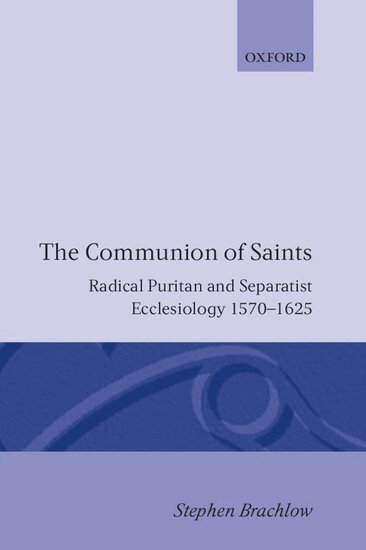
    The Communion of Saints

    Radical Puritan and Separatist Ecclesiology 1570-1625

    AvStephen Brachlow

    Inbunden, Engelska, 1988

    Del i serien Oxford Theological Monographs

    3 343 kr

    Beställningsvara. Skickas inom 5-8 vardagar. Fri frakt över 249 kr.

    Beskrivning

    This study of left-wing puritan and separatist ecclesiology in Elizabethan and Jacobean England explores several major ecclesial motifs, including the relationship of soteriology, eschatology, and puritan covenant thought to ecclesiology; radical puritan and separatist ideals about the government of gathered churches; the role of synodical authority; and the relationship between church and state. Instead of looking at pre-revolutionary dissent in terms of two distinct ecclesiological categories of radical puritan `presbyterians' and separatist `congregationalists', the author underlines the shared ecclesiological ideals of both traditions. While recognizing that there were presbyterian as well as congregational tendencies within each of the two movements, he argues that they were by no means always clear, nor denominationally fixed. It was an ecclesiology still in its infancy, largely untested by the moulding of long-standing, unhindered practice, and bearing within itself the possibilities of development in more than one direction. For this reason, radical puritan polity would prove to be a rich and many-layered source, providing an ideology that could be manipulated by both Independents and Presbyterians for historical support of their respective polities, when denominationalism began in the mid- seventeenth century.

    Produktinformation

    • Utgivningsdatum:1988-11-17
    • Mått:144 x 225 x 22 mm
    • Vikt:535 g
    • Format:Inbunden
    • Språk:Engelska
    • Serie:Oxford Theological Monographs
    • Antal sidor:304
    • Förlag:OUP OXFORD
    • ISBN:9780198267263

    Utforska kategorier

    • Europas historia inom Historia och arkeologi
    • Kristendom inom Filosofi och religion

    Recensioner i media

    'Dr Brachlow announces what he has found, with assurance and without prejudice'Geoffrey F. Nuttall, Journal of Theological Studies

    Innehållsförteckning

    • Introduction. Ecclesiology and soteriology; history and the future; church membership and saving faith; visible saints and the logic of Anabaptism; government of the gathered church - democracy and aristocracy; autonomy and uniformity between the gathered congregations; church and magistrate. Conclusion. References. Index.