Häftad, Engelska, 2001
The Self-Made Tapestry
Av Ball
1176 kr
Beställningsvara. Skickas inom 7-10 vardagar. Fri frakt över 249 kr.
Beskrivning
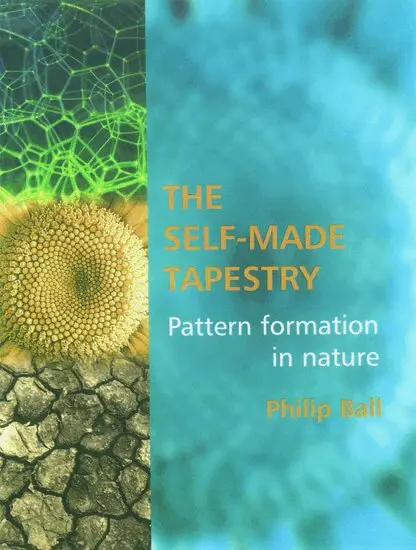
Why do similar patterns and forms appear in nature in settings that seem to bear no relation to one another? The windblown ripples of desert sand follow a sinuous course that resembles the stripes of a zebra or a marine fish. In the trellis-like shells of microscopic sea creatures we see the same angles and intersections as for bubble walls in a foam. The forks of lightning mirror the branches of a river or a tree. This book explains why these are no coincidences. Nature commonly weaves its tapestry by self-organization, employing no master plan or blueprint but by simple, local interactions between its component parts - be they grains of sand, diffusing molecules or living cells. And the products of self- organization are typically universal patterns: spirals, spots, and stripes, branches, honeycombs. This book explains, in non-technical language, and with profuse illustrations, how nature's patterns are made.
Produktinformation
- Utgivningsdatum: 2001-07-05
- Mått: 189 x 247 x 18 mm
- Vikt: 634 g
- Format: Häftad
- Språk: Engelska
- Antal sidor: 296
- Förlag: OUP OXFORD
- ISBN: 9780198502432
Utforska kategorier
Betyg & recensioner
0 recensioner
Inga recensioner tillgängliga.