• Fri frakt över 249 kr
  • •
  • Snabba leveranser
  • •
  • Billiga böcker
Kundservice

Du är på sajten för privatpersoner.

Företag, bibliotek eller offentlig verksamhet?

Du handlar på classic.bokus.com, där alla dina funktioner finns intakta.
Till classic.bokus.com
Bokus logotyp. Gå till startsidan.
  • Erbjudanden
  • Nyheter
  • Student
  • Topplistor
  • Barn & ungdom
  • Bokus Play
  • E-böcker
  • Pocketböcker
  • Spel & pussel

10% rabatt på allt med kod: NYSTART10 →

Sidfot

Mina sidor

    Hjälp

    • Kundservice
    • Vanliga frågor och svar
    • Frakt och leverans
    • Retur vid ångerrätt
    • Reklamera vara
    • Betalning
    • Köpvillkor
    • Allmänna villkor
    • Information om webbplatsens tillgänglighet

    Om Bokus

    • Om oss
    • Pressrum
    • För studenter
    • För företag
    • För bibliotek och offentlig verksamhet
    • För leverantörer
    • Hållbarhet

    Populärt

    • Aktuella erbjudanden
    • Presentkort
    • Studentlitteratur
    • Nya böcker
    • Topplistor
    • Signerade böcker
    • Engelska böcker

    Inspiration

    • Boktips
    • BookTok
    • Populära bokserier
    • Barnbokskaraktärer
    • Populära författare
    Logotyp för Bokus
    Följ oss på Facebook (extern länk)Följ oss på Instagram (extern länk)Följ oss på YouTube (extern länk)Följ oss på TikTok (extern länk)
    bokus @ CookiesAnpassa cookiesIntegritetspolicyKöpvillkor
    Till Citymail hemsida (extern länk)Till Budbee hemsida (extern länk)Till Postnord hemsida (extern länk)Till Schenker hemsida (extern länk)Till Early Bird hemsida (extern länk)Till Walleys hemsida (extern länk)
    1. Psykologi och pedagogik
    2. Psykologi
    3. Barnpsykologi och utvecklingspsykologi

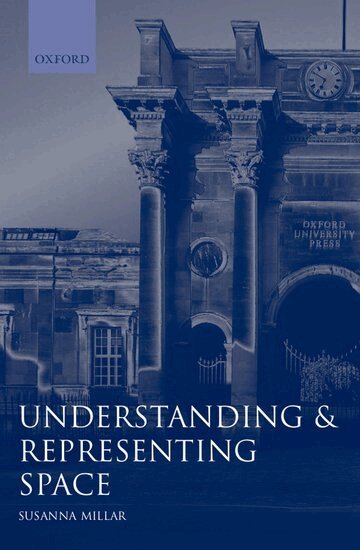
    Understanding and Representing Space

    Theory and Evidence from Studies with Blind and Sighted Children

    AvSusanna Millar

    Inbunden, Engelska, 1994

    Del i serien OUP Oxford

    1 960 kr

    Beställningsvara. Skickas inom 5-8 vardagar. Fri frakt över 249 kr.

    Beskrivning

    This book breaks new ground in our understanding of how we perceive and represent the space around us - one of the central topics in cognitive psychology. It presents a new view of development and spatial cognition by reversing the usual focus on vision and examining the evidence on representation in the total absence of vision without specific brain damage. Findings from the author's work with congenitally totally blind and with sighted children, together with studies from a wide variety of other areas, are set in the context of intersensory and spatial development. Touch and movement are considered as converging sources of reference information with and without vision. The findings have important implications for future work in many fields, particularly developmental pscychology; cognition, cognitive neuroscience and visual handicap, and make this new work essential reading for students and researchers in these fields.

    Produktinformation

    • Utgivningsdatum:1994-10-27
    • Mått:160 x 241 x 23 mm
    • Vikt:623 g
    • Format:Inbunden
    • Språk:Engelska
    • Serie:OUP Oxford
    • Antal sidor:324
    • Upplaga:1998
    • Förlag:Clarendon Press
    • ISBN:9780198521426

    Utforska kategorier

    • Barnpsykologi och utvecklingspsykologi inom Psykologi och pedagogik
    • Kognitiv psykologi inom Psykologi och pedagogik
    • Specialundervisning inom Psykologi och pedagogik

    Recensioner i media

    we have here a very considerable achievement ... particularly welcome ... Susanna Millar, for her work in the field, has deserved a celebratory festschrift; the only problem is that this volume will be a very difficult act to follow!

    Innehållsförteckning

    • Introduction: questions and terms ; 1. Modality and cognition in developmental theories and evidence ; 2. The modalities as convergent sources of spatial information ; 3. Neuropsychological evidence on convergence ; 4. Shape coding by vision and touch ; 5. Spatial coding: studies in small-scale space ; 6. Information and understanding large-scale space ; 7. Non-verbal representation: images, drawings, maps, and memory ; 8. Some practical implications ; 9. A theory of spatial understanding and development