• Fri frakt över 249 kr
  • •
  • Snabba leveranser
  • •
  • Billiga böcker
Kundservice

Du är på sajten för privatpersoner.

Företag, bibliotek eller offentlig verksamhet?

Du handlar på classic.bokus.com, där alla dina funktioner finns intakta.
Till classic.bokus.com
Bokus logotyp. Gå till startsidan.
  • Erbjudanden
  • Nyheter
  • Student
  • Topplistor
  • Barn & ungdom
  • Bokus Play
  • E-böcker
  • Pocketböcker
  • Spel & pussel

10% rabatt på allt med kod: NYSTART10 →

Sidfot

Mina sidor

    Hjälp

    • Kundservice
    • Vanliga frågor och svar
    • Frakt och leverans
    • Retur vid ångerrätt
    • Reklamera vara
    • Betalning
    • Köpvillkor
    • Allmänna villkor
    • Information om webbplatsens tillgänglighet

    Om Bokus

    • Om oss
    • Pressrum
    • För studenter
    • För företag
    • För bibliotek och offentlig verksamhet
    • För leverantörer
    • Hållbarhet

    Populärt

    • Aktuella erbjudanden
    • Presentkort
    • Studentlitteratur
    • Nya böcker
    • Topplistor
    • Signerade böcker
    • Engelska böcker

    Inspiration

    • Boktips
    • BookTok
    • Populära bokserier
    • Barnbokskaraktärer
    • Populära författare
    Logotyp för Bokus
    Följ oss på Facebook (extern länk)Följ oss på Instagram (extern länk)Följ oss på YouTube (extern länk)Följ oss på TikTok (extern länk)
    bokus @ CookiesAnpassa cookiesIntegritetspolicyKöpvillkor
    Till Citymail hemsida (extern länk)Till Budbee hemsida (extern länk)Till Postnord hemsida (extern länk)Till Schenker hemsida (extern länk)Till Early Bird hemsida (extern länk)Till Walleys hemsida (extern länk)
    1. Naturvetenskap och teknik
    2. Matematik och naturvetenskap
    3. Biologi
    4. Groddjur och reptiler

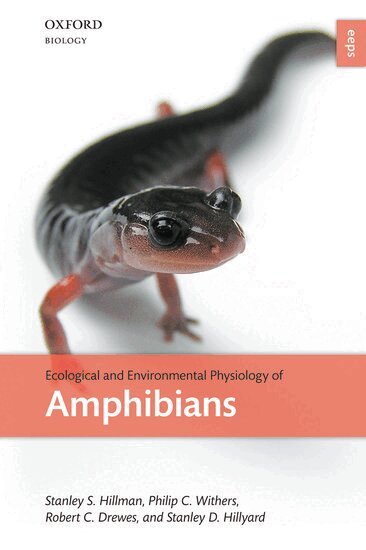
    Ecological and Environmental Physiology of Amphibians

    AvStanley S. Hillman,Philip C. Withers

    Häftad, Engelska, 2008

    Del i serien Environmental & Ecological Physiology

    1 036 kr

    Beställningsvara. Skickas inom 7-10 vardagar. Fri frakt över 249 kr.

    Fler format och utgåvor

    Inbunden

    2 803 kr

    Beskrivning

    Amphibians are the extant descendants of the first vertebrate class to successfully colonize terrestrial environments; hence they occupy a unique position between fish and reptiles. Amphibian skin provides essentially no resistance to evaporative water loss, and consequently daily water turnover rates are an order of magnitude greater than in other terrestrial vertebrate groups. This has led to a suite of physiological, morphological and behavioural adaptations that have allowed a successful terrestrial existence in spite of this apparently spendthrift water retention strategy. Ecological and Environmental Physiology of Amphibians provides a synthesis of current research on the comparative physiology of amphibians with a particular emphasis on water balance. It adopts a strong environmental perspective and includes a wealth of information on ecology, phylogeny and development. As with other books in the Ecological and Environmental Physiology Series, the emphasis in this book is on the unique physiological characteristics of the amphibians, although the latest experimental techniques and future research directions are also considered. This accessible text is suitable for both graduate students and researchers in the fields of amphibian comparative physiology and physiological ecology, including specialist courses in amphibian ecology. It will also be of value and use to the many professional herpetologists requiring a concise overview of the topic.

    Produktinformation

    • Utgivningsdatum:2008-10-30
    • Mått:156 x 234 x 24 mm
    • Vikt:827 g
    • Format:Häftad
    • Språk:Engelska
    • Serie:Environmental & Ecological Physiology
    • Antal sidor:488
    • Förlag:OUP OXFORD
    • ISBN:9780198570325

    Utforska kategorier

    • Groddjur och reptiler inom Naturvetenskap och teknik
    • Reptiler och groddjur inom Djur och Natur
    • Folkhälsa och hälsopedagogik inom Medicin

    Mer om författaren

    Stan Hillman is Professor and Chair of Biology at Portland State University. He obtained his Ph.D. in 1977 from the University of California, Los Angeles. He is the author of many papers on aspects of the osmotic, metabolic and cardiovascular physiology of amphibians from three continents.Philip Withers is Professor of Zoology at the University of Western Australia. He obtained his Ph.D. in 1976 from the University of California, Los Angeles. He is the author of over 200 publications on the physiology and ecology of vertebrates, and has extensive research experience with metabolic, osmotic and cardiovascular physiology of amphibians from four continents. He is the author of a textbook on Comparative Animal Physiology.Robert Drewes is Curator of Herpetology at the California Academy of Sciences. He obtained his Ph.D. in 1981 from the University of California, Los Angeles. He is the author of over 70 papers and two books on aspects of amphibian taxonomy, distributions and environmental physiology from species spanning three continents. He brings the taxonomic expertise so important in phylogenetic analyses of variation as well as an incredible field experience of the African amphibian fauna; he curates one of the largest museum collections of African amphibians and reptiles in the world.Stan Hillyard is Professor of Biology at the University of Nevada, Las Vegas. He ontained his Ph.D. in 1974 from the University of California, Riverside. He is the author of over 50 papers on aspects of the control of cutaneous water and ion absorption in amphibian skin. He has a unique background in the utilization of amphibians as model systems for general physiology, with a strong appreciation for grounding in environmental relevance. He also has extensive experience with researchers and the amphibian fauna of Europe.

    Recensioner i media

    An important and significant resource, with an excellent review of the state of our current understanding of amphibian physiology.

    Innehållsförteckning

    • 1. Introduction ; 2. General Physiological Principles ; 3. Specialized Physiological Characteristics of Amphibia ; 4. Physiological Adaptations to Extreme Environments ; 5. Approaches and Techniques ; 6. Conclusions and Future Directions