• Fri frakt över 249 kr
  • •
  • Snabba leveranser
  • •
  • Billiga böcker
Kundservice

Du är på sajten för privatpersoner.

Företag, bibliotek eller offentlig verksamhet?

Du handlar på classic.bokus.com, där alla dina funktioner finns intakta.
Till classic.bokus.com
Bokus logotyp. Gå till startsidan.
  • Erbjudanden
  • Student
  • Topplistor
  • Barn & ungdom
  • Bokus Play
  • E-böcker
  • Ljudböcker
  • Pocketböcker
  • Spel & pussel

Upp till 25% på utvalda nyheter →

Sidfot

Mina sidor

    Hjälp

    • Kundservice
    • Vanliga frågor och svar
    • Frakt och leverans
    • Retur vid ångerrätt
    • Reklamera vara
    • Betalning
    • Köpvillkor
    • Allmänna villkor
    • Information om webbplatsens tillgänglighet

    Om Bokus

    • Om oss
    • Pressrum
    • För studenter
    • För företag
    • För bibliotek och offentlig verksamhet
    • För leverantörer
    • Hållbarhet

    Populärt

    • Aktuella erbjudanden
    • Presentkort
    • Studentlitteratur
    • Nya böcker
    • Topplistor
    • Signerade böcker
    • Engelska böcker

    Inspiration

    • Boktips
    • BookTok
    • Populära bokserier
    • Barnbokskaraktärer
    • Populära författare
    Logotyp för Bokus
    Följ oss på Facebook (extern länk)Följ oss på Instagram (extern länk)Följ oss på YouTube (extern länk)Följ oss på TikTok (extern länk)
    bokus @ CookiesAnpassa cookiesIntegritetspolicyKöpvillkor
    Till Citymail hemsida (extern länk)Till Budbee hemsida (extern länk)Till Postnord hemsida (extern länk)Till Schenker hemsida (extern länk)Till Early Bird hemsida (extern länk)Till Walleys hemsida (extern länk)
    1. Medicin
    2. Medicin: allmänt
    3. Medicinhistoria

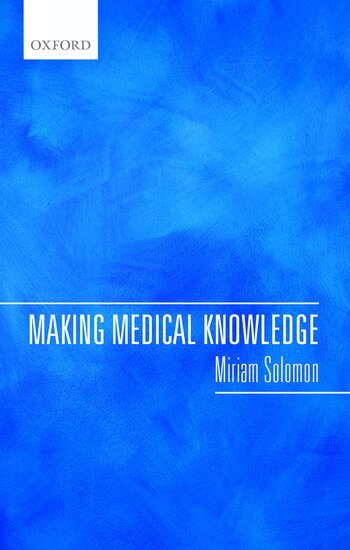
    Making Medical Knowledge

    AvMiriam Solomon

    Inbunden, Engelska, 2015

    1 688 kr

    Beställningsvara. Skickas inom 5-8 vardagar. Fri frakt över 249 kr.

    Fler format och utgåvor

    E-bok

    338 kr

    E-bok

    338 kr

    Häftad

    380 kr

    Beskrivning

    How is medical knowledge made? New methods for research and clinical care have reshaped the practices of medical knowledge production over the last forty years. Consensus conferences, evidence-based medicine, translational medicine, and narrative medicine are among the most prominent new methods. Making Medical Knowledge explores their origins and aims, their epistemic strengths, and their epistemic weaknesses. Miriam Solomon argues that the familiar dichotomy between the art and the science of medicine is not adequate for understanding this plurality of methods. The book begins by tracing the development of medical consensus conferences, from their beginning at the United States' National Institutes of Health in 1977, to their widespread adoption in national and international contexts. It discusses consensus conferences as social epistemic institutions designed to embody democracy and achieve objectivity. Evidence-based medicine, which developed next, ranks expert consensus at the bottom of the evidence hierarchy, thus challenging the authority of consensus conferences. Evidence-based medicine has transformed both medical research and clinical medicine in many positive ways, but it has also been accused of creating an intellectual hegemony that has marginalized crucial stages of scientific research, particularly scientific discovery. Translational medicine is understood as a response to the shortfalls of both consensus conferences and evidence-based medicine. Narrative medicine is the most prominent recent development in the medical humanities. Its central claim is that attention to narrative is essential for patient care. Solomon argues that the differences between narrative medicine and the other methods have been exaggerated, and offers a pluralistic account of how the all the methods interact and sometimes conflict. The result is both practical and theoretical suggestions for how to improve medical knowledge and understand medical controversies.

    Produktinformation

    • Utgivningsdatum:2015-04-02
    • Mått:150 x 222 x 23 mm
    • Vikt:484 g
    • Format:Inbunden
    • Språk:Engelska
    • Antal sidor:278
    • Förlag:OUP OXFORD
    • ISBN:9780198732617

    Utforska kategorier

    • Medicinhistoria inom Medicin
    • Filosofiska discipliner inom Filosofi och religion
    • Naturvetenskapens filosofi inom Naturvetenskap och teknik

    Mer om författaren

    Miriam Solomon is Professor of Philosophy at Temple University. She has a BA in Natural Sciences from Cambridge University and a PhD in Philosophy from Harvard University. Her first book was Social Empiricism (MIT Press, 2001) and she is the author of many articles in philosophy of medicine, philosophy of science, gender and science, epistemology and bioethics. She is a Fellow of the College of Physicians of Philadelphia.

    Recensioner i media

    This is an impressive and important book. It is full of useful examples and case studies from medicine that help to make original points. And many of these points seem to me to be correct: in medicine, there is a plurality of methods, and these methods should be judged on their merits rather than by appealing to a hierarchy of methods. Solomon's historical approach to these issues is a productive way to proceed. It furthers the debate about the strengths and weaknesses of the various methods used in medical research and practice by providing a more complete picture of the relationships between these methods. It is a must-read for anyone interested in the epistemology of medicine or philosophy of science more generally. It is also beautifully written, with clear and informative prose, and concise summaries of the conclusions at regular intervals.

    Innehållsförteckning

    • 1. Introduction: Beyond the art and science of medicine ; 2. 'NIH's window to the health care community': the NIH Consensus Development Conference Program ; 3. From the NIH model to the Danish model: the medical consensus conference movement ; 4. Philosophical interlude: objectivity and democracy in consensus conferences ; 5. Evidence-based medicine as empiric medicine ; 6. The fallibility of evidence-based medicine ; 7. What is translational medicine? ; 8. On narrative medicine ; 9. A developing, untidy, methodological pluralism ; Concluding thoughts ; Bibliography ; Index