Inbunden, Engelska, 2017
The End of Outrage
743 kr
Beställningsvara. Skickas inom 3-6 vardagar. Fri frakt över 249 kr.
Beskrivning
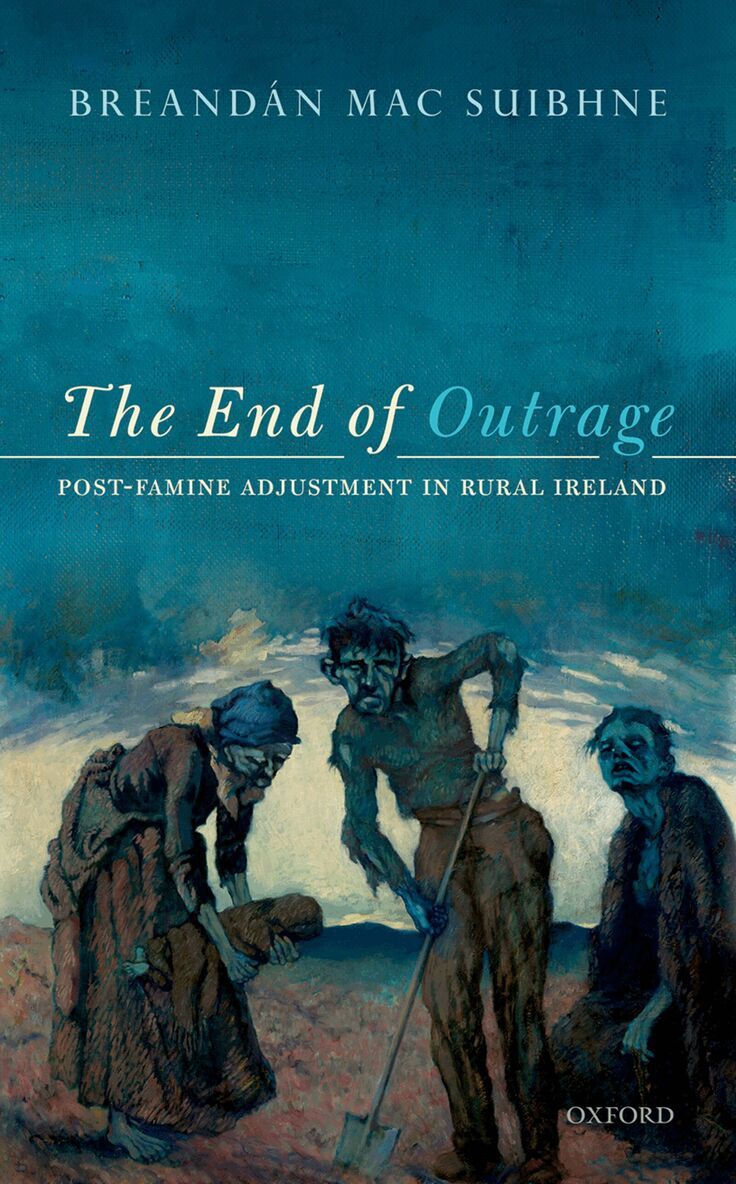
South-west Donegal, Ireland, June 1856. From the time that the blight first came on the potatoes in 1845, armed and masked men dubbed Molly Maguires had been raiding the houses of people deemed to be taking advantage of the rural poor. On some occasions, they represented themselves as 'Molly's Sons', sent by their mother, to carry out justice; on others, a man attired as a woman, introducing 'herself' as Molly Maguire, demanding redress for wrongs inflicted on her children. The raiders might stipulate the maximum price at which provisions were to be sold, warn against the eviction of tenants, or demand that an evicted family be reinstated to their holding. People who refused to meet their demands were often viciously beaten and, in some instances, killed -- offences that the Constabulary classified as 'outrages'. Catholic clergymen regularly denounced the Mollies and in 1853, the district was proclaimed under the Crime and Outrage (Ireland) Act. Yet the 'outrages' continued. Then, in 1856, Patrick McGlynn, a young schoolmaster, suddenly turned informer on the Mollies, precipitating dozens of arrests. Here, a history of McGlynn's informing, backlit by episodes over the previous two decades, sheds light on that wave of outrage, its origins and outcomes, the meaning and the memory of it. More specifically, it illuminates the end of 'outrage' -- the shifting objectives of those who engaged in it, and also how, after hunger faded and disease abated, tensions emerged in the Molly Maguires, when one element sought to curtail such activity, while another sought, unsuccessfully, to expand it. And in that contention, when the opportunities of post-Famine society were coming into view, one glimpses the end, or at least an ebbing, of outrage -- in the everyday sense of moral indignation -- at the fate of the rural poor. But, at heart, The End of Outrage is about contention among neighbours -- a family that rose from the ashes of a mode of living, those consumed in the conflagration, and those who lost much but not all. Ultimately, the concern is how the poor themselves came to terms with their loss: how their own outrage at what had been done unto them and their forbears lost malignancy, and eventually ended. The author being a native of the small community that is the focus of The End of Outrage makes it an extraordinarily intimate and absorbing history.
Produktinformation
- Utgivningsdatum: 2017-08-17
- Mått: 151 x 223 x 24 mm
- Vikt: 548 g
- Format: Inbunden
- Språk: Engelska
- Antal sidor: 338
- Förlag: OUP OXFORD
- ISBN: 9780198738619
- Utmärkelser: Winner of the 2018 Michel Déon Prize for Non-Fiction, awarded by the Royal Irish AcademyWinner of the 2017 James S. Donnelly, Sr. Prize for Books on History and Social Sciences, awarded by the American Conference for Irish Studies.Irish Times Critics' Choice for Irish Non-fiction Book of the Year 2017.Nominated for the 2018 IrishCentral Creativity & Arts award in the 'Written Word' category.
Utforska kategorier
Betyg & recensioner
0 recensioner
Inga recensioner tillgängliga.