• Fri frakt över 249 kr
  • •
  • Snabba leveranser
  • •
  • Billiga böcker
Kundservice

Du är på sajten för privatpersoner.

Företag, bibliotek eller offentlig verksamhet?

Du handlar på classic.bokus.com, där alla dina funktioner finns intakta.
Till classic.bokus.com
Bokus logotyp. Gå till startsidan.
  • Erbjudanden
  • Student
  • Topplistor
  • Barn & ungdom
  • Bokus Play
  • E-böcker
  • Ljudböcker
  • Pocketböcker
  • Spel och pussel

Pocketfynda! Hundratals böcker för 49 kr/st →

Sidfot

Mina sidor

    Hjälp

    • Kundservice
    • Vanliga frågor och svar
    • Frakt och leverans
    • Retur vid ångerrätt
    • Reklamera vara
    • Betalning
    • Köpvillkor
    • Allmänna villkor
    • Information om webbplatsens tillgänglighet

    Om Bokus

    • Om oss
    • Pressrum
    • För studenter
    • För företag
    • För bibliotek och offentlig verksamhet
    • För leverantörer
    • Hållbarhet

    Populärt

    • Aktuella erbjudanden
    • Presentkort
    • Studentlitteratur
    • Nya böcker
    • Topplistor
    • Signerade böcker
    • Engelska böcker

    Inspiration

    • Boktips
    • BookTok
    • Barnbokskaraktärer
    • Populära författare
    Logotyp för Bokus
    Följ oss på Facebook (extern länk)Följ oss på Instagram (extern länk)Följ oss på YouTube (extern länk)Följ oss på TikTok (extern länk)
    bokus @ CookiesAnpassa cookiesIntegritetspolicyKöpvillkor
    Till Citymail hemsida (extern länk)Till Budbee hemsida (extern länk)Till Postnord hemsida (extern länk)Till Schenker hemsida (extern länk)Till Early Bird hemsida (extern länk)Till Walleys hemsida (extern länk)
    1. Språk och ordböcker
    2. Språkvetenskap och lingvistik

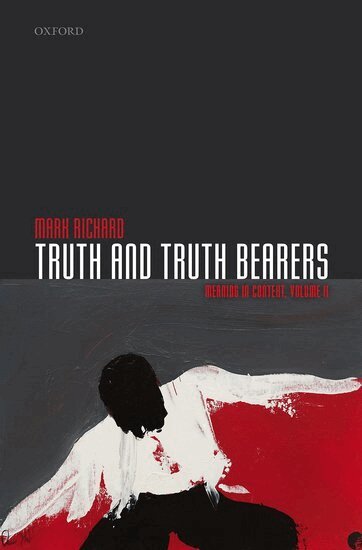
    Truth and Truth Bearers

    Meaning in Context, Volume II

    AvMark Richard

    Inbunden, Engelska, 2015

    1 488 kr

    Beställningsvara. Skickas inom 5-8 vardagar. Fri frakt över 249 kr.

    Fler format och utgåvor

    E-bok

    941 kr

    Beskrivning

    This book collects nine seminal essays by Mark Richard published between 1980 and 2014, alongside four new essays and an introduction that puts the essays in context. Each essay is an attempt, in one way or another, to understand the idea of a proposition. Part I discusses whether the objects of thought and assertion can change truth value over time. Part II develops and defends a relativist view of the objects of assertion and thought; it includes discussions of the nature of disagreement, moral relativism, and responds to important objections to relativism. It also explores the idea that thoughts and assertions may be neither true nor false. Part III discusses issues having to do with relations between sentential and propositional structure. Among the topics discussed in Part III are the semantics of quotation, 'mixed quotation', opacity, philosophical analysis and propositional structure, and the semantics of demonstratives and clausal complements.

    Produktinformation

    • Utgivningsdatum:2015-10-29
    • Mått:170 x 241 x 23 mm
    • Vikt:614 g
    • Format:Inbunden
    • Språk:Engelska
    • Antal sidor:298
    • Förlag:OUP OXFORD
    • ISBN:9780198747765

    Utforska kategorier

    • Språkvetenskap och lingvistik inom Språk och ordböcker
    • Filosofiska discipliner inom Filosofi och religion

    Mer om författaren

    Mark Richard is a Professor of Philosophy at Harvard University. He is the author of Context and the Attitudes: Meaning in Context, Volume 1 (OUP, 2013), Propositional Attitudes (CUP, 1990), When Truth Gives Out (OUP, 2008), and the editor of Meaning (Blackwell, 2002).

    Recensioner i media

    Like the previous volume [Context and the Attitudes], this one includes both important papers that deservedly had a great impact on contemporary philosophy and some new material; hence it is very welcome. Researchers working on the philosophy of language (broadly conceived), the philosophy of mind, and metaphysics will want to have both compilations at hand.

    Innehållsförteckning

    • I. TIME, TENSE, AND TRUTH; II. RELATIVISM, TRUTH BEARERS, AND INDETERMINACY; III. QUOTATION, PROPOSITIONAL STRUCTURE, AND SEMANTIC COMPETENCE