• Fri frakt över 249 kr
  • •
  • Snabba leveranser
  • •
  • Billiga böcker
Kundservice

Du är på sajten för privatpersoner.

Företag, bibliotek eller offentlig verksamhet?

Du handlar på classic.bokus.com, där alla dina funktioner finns intakta.
Till classic.bokus.com
Bokus logotyp. Gå till startsidan.
  • Erbjudanden
  • Nyheter
  • Student
  • Topplistor
  • Barn & ungdom
  • Bokus Play
  • E-böcker
  • Pocketböcker
  • Spel & pussel

10% rabatt på allt med kod NYSTART10 →

Sidfot

Mina sidor

    Hjälp

    • Kundservice
    • Vanliga frågor och svar
    • Frakt och leverans
    • Retur vid ångerrätt
    • Reklamera vara
    • Betalning
    • Köpvillkor
    • Allmänna villkor
    • Information om webbplatsens tillgänglighet

    Om Bokus

    • Om oss
    • Pressrum
    • För studenter
    • För företag
    • För bibliotek och offentlig verksamhet
    • För leverantörer
    • Hållbarhet

    Populärt

    • Aktuella erbjudanden
    • Presentkort
    • Studentlitteratur
    • Nya böcker
    • Topplistor
    • Signerade böcker
    • Engelska böcker

    Inspiration

    • Boktips
    • BookTok
    • Populära bokserier
    • Barnbokskaraktärer
    • Populära författare
    Logotyp för Bokus
    Följ oss på Facebook (extern länk)Följ oss på Instagram (extern länk)Följ oss på YouTube (extern länk)Följ oss på TikTok (extern länk)
    bokus @ CookiesAnpassa cookiesIntegritetspolicyKöpvillkor
    Till Citymail hemsida (extern länk)Till Budbee hemsida (extern länk)Till Postnord hemsida (extern länk)Till Schenker hemsida (extern länk)Till Early Bird hemsida (extern länk)Till Walleys hemsida (extern länk)
    1. Historia och arkeologi
    2. Historia
    3. Militärhistoria
    4. Andra världskriget

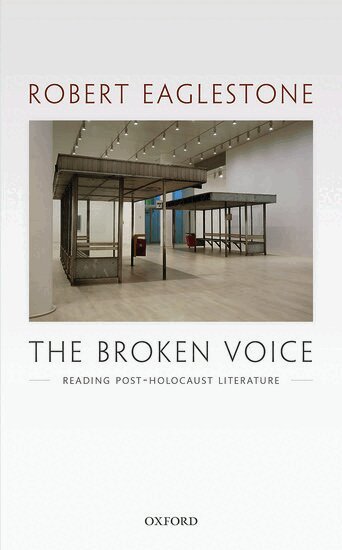
    The Broken Voice

    Reading Post-Holocaust Literature

    AvRobert Eaglestone

    Inbunden, Engelska, 2017

    1 215 kr

    Beställningsvara. Skickas inom 7-10 vardagar. Fri frakt över 249 kr.

    Beskrivning

    'Which writer today is not a writer of the Holocaust?' asked the late Imre Kertész, Hungarian survivor and novelist, in his Nobel acceptance speech: 'one does not have to choose the Holocaust as one's subject to detect the broken voice that has dominated modern European art for decades'. Robert Eaglestone attends to this broken voice in literature in order to explore the meaning of the Holocaust in the contemporary world, arguing, again following Kertész, that the Holocaust will 'remain through culture, which is really the vessel of memory'. Drawing on the thought of Hannah Arendt, Eaglestone identifies and develops five concepts--the public secret, evil, stasis, disorientalism, and kitsch--in a range of texts by significant writers (including Kazuo Ishiguro, Jonathan Littell, Imre Kertész, W. G. Sebald, and Joseph Conrad) as well as in work by victims and perpetrators of the Holocaust and of atrocities in Africa. He explores the interweaving of complicity, responsibility, temporality, and the often problematic powers of narrative which make up some part of the legacy of the Holocaust.

    Produktinformation

    • Utgivningsdatum:2017-06-08
    • Mått:145 x 222 x 18 mm
    • Vikt:382 g
    • Format:Inbunden
    • Språk:Engelska
    • Antal sidor:196
    • Förlag:OUP OXFORD
    • ISBN:9780198778363

    Utforska kategorier

    • Andra världskriget inom Historia och arkeologi
    • Litteraturvetenskap inom Skönlitteratur
    • Förintelsen inom Historia och arkeologi

    Mer om författaren

    Robert Eaglestone is Professor of Contemporary Literature and Thought at Royal Holloway, University of London. He works on contemporary literature and literary theory, contemporary philosophy and on Holocaust and Genocide studies. He is the author of five books including Ethical Criticism: Reading after Levinas (1997) and The Holocaust and the Postmodern (2004), and the editor or co-editor of seven more.He is Deputy Director of the Holocaust Research Centre at Royal Holloway.

    Recensioner i media

    Summing Up: Highly recommended. Upper-division undergraduates and above.

    Innehållsförteckning

    • Introduction 1: The public secret 2: Evil 3: Stasis 4: Disorientalism 5: Disorientalism Today 6: Post-Holocaust Kitsch Conclusion