• Fri frakt över 249 kr
  • •
  • Snabba leveranser
  • •
  • Billiga böcker
Kundservice

Du är på sajten för privatpersoner.

Företag, bibliotek eller offentlig verksamhet?

Du handlar på classic.bokus.com, där alla dina funktioner finns intakta.
Till classic.bokus.com
Bokus logotyp. Gå till startsidan.
  • Erbjudanden
  • Nyheter
  • Student
  • Topplistor
  • Barn & ungdom
  • Bokus Play
  • E-böcker
  • Pocketböcker
  • Spel & pussel

10% rabatt på allt med kod: NYSTART10 →

Sidfot

Mina sidor

    Hjälp

    • Kundservice
    • Vanliga frågor och svar
    • Frakt och leverans
    • Retur vid ångerrätt
    • Reklamera vara
    • Betalning
    • Köpvillkor
    • Allmänna villkor
    • Information om webbplatsens tillgänglighet

    Om Bokus

    • Om oss
    • Pressrum
    • För studenter
    • För företag
    • För bibliotek och offentlig verksamhet
    • För leverantörer
    • Hållbarhet

    Populärt

    • Aktuella erbjudanden
    • Presentkort
    • Studentlitteratur
    • Nya böcker
    • Topplistor
    • Signerade böcker
    • Engelska böcker

    Inspiration

    • Boktips
    • BookTok
    • Populära bokserier
    • Barnbokskaraktärer
    • Populära författare
    Logotyp för Bokus
    Följ oss på Facebook (extern länk)Följ oss på Instagram (extern länk)Följ oss på YouTube (extern länk)Följ oss på TikTok (extern länk)
    bokus @ CookiesAnpassa cookiesIntegritetspolicyKöpvillkor
    Till Citymail hemsida (extern länk)Till Budbee hemsida (extern länk)Till Postnord hemsida (extern länk)Till Schenker hemsida (extern länk)Till Early Bird hemsida (extern länk)Till Walleys hemsida (extern länk)
    1. Historia och arkeologi
    2. Historia
    3. Forntidens historia

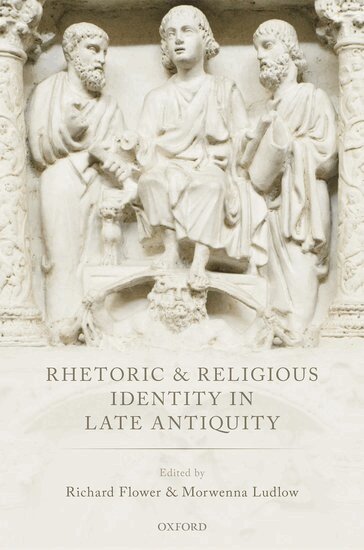
    Rhetoric and Religious Identity in Late Antiquity

    AvLudlow Flower,Richard Flower

    Inbunden, Engelska, 2020

    1 967 kr

    Beställningsvara. Skickas inom 5-8 vardagar. Fri frakt över 249 kr.

    Beskrivning

    The topic of religious identity in late antiquity is highly contentious. How did individuals and groups come to ascribe identities based on what would now be known as 'religion', categorizing themselves and others with regard to Judaism, Manichaeism, traditional Greek and Roman practices, and numerous competing conceptions of Christianity? How and why did examples of self-identification become established, activated, or transformed in response to circumstances? To what extent do labels (whether ancient and modern) for religious categories reflect a sense of a unified and enduring social or group identity for those included within them? How does religious identity relate to other forms of ancient identity politics (for example, ethnic discourse concerning 'barbarians')? Rhetoric and Religious Identity in Late Antiquity responds to the recent upsurge of interest in this issue by developing interdisciplinary research between classics, ancient and medieval history, philosophy, religion, patristics, and Byzantine studies, expanding the range of evidence standardly used to explore these questions. In exploring the malleability and potential overlapping of religious identities in late antiquity, as well as their variable expressions in response to different public and private contexts, it challenges some prominent scholarly paradigms. In particular, rhetoric and religious identity are here brought together and simultaneously interrogated to provide mutual illumination: in what way does a better understanding of rhetoric (its rules, forms, practices) enrich our understanding of the expression of late-antique religious identity? How does an understanding of how religious identity was ascribed, constructed, and contested provide us with a new perspective on rhetoric at work in late antiquity?

    Produktinformation

    • Utgivningsdatum:2020-08-31
    • Mått:162 x 241 x 22 mm
    • Vikt:604 g
    • Format:Inbunden
    • Språk:Engelska
    • Antal sidor:300
    • Förlag:OUP OXFORD
    • ISBN:9780198813194

    Utforska kategorier

    • Forntidens historia inom Historia och arkeologi
    • Religion: allmänt inom Filosofi och religion
    • Kristendom inom Filosofi och religion

    Mer om författaren

    Prof Richard Flower studied for his BA, MPhil and PhD in Classics at Clare College, Cambridge, and has worked at the Universities of Cambridge, Sheffield and Exeter. He specialises in the construction of imperial and ecclesiastical authority, particularly in late-antique polemical literature and heresiology. His publications include Emperors and Bishops in Late Roman Invective (Cambridge, 2013) and Imperial Invectives against Constantius II (Liverpool, 2016), and he is also editing The Cambridge Companion to Christian Heresy. Prof Morwenna Ludlow studied Classics and then Theology at the University of Oxford. She has written widely on Gregory of Nyssa. Her latest book, Art, Craft and Theology in Fourth Century Greek Authors (also published by OUP) examines the use of literary and rhetorical tropes by Christian authors and argues that they interpret themselves as both theologians and craftsmen with words.

    Recensioner i media

    The strongest essays of this collection are those that work with a clear set of definitions and methods. Part One is by far the most useful section of the book and will repay the attention of readers since issues of identity and rhetoric are at the forefront.

    Innehållsförteckning

    • 1: Richard Flower and Morwenna Ludlow: Introduction PART I: THE NATURE OF RELIGIOUS IDENTITIES AND THEIR REPRESENTATION 2: Éric Rebillard: Approaching 'Religious Identity' in Late Antiquity 3: Aaron P. Johnson: The Rhetoric of Pagan Religious Identities: Porphyry and his First Readers 4: Douglas Boin: The Maccabees, 'Apostasy' and Julian's Appropriation of Hellenismos as a Reclaimed Epithet in Christian Conversations of the Fourth Century C.E. PART II: AGENTS OF THE REPRESENTATION OF RELIGIOUS IDENTITY 5: Shaun Tougher: Julian the Apologist: Christians and Pagans on the Mother of the Gods 6: Susanna Elm: Bodies, Books, Histories: Augustine of Hippo and the Extraordinary (civ. Dei 16.8 and Pliny, HN 7) 7: Raffaella Cribiore: Classical Decadence or Christian Aesthetics? Libanius, John Chrysostom, and Augustine on Rhetoric 8: Nicholas Baker-Brian: 'Very great are your words': Dialogue as Rhetoric in Manichaean Kephalaia 9: Maijastina Kahlos: 'A Christian Cannot Employ Magic': Rhetorical Self-fashioning of the Magicless Christianity of Late Antiquity PART III: MODES OF THE REPRESENTATION OF RELIGIOUS IDENTITY 10: Mark Humphries: The Rhetorical Construction of a Christian Empire in the Theodosian Code 11: Peter Van Nuffelen: What Happened after Eusebius? Chronicles and Narrative Identities in the Fourth Century 12: Richard Flower: The Rhetoric of Heresiological Prefaces 13: Robin M. Jensen: Constructing Identity in the Tomb: The Visual Rhetoric of Early Christian Iconography 14: Hajnalka Tamas: Renunciation and Ascetic Identity in the Liber ad Renatum of Asterius Ansedunensis 15: Morwenna Ludlow: Christian Literary Identity and Rhetoric about Style