• Fri frakt över 249 kr
  • •
  • Snabba leveranser
  • •
  • Billiga böcker
Kundservice

Du är på sajten för privatpersoner.

Företag, bibliotek eller offentlig verksamhet?

Du handlar på classic.bokus.com, där alla dina funktioner finns intakta.
Till classic.bokus.com
Bokus logotyp. Gå till startsidan.
  • Erbjudanden
  • Nyheter
  • Student
  • Topplistor
  • Barn & ungdom
  • Bokus Play
  • E-böcker
  • Pocketböcker
  • Spel & pussel

10% rabatt på allt med kod NYSTART10 →

Sidfot

Mina sidor

    Hjälp

    • Kundservice
    • Vanliga frågor och svar
    • Frakt och leverans
    • Retur vid ångerrätt
    • Reklamera vara
    • Betalning
    • Köpvillkor
    • Allmänna villkor
    • Information om webbplatsens tillgänglighet

    Om Bokus

    • Om oss
    • Pressrum
    • För studenter
    • För företag
    • För bibliotek och offentlig verksamhet
    • För leverantörer
    • Hållbarhet

    Populärt

    • Aktuella erbjudanden
    • Presentkort
    • Studentlitteratur
    • Nya böcker
    • Topplistor
    • Signerade böcker
    • Engelska böcker

    Inspiration

    • Boktips
    • BookTok
    • Populära bokserier
    • Barnbokskaraktärer
    • Populära författare
    Logotyp för Bokus
    Följ oss på Facebook (extern länk)Följ oss på Instagram (extern länk)Följ oss på YouTube (extern länk)Följ oss på TikTok (extern länk)
    bokus @ CookiesAnpassa cookiesIntegritetspolicyKöpvillkor
    Till Citymail hemsida (extern länk)Till Budbee hemsida (extern länk)Till Postnord hemsida (extern länk)Till Schenker hemsida (extern länk)Till Early Bird hemsida (extern länk)Till Walleys hemsida (extern länk)
    1. Skönlitteratur
    2. Litteraturvetenskap
    3. Litteraturvetenskap

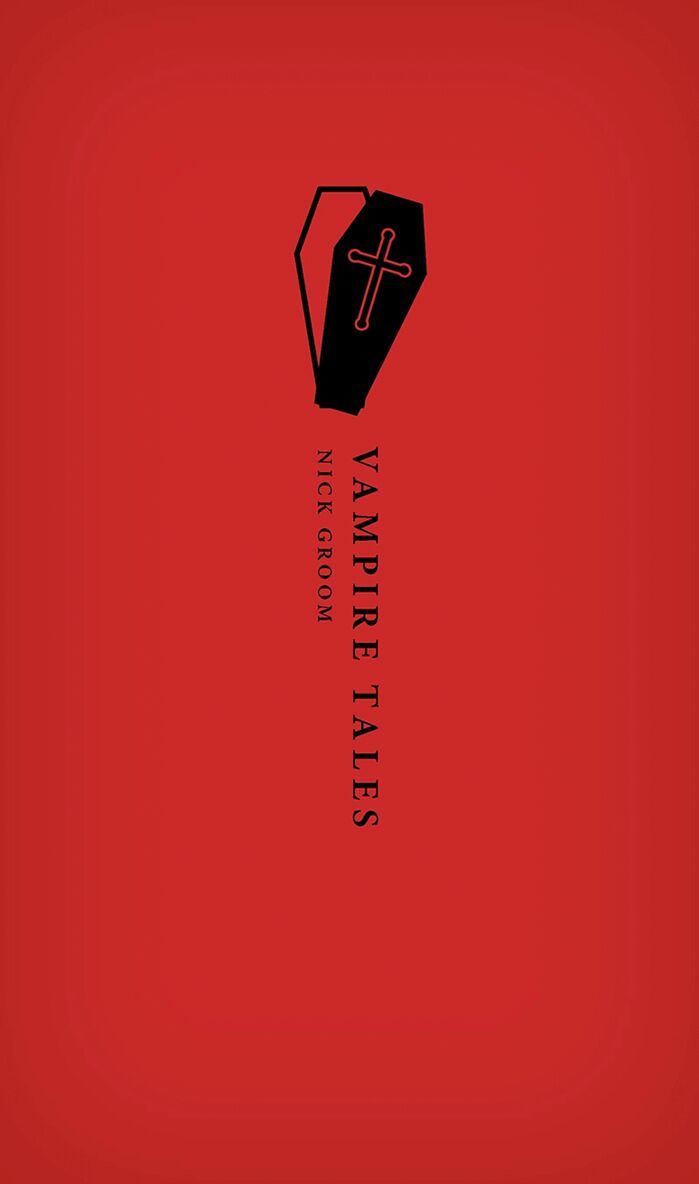
    Vampire Tales

    AvNick Groom

    Inbunden, Engelska, 2026

    Del i serien Oxford World's Classics Hardback Collection

    208 kr

    Kommande

    Beskrivning

    'The pang of the bite, the sudden spurting of blood, and the monstrous horror of the act.'This collection, edited by Nick Groom, explores the extraordinary variety and range of the vampire in English literature prior to the publication of Bram Stoker's Dracula (1897): it includes classical and mediaeval vampires, Islamic and Caribbean vampires, aristocratic and penurious vampires, abject vampires and dandified vampires, erudite vampires and bestial vampires, invisible vampires and psychic vampires, and, of course, she-vampires.While Dracula remains the touchstone not only of the English literary vampire but of the international vampire phenomenon in the cinema, on television, on the stage, in comics, in videogames, in music, and in fashion, readers may well be surprised to discover that there is an abundant tradition of vampire literature before Stoker's iconic novel. Moreover, these earlier vampires are often very different to those portrayed in Dracula: vampires were atypical beings-at least until the advent of the Count.Although there are familiar names among the twenty-five pieces collected here such as Lord Byron, Edgar Allan Poe, Joseph Sheridan Le Fanu, Robert Louis Stevenson, and Ambrose Bierce, there are also many less familiar writers, and so neglected classics from the United States, Australia, and, in translation, France and Germany, are also included. These encompass major cultural movements from Romantic Hellenism to late-Victorian Decadence, as well as engaging in the most pressing socio-political issues of the times: colonial slavery, sexual identity, class oppression, and the very nature of the human. Nick Groom's introduction and notes accordingly explain how these diverse vampires were characterized a variety of traits, themes, and images that constituted a culture of vampirism. These include-but are not confined to-bloodsucking, together with a morbid preoccupation with blood, vitality, and predation; the exercise of power through possessing and dominating others; the prevalence of dreams and deliria that casts doubt over lived reality; the blurring of boundaries between life and death; and the enthralling intensity of beauty. Neither were such aspects of vampirism necessarily confined to the supernatural realm of the undead: they could also, for example, be understood as medical or psychological conditions. It is, then, the aim of Vampire Tales to reveal the extraordinary diversity of vampire literature in the nineteenth century.ABOUT THE SERIES: For over 100 years Oxford World's Classics has made available the widest range of literature from around the globe. Each affordable volume reflects Oxford's commitment to scholarship, providing the most accurate text plus a wealth of other valuable features, including expert introductions by leading authorities, helpful notes to clarify the text, up-to-date bibliographies for further study, and much more.

    Produktinformation

    • Utgivningsdatum:2026-09-10
    • Mått:143 x 222 x 54 mm
    • Vikt:768 g
    • Format:Inbunden
    • Språk:Engelska
    • Serie:Oxford World's Classics Hardback Collection
    • Antal sidor:688
    • Förlag:OUP OXFORD
    • Medarbetare:Nick Groom
    • ISBN:9780198814658

    Utforska kategorier

    • Litteraturvetenskap inom Skönlitteratur
    • Magi och ockulta studier inom Filosofi och religion

    Mer om författaren

    Nick Groom is Professor of Literature in English at the University of Macau. He is best known for his work on Gothic literature, including The Vampire: A New History (2020), The Gothic: A Very Short Introduction (2012), and scholarly editions of Frankenstein, The Italian, The Monk, and The Castle of Otranto for Oxford World's Classics.

    Innehållsförteckning

    • Acknowledgements Introduction Select Bibliography Note on the Text A Chronology of Significant Vampire Cases and Publications prior to Dracula (1897 VAMPIRE TALES Lord Byron, 'A Fragment' (1819) Johann Wolfgang von Goethe, 'The Bride of Corinth' [translation of 'Die Braut von Korinth', 1798] (1819) John William Polidori, ed. Alaric Watts, 'Extract of a Letter from Geneva, with Anecdotes of Lord Byron, &c.' (1819) Alaric Watts, 'Introduction' to 'The Vampyre' (1819) John William Polidori, ed. Alaric Watts, 'The Vampyre' (1819) John Keats, 'La Belle Dame Sans Merci' (1819) 'Uriah Derick D'Arcy' [Richard Varick Dey], The Black Vampyre; A Legend of St. Domingo (1819) Ernst Benjamin Salomo Raupach, 'Wake Not the Dead' [translation of 'Laßt die Todten Ruhen. Ein Märchen'] (1823) Edgar Allan Poe, 'Ligeia' (1838) James Malcolm Rymer, extract from Varney, the Vampyre; or, The Feast of Blood (1845-7) Karl Adolf von Wachsmann, 'The Mysterious Stranger' (1854) Fitz-James O'Brien, 'What Was It?' (1859) 'Waif Wanderer' [Mary Fortune], 'The White Maniac; A Doctor's Tale' (1867) Charles Baudelaire, 'A Carcass' [translation of 'Une Charogne', 1857] (1869) Joseph Sheridan Le Fanu, 'Carmilla' (1872) Julian Hawthorne, 'Ken's Mystery' (1883) Sabine Baring-Gould, 'Margery of Quether' (1884) Robert Louis Stevenson, 'Olalla' (1885) Guy de Maupassant, 'The Horla' [translation of 'Le Horla', 1887] (1890) Ambrose Bierce, 'The Death of Halpin Frayser' (1893) 'X. L.' [Julian Osgood Field], 'A Kiss of Judas' (1893) Eric, Count Stenbock, 'The True Story of a Vampire' (1894) Robert Murray Gilchrist, 'The Crimson Weaver' (1895) Mary Elizabeth Braddon, 'The Good Lady Ducayne' (1896) Rudyard Kipling, 'The Vampire' (1897) Explanatory Notes