• Fri frakt över 249 kr
  • •
  • Snabba leveranser
  • •
  • Billiga böcker
Kundservice

Du är på sajten för privatpersoner.

Företag, bibliotek eller offentlig verksamhet?

Du handlar på classic.bokus.com, där alla dina funktioner finns intakta.
Till classic.bokus.com
Bokus logotyp. Gå till startsidan.
  • Erbjudanden
  • Nyheter
  • Student
  • Topplistor
  • Barn & ungdom
  • Bokus Play
  • E-böcker
  • Pocketböcker
  • Spel & pussel

10% rabatt på allt med kod NYSTART10 →

Sidfot

Mina sidor

    Hjälp

    • Kundservice
    • Vanliga frågor och svar
    • Frakt och leverans
    • Retur vid ångerrätt
    • Reklamera vara
    • Betalning
    • Köpvillkor
    • Allmänna villkor
    • Information om webbplatsens tillgänglighet

    Om Bokus

    • Om oss
    • Pressrum
    • För studenter
    • För företag
    • För bibliotek och offentlig verksamhet
    • För leverantörer
    • Hållbarhet

    Populärt

    • Aktuella erbjudanden
    • Presentkort
    • Studentlitteratur
    • Nya böcker
    • Topplistor
    • Signerade böcker
    • Engelska böcker

    Inspiration

    • Boktips
    • BookTok
    • Populära bokserier
    • Barnbokskaraktärer
    • Populära författare
    Logotyp för Bokus
    Följ oss på Facebook (extern länk)Följ oss på Instagram (extern länk)Följ oss på YouTube (extern länk)Följ oss på TikTok (extern länk)
    bokus @ CookiesAnpassa cookiesIntegritetspolicyKöpvillkor
    Till Citymail hemsida (extern länk)Till Budbee hemsida (extern länk)Till Postnord hemsida (extern länk)Till Schenker hemsida (extern länk)Till Early Bird hemsida (extern länk)Till Walleys hemsida (extern länk)
    1. Samhälle och politik
    2. Samhälle och kultur
    3. Kultur och medier
    4. Referensverk och tvärvetenskap

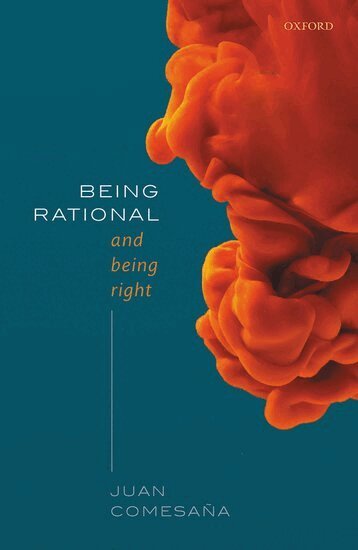
    Being Rational and Being Right

    AvJuan Comesaña

    Inbunden, Engelska, 2020

    1 167 kr

    Beställningsvara. Skickas inom 5-8 vardagar. Fri frakt över 249 kr.

    Fler format och utgåvor

    Häftad

    338 kr

    Beskrivning

    In Being Rational and Being Right, Juan Comesaña argues for a cluster of theses related to the rationality of action and belief. His starting point is that rational action requires rational belief but tolerates false belief. From there, Comesaña provides a novel account of empirical evidence according to which said evidence consists of the content of undefeated experiences. This view, which Comesaña calls "Experientialism," differs from the two main views of empirical evidence on offer nowadays: Factualism, according to which our evidence is what we know, and Psychologism, according to which our experiences themselves are evidence. He reasons that Experientialism fares better than these rival views in explaining different features of rational belief and action. Comesaña embeds this discussion in a Bayesian framework, and discusses in addition the problem of normative requirements, the easy knowledge problem, and how Experientialism compares to Evidentialism, Reliabilism, and Comesaña's own (now superseded) Evidentialist Reliabilism.

    Produktinformation

    • Utgivningsdatum:2020-03-13
    • Mått:159 x 232 x 18 mm
    • Vikt:496 g
    • Format:Inbunden
    • Språk:Engelska
    • Antal sidor:240
    • Förlag:OUP OXFORD
    • ISBN:9780198847717

    Utforska kategorier

    • Referensverk och tvärvetenskap inom Samhälle och politik
    • Filosofiska discipliner inom Filosofi och religion

    Mer om författaren

    Juan Comesaña is Professor of Philosophy at the University of Arizona. Prior to this, he obtained his PhD from Brown University and then taught at the University of Wisconsin, Madison for six years. He works mainly in epistemology, though he is also interested in metaphysics and metaethics.

    Innehållsförteckning

    • 1: Introduction 2: Probability and Decision Theory 3: Objective Bayesianism and Knowledge-First Epistemolog 4: Knowledge-Based Decision Theory 5: Excuses, Would-Be Knowledge, and Rationality-Based Decision Theory 6: Experientialism 7: The Normative Force of Unjustified Beliefs 8: The Problem of Easy Rationality 9: Evidentialism, Reliabilism, Evidentialist Reliabilism? 10: Conclusion