• Fri frakt över 249 kr
  • •
  • Snabba leveranser
  • •
  • Billiga böcker
Kundservice

Du är på sajten för privatpersoner.

Företag, bibliotek eller offentlig verksamhet?

Du handlar på classic.bokus.com, där alla dina funktioner finns intakta.
Till classic.bokus.com
Bokus logotyp. Gå till startsidan.
  • Erbjudanden
  • Nyheter
  • Student
  • Topplistor
  • Barn & ungdom
  • Bokus Play
  • E-böcker
  • Pocketböcker
  • Spel & pussel

10% rabatt på allt med kod: NYSTART10 →

Sidfot

Mina sidor

    Hjälp

    • Kundservice
    • Vanliga frågor och svar
    • Frakt och leverans
    • Retur vid ångerrätt
    • Reklamera vara
    • Betalning
    • Köpvillkor
    • Allmänna villkor
    • Information om webbplatsens tillgänglighet

    Om Bokus

    • Om oss
    • Pressrum
    • För studenter
    • För företag
    • För bibliotek och offentlig verksamhet
    • För leverantörer
    • Hållbarhet

    Populärt

    • Aktuella erbjudanden
    • Presentkort
    • Studentlitteratur
    • Nya böcker
    • Topplistor
    • Signerade böcker
    • Engelska böcker

    Inspiration

    • Boktips
    • BookTok
    • Populära bokserier
    • Barnbokskaraktärer
    • Populära författare
    Logotyp för Bokus
    Följ oss på Facebook (extern länk)Följ oss på Instagram (extern länk)Följ oss på YouTube (extern länk)Följ oss på TikTok (extern länk)
    bokus @ CookiesAnpassa cookiesIntegritetspolicyKöpvillkor
    Till Citymail hemsida (extern länk)Till Budbee hemsida (extern länk)Till Postnord hemsida (extern länk)Till Schenker hemsida (extern länk)Till Early Bird hemsida (extern länk)Till Walleys hemsida (extern länk)
    1. Historia och arkeologi
    2. Arkeologi
    3. Arkeologiska perioder och områden

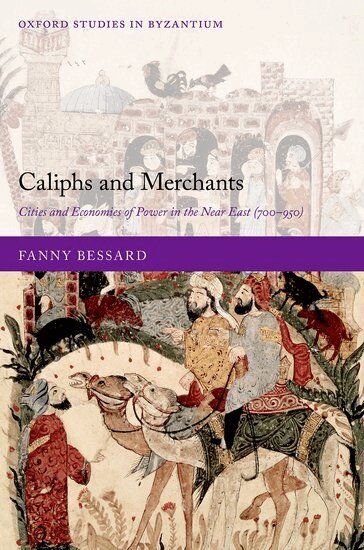
    Caliphs and Merchants

    Cities and Economies of Power in the Near East (700-950)

    AvFanny Bessard

    Inbunden, Engelska, 2020

    Del i serien Oxford Studies in Byzantium

    2 346 kr

    Beställningsvara. Skickas inom 5-8 vardagar. Fri frakt över 249 kr.

    Fler format och utgåvor

    E-bok

    1 577 kr

    E-bok

    1 572 kr

    Beskrivning

    Caliphs and Merchants: Cities and Economies of Power in the Near East (700-950) offers fresh perspectives on the origins of the economic success of the early Islamic Caliphate, identifying a number of previously unnoticed or underplayed yet crucial developments, such as the changing conditions of labour, attitudes towards professional associations, and the interplay between the state, Islamic religious institutions, and the economy. Moving beyond the well-studied transition between the death of Justinian in 565 and the Arab-Muslim conquests in the seventh century, the volume focuses on the period between 700 and 950 during which the Islamic world asserted its identity and authority. Whilst the extraordinary prosperity of Near Eastern cities and economies during this time was not unprecedented when one considers the early Imperial Roman world, the aftermath of the Arab-Muslim conquests saw a deep transformation of urban retail and craft which marked a distinct break from the past. It explores the mechanisms effecting these changes, from the increasing involvement of caliphs and their governors in the patronage of urban economies, to the empowerment of enriched entrepreneurial tā%gir from the ninth century. Combining detailed analysis of a large corpus of literary sources in Arabic with presentation of new physical and epigraphic evidence, and utilizing an innovative approach which is both comparative and global, the discussion lucidly locates the Middle East within the contemporary Eurasian context and draws instructive parallels between the Islamic world and Western Christendom, Byzantium, South-East Asia, and China.

    Produktinformation

    • Utgivningsdatum:2020-10-27
    • Mått:163 x 241 x 24 mm
    • Vikt:1 g
    • Format:Inbunden
    • Språk:Engelska
    • Serie:Oxford Studies in Byzantium
    • Antal sidor:400
    • Förlag:OUP OXFORD
    • ISBN:9780198855828

    Utforska kategorier

    • Arkeologiska perioder och områden inom Historia och arkeologi
    • Mellanösterns historia inom Historia och arkeologi

    Mer om författaren

    Fanny Bessard is a historian of early and classical Islam with expertise in Arabic historiography, as well as a practicing archaeologist with a decade of field experience in the Near East and Central Asia. Before joining the University of Oxford she held a Newton International Fellowship at SOAS (2013-15), a Leverhulme Early Career Fellowship at the University of St Andrews (2015-16), and a Lectureship in the Department of Historical Studies at the University of Bristol (2016-19). Her main research interests lie in the social and economic transformations of the Near East from 700 to 1000.

    Recensioner i media

    This volume collates, well analyzes, and integrates the scholarly research of historians, literary and textual specialists, and archaeologists. In so doing it represents a worthwhile and admirable book on the "artisanal" economy of the Syro-Persian domain of Islam between 700 and 950 CE, the period of the late Umayyads in Syria, the early 'Abbāsids in Persia, and beyond.

    Innehållsförteckning

    • Frontmatter List of Illustrations List of Abbreviations Notes on Transcription and Dates Maps 0: Introduction 1: The Historical Context 1. Conquests 2. Ideology 3. Agriculture 4. Trade PART I. PATRONAGE AND POWER 2: A Stamp of Authority 1. A Caliphal officium 2. Sowing and reaping 3. Exercise and assertion of power 3: New Perspectives on Urban Economic Planning 1. Growth of communal working areas in the Levant (700-750) 2. Process of exclusion of economic clusters under early 'Abb=asid rule 3. Raba.d in Central Asia 4. Isolation of domesticity 4.1. Productive and public use to domestic shelter 4.2. An emphasis on intimacy 3a: Conclusion PART II. REVISITING THE LEGACIES 4: Artisans to Producers 1. The progression of change 1.1. Persistence of Roman practices after 700 1.2. Downfall of 'home' production after 800 2. Approaches to key industries 2.1. Pottery 2.2. Glass-making 2.3. Textile industry 3. Food processing industries 3.1. Oil and wine industries 3.2. Watermills 5: Reshaping Market-Places 1. From the ergast=erion to the s=uq 2. Covered market-places 2.1. Funduq 2.2. D=ar, nh=an, and qays=ariyya 5a: Conclusion PART III. INSTITUTIONAL AND RELIGIOUS GENERATORS 6: Money Supply and Currency 1. Out with the old 2. Coinage in common 3. Balancing supply and demand 7: Islamifying the Economy 1. Commercial rituals and Islamic worship 2. Mosques and measures 3. The mu.htasib 7a: Conclusion PART IV. ECONOMY AND SOCIAL CHANGES 8: The Evolution of Labour Patterns 1. Conditions of labour 1.1. Servile labour 1.2. Free labour 1.3. Wage labour 2. Changing patterns of institutional identity 3. Status and composition of the labour force 3.1. Disdained and tolerated professions 3.2. Changing division of labour 3.3. Female artisans 9: Twilight of the Clerical and Landowning Elite, Rise of Tu%g%g=ar 1. Retailers and traders before 800 2. Ascendance of tu%g%g=ar from 800 2.1. Financial 2.2. Identity 2.3. Cultural 3. Tu%g%g=ar's political and religious careers 4. Tu%g%g=ar and authority 4.1. The defense of trading interests 4.2. Tu%g%g=ar and economic expansion 9a: Conclusion 10: Conclusion Endmatter Appendix References Index