• Fri frakt över 249 kr
  • •
  • Snabba leveranser
  • •
  • Billiga böcker
Kundservice

Du är på sajten för privatpersoner.

Företag, bibliotek eller offentlig verksamhet?

Du handlar på classic.bokus.com, där alla dina funktioner finns intakta.
Till classic.bokus.com
Bokus logotyp. Gå till startsidan.
  • Erbjudanden
  • Nyheter
  • Student
  • Topplistor
  • Barn & ungdom
  • Bokus Play
  • E-böcker
  • Pocketböcker
  • Spel & pussel

10% rabatt på allt med kod: NYSTART10 →

Sidfot

Mina sidor

    Hjälp

    • Kundservice
    • Vanliga frågor och svar
    • Frakt och leverans
    • Retur vid ångerrätt
    • Reklamera vara
    • Betalning
    • Köpvillkor
    • Allmänna villkor
    • Information om webbplatsens tillgänglighet

    Om Bokus

    • Om oss
    • Pressrum
    • För studenter
    • För företag
    • För bibliotek och offentlig verksamhet
    • För leverantörer
    • Hållbarhet

    Populärt

    • Aktuella erbjudanden
    • Presentkort
    • Studentlitteratur
    • Nya böcker
    • Topplistor
    • Signerade böcker
    • Engelska böcker

    Inspiration

    • Boktips
    • BookTok
    • Populära bokserier
    • Barnbokskaraktärer
    • Populära författare
    Logotyp för Bokus
    Följ oss på Facebook (extern länk)Följ oss på Instagram (extern länk)Följ oss på YouTube (extern länk)Följ oss på TikTok (extern länk)
    bokus @ CookiesAnpassa cookiesIntegritetspolicyKöpvillkor
    Till Citymail hemsida (extern länk)Till Budbee hemsida (extern länk)Till Postnord hemsida (extern länk)Till Schenker hemsida (extern länk)Till Early Bird hemsida (extern länk)Till Walleys hemsida (extern länk)
    1. Juridik
    2. Särskilda rättsområden
    3. Rättsordning

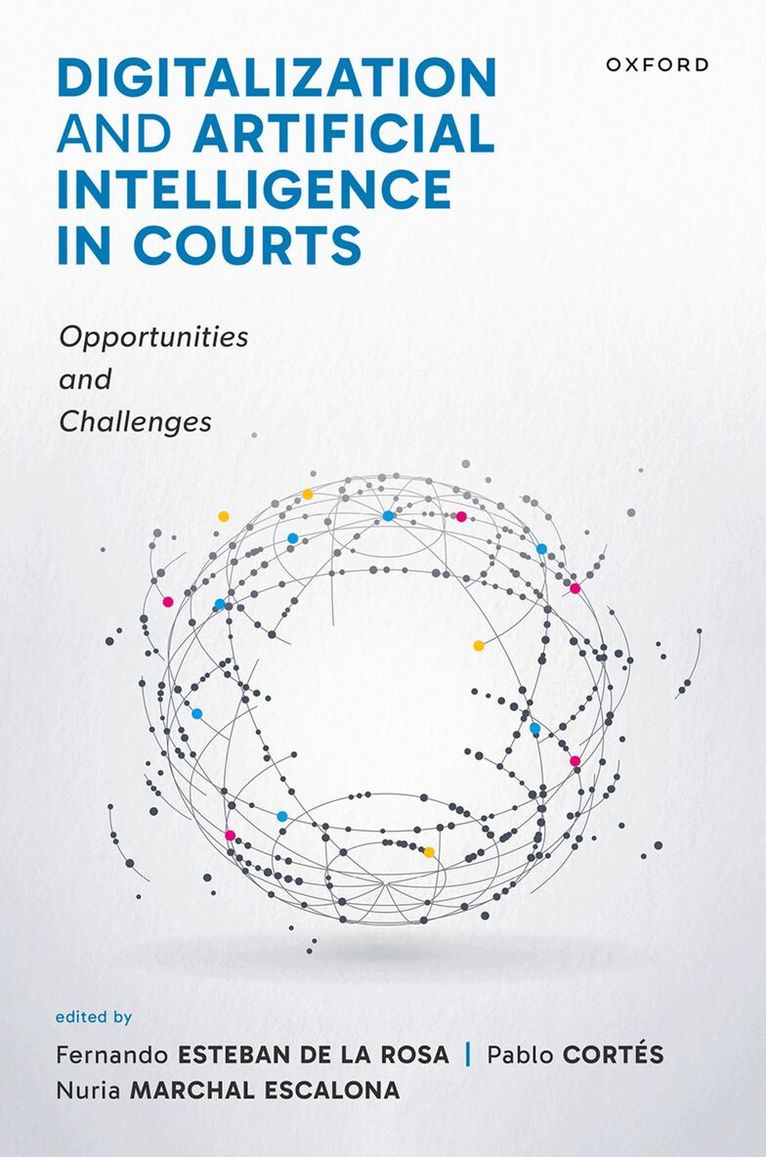
    Digitalization and Artificial Intelligence in Courts

    Opportunities and Challenges

    AvFernando Esteban de la Rosa,Pablo Cortés

    Inbunden, Engelska, 2025

    2 231 kr

    Beställningsvara. Skickas inom 3-6 vardagar. Fri frakt över 249 kr.

    Beskrivning

    In an era of rapid technological advancement, justice systems around the world stand at the threshold of a profound transformation. Digitalization and artificial intelligence offer unprecedented opportunities to enhance efficiency, broaden access to legal remedies, and bring courts closer to citizens. Yet, as judicial processes become increasingly digitalized and automated, critical questions arise: how can we ensure transparency, fairness, and accountability in online dispute resolution (ODR) and AI-driven systems? What protections must be in place to preserve privacy, uphold fundamental rights, and ensure that technology serves, rather than undermines, the core principles of justice?Positioned at the intersection between technology and justice, Digitalization and Artificial Intelligence in Courts: Opportunities and Challenges explores these questions. The first part of the volume considers strategies for bridging the digital divide, explores the potential for process pluralism, outlines data protection requirements, and emphasizes the necessity of robust cybersecurity frameworks. It also tackles one of the most pressing concerns of the digital era: fostering trust and legal certainty in a virtual justice system. The second part presents a comparative analysis of selected groundbreaking national and cross-border court digitalization initiatives, from England and the United States to China, Pakistan, and the European Union. The final part examines the role of AI in courts, offering a critical reflection on its promises and perils, from algorithmic bias to the controversial concept of "AI judges."Through a rigorous and balanced analysis, the authors map the opportunities and challenges of an increasingly digitalized legal landscape. Essential for legal professionals, policymakers, and scholars, Digitalization and Artificial Intelligence in Courts serves as a fundamental guide to navigating the future of justice systems and technology in the twenty-first century.Includes a foreword by Lord Briggs of Westbourne, Justice of the Supreme Court of the United Kingdom.

    Produktinformation

    • Utgivningsdatum:2025-09-25
    • Mått:156 x 27 x 234 mm
    • Vikt:854 g
    • Format:Inbunden
    • Språk:Engelska
    • Antal sidor:486
    • Förlag:OUP OXFORD
    • ISBN:9780198918721

    Utforska kategorier

    • Rättsordning inom Juridik
    • Straffrätt: process och brott inom Juridik
    • IT-rätt och kommunikationsrätt inom Juridik

    Mer om författaren

    Fernando Esteban de la Rosa is a Professor of Private International Law, Director of the Department of Private International Law and History of Law, and Scientific Director of the Research Unit of Excellence Digital Society at the University of Granada. He is also an Associate member of the Hispano-Luso-American-Filipino Institute of International Law, a fellow of the National Center for Technology and Dispute Resolution (UMass, Amherst), and a fellow of the European Law Institute. He was appointed as a Member of the Digital Justice Working Group of the World Bank (2024).Pablo Cortés is a Professor of Civil Justice at Leicester Law School, where he specializes in dispute resolution, with a particular focus on Alternative and Online Dispute Resolution. He also serves as an arbitrator and adjudicator on various CEDR panels and has authored four notable books exploring the intersection of technology and dispute resolution. He is the co-editor of the journal Amicus Curiae. As a consultant, Professor Cortés has made significant contributions to several high-impact projects, including assisting the European Commission in developing legislative proposals for the ADR Directive and the ODR Regulation. In recognition of his contributions to the field, he was awarded the prestigious National Mediation Award for ADR Academic Researcher of the Year in December 2022.Nuria Marchal Escalona is a Professor of Private International Law, Secretary of the Department of Private International Law and History of Law, and a member of the Research Unit of Excellence Digital Society at the University of Granada. She is a Supernumerary member of the Mexican Academy of Private and Comparative International Law and has advised the Spanish Ministry of Justice on the negotiation and drafting of Regulation 805/2004 on the European Enforcement Order for uncontested claims.

    Innehållsförteckning

    • PART I. BUILDING FOUNDATIONS FOR THE DIGITALIZATION OF THE JUSTICE SYSTEMS 1: Fernando Esteban de la Rosa: Towards a People-Centric Digitalization of Justice Systems: Fostering Empowerment, New Rights, and Fair Treatment amid the Digital Divide 2: Orna Rabinovich-Einy: Process Pluralism in the Post-Covid Dispute Resolution Landscape 3: Jose Antonio Castillo Parrilla: Challenges of Using AI Tools in the Digitalization of Advanced Justice Systems: Beyond Data Protection and Cybersecurity 4: Begoña Fernández Rodríguez: Biometric Breakthroughs: Transforming Electronic ID and Trust in Courts PART II. THE IMPACT OF TECHNOLOGY IN TRANSFORMING NATIONAL COURTS AND CROSS-BORDER LITIGATION 5: Pablo Cortés: Technology as an Instrument to Promote Settlement in Advance of Court Adjudication-Developments in England and Wales 6: Amy J. Schmitz: Designing to Expand Access to Remedies, Voice, and Possibly Justicein United States Court Online Dispute Resolution (ODR) 7: Alex ChungandYing Yu: Delivering Justice in the Digital Economy: Innovations in China's E-Courts 8: Nauman Reayat: The Digitalization of the Pakistani Justice System: Challenges and Solutions 9: Nuria Marchal Escalona: Facilitation of Digital Access to Justice in Cross-Border Environments: The New System of European Judicial Cooperation in Civil Matters 10: María José Fernández-Fígares Morales: The Framework for Evidence-Taking under the Policy of European Judicial Cooperation on Civil Matters PART III. THE RISE OF AI IN DIGITAL COURTS 11: Ozana OlariuandJohn Zeleznikow: Human Rights-Compliant Artificial Intelligence: Regulatory Frameworks for Upholding Democracy and the Rule of Law in the Digital Age 12: Javier Valls Prieto: Governance of AI in the Judicial System 13: Roberta Montinaro: Artificial Intelligence Systems Processing Judicial Decisions and Legal Data Under the EU Legal Framework 14: John Zeleznikow: The Integration of Artificial Intelligence in the Digitalization Process of the Administration of Justice 15: David Freeman Engstrom,Ayelet Sela, and Natalie Knowlton: Courthouse AI and Access to Justice in the United States 16: Tania Sourdin and Ella Brown: Judging the Robot Judge