• Fri frakt över 249 kr
  • •
  • Snabba leveranser
  • •
  • Billiga böcker
Kundservice

Du är på sajten för privatpersoner.

Företag, bibliotek eller offentlig verksamhet?

Du handlar på classic.bokus.com, där alla dina funktioner finns intakta.
Till classic.bokus.com
Bokus logotyp. Gå till startsidan.
  • Erbjudanden
  • Student
  • Topplistor
  • Barn & ungdom
  • Bokus Play
  • E-böcker
  • Ljudböcker
  • Pocketböcker
  • Spel och pussel

Pocketfynda! Hundratals böcker för 49 kr/st →

Sidfot

Mina sidor

    Hjälp

    • Kundservice
    • Vanliga frågor och svar
    • Frakt och leverans
    • Retur vid ångerrätt
    • Reklamera vara
    • Betalning
    • Köpvillkor
    • Allmänna villkor
    • Information om webbplatsens tillgänglighet

    Om Bokus

    • Om oss
    • Pressrum
    • För studenter
    • För företag
    • För bibliotek och offentlig verksamhet
    • För leverantörer
    • Hållbarhet

    Populärt

    • Aktuella erbjudanden
    • Presentkort
    • Studentlitteratur
    • Nya böcker
    • Topplistor
    • Signerade böcker
    • Engelska böcker

    Inspiration

    • Boktips
    • BookTok
    • Barnbokskaraktärer
    • Populära författare
    Logotyp för Bokus
    Följ oss på Facebook (extern länk)Följ oss på Instagram (extern länk)Följ oss på YouTube (extern länk)Följ oss på TikTok (extern länk)
    bokus @ CookiesAnpassa cookiesIntegritetspolicyKöpvillkor
    Till Citymail hemsida (extern länk)Till Budbee hemsida (extern länk)Till Postnord hemsida (extern länk)Till Schenker hemsida (extern länk)Till Early Bird hemsida (extern länk)Till Walleys hemsida (extern länk)
    1. Kultur
    2. Konstböcker
    3. Konsthistoria

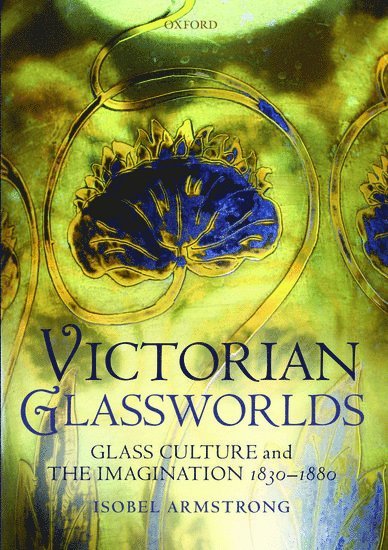
    Victorian Glassworlds

    Glass Culture and the Imagination 1830-1880

    AvIsobel Armstrong

    Inbunden, Engelska, 2008

    1 632 kr

    Beställningsvara. Skickas inom 5-8 vardagar. Fri frakt över 249 kr.

    Fler format och utgåvor

    E-bok

    1 071 kr

    E-bok

    998 kr

    Beskrivning

    Isobel Armstrong's startlingly original and beautifully illustrated book tells the stories that spring from the mass-production of glass in nineteenth-century England. Moving across technology, industry, local history, architecture, literature, print culture, the visual arts, optics, and philosophy, it will transform our understanding of the Victorian period.The mass production of glass in the nineteenth century transformed an ancient material into a modern one, at the same time transforming the environment and the nineteenth-century imagination. It created a new glass culture hitherto inconceivable. Glass culture constituted Victorian modernity. It was made from infinite variations of the prefabricated glass panel, and the lens. The mirror and the window became its formative elements, both the texts and constituents of glass culture. The glassworlds of the century are heterogeneous. They manifest themselves in the technologies of the factory furnace, in the myths of Cinderella and her glass slipper circulated in print media, in the ideologies of the conservatory as building type, in the fantasia of the shopfront, in the production of chandeliers, in the Crystal Palace, and the lens-made images of the magic lantern and microscope. But they were nevertheless governed by two inescapable conditions. First, to look through glass was to look through the residues of the breath of an unknown artisan, because glass was mass produced by incorporating glassblowing into the division of labour. Second, literally a new medium, glass brought the ambiguity of transparency and the problems of mediation into the everyday. It intervened between seer and seen, incorporating a modern philosophical problem into bodily experience. Thus for poets and novelists glass took on material and ontological, political, and aesthetic meanings. Reading glass forwards into Bauhaus modernism, Walter Benjamin overlooked an early phase of glass culture where the languages of glass are different. The book charts this phase in three parts. Factory archives, trade union records, and periodicals document the individual manufacturers and artisans who founded glass culture, the industrial tourists who described it, and the systematic politics of window-breaking. Part Two, culminating in glass under glass at the Crystal Palace, reads the glassing of the environment, including the mirror, the window, and controversy round the conservatory, and their inscription in poems and novels. Part Three explores the lens, from optical toys to 'philosophical' instruments as the telescope and microscope were known.A meditation on its history and phenomenology, Victorian Glassworlds is a poetics of glass for nineteenth-century modernity.

    Produktinformation

    • Utgivningsdatum:2008-04-24
    • Mått:180 x 255 x 30 mm
    • Vikt:1 090 g
    • Format:Inbunden
    • Språk:Engelska
    • Antal sidor:472
    • Förlag:OUP OXFORD
    • ISBN:9780199205202
    • Utmärkelser:Winner of the MLA's James Russell Lowell Prize 2009Shortlisted for The British Society for Literature and Science Book Prize 2009

    Utforska kategorier

    • Konsthistoria inom Kultur
    • Litteraturvetenskap inom Skönlitteratur
    • Reportage, journalistik och krönikor inom Samhälle och politik

    Recensioner i media

    Intellectually, theoretically, and methodologically, Victorian Glassworlds is a remarkable study to which scholars working in the field of Victorian studies will return again and again.

    Innehållsförteckning

    • Introduction: The Poetics of Transparency ; PART 1 FACETS OF GLASS CULTURE: MAKING AND BREAKING GLASS ; 1. Factory Tourism: Morphology of the 'Visit to a Glass Factory' ; 2. Robert Lucas Chance, Modern Glass Manufacturer: fractures in the glass factory ; 3. Riot and the Grammar of Window-Breaking: the Chances, Wellington, Chartism ; 4. The Glassmakers' Eloquence: a Trade Union Journal, the Royal Commission, 1868 ; Conclusion ; PART 11 PERSPECTIVES OF THE GLASS PANEL: WINDOWS, MIRRORS, WALLS ; 5. Reflections, Translucency, Aura, Trace ; 6. Glassing London: Building Glass Culture, Real and Imagined ; 7. Politics of the Conservatory: Glasshouses, Republican and Populist ; 8. Mythmaking: Cinderella and her Glass Slipper at the Crystal Palace ; 9. Glass under Glass: Glassworld Fictions ; PART 111 LENS-MADE IMAGES: OPTICAL TOYS AND PHILOSOPHICAL INSTRUMENTS ; 10. The Lens, Light, and the Virtual World ; 11. Dissolving and Resolving Views: from Magic Lantern to Telescope ; 12. Microscopic Space ; 13. Crystalphiles, Anamorphobics, and Stereoscopic Volume ; 14. Coda on Time: Fixing the Moving Image and Mobilising the Fixed Image - Memory, Repetition, and Working Through ; Conclusion: the End of Glass Culture - from Nineteenth-Century Modernity to Modernism