• Fri frakt över 249 kr
  • •
  • Snabba leveranser
  • •
  • Billiga böcker
Kundservice

Du är på sajten för privatpersoner.

Företag, bibliotek eller offentlig verksamhet?

Du handlar på classic.bokus.com, där alla dina funktioner finns intakta.
Till classic.bokus.com
Bokus logotyp. Gå till startsidan.
  • Erbjudanden
  • Student
  • Topplistor
  • Barn & ungdom
  • Bokus Play
  • E-böcker
  • Ljudböcker
  • Pocketböcker
  • Spel & pussel

10% rabatt på allt med kod NYSTART10 →

Sidfot

Mina sidor

    Hjälp

    • Kundservice
    • Vanliga frågor och svar
    • Frakt och leverans
    • Retur vid ångerrätt
    • Reklamera vara
    • Betalning
    • Köpvillkor
    • Allmänna villkor
    • Information om webbplatsens tillgänglighet

    Om Bokus

    • Om oss
    • Pressrum
    • För studenter
    • För företag
    • För bibliotek och offentlig verksamhet
    • För leverantörer
    • Hållbarhet

    Populärt

    • Aktuella erbjudanden
    • Presentkort
    • Studentlitteratur
    • Nya böcker
    • Topplistor
    • Signerade böcker
    • Engelska böcker

    Inspiration

    • Boktips
    • BookTok
    • Populära bokserier
    • Barnbokskaraktärer
    • Populära författare
    Logotyp för Bokus
    Följ oss på Facebook (extern länk)Följ oss på Instagram (extern länk)Följ oss på YouTube (extern länk)Följ oss på TikTok (extern länk)
    bokus @ CookiesAnpassa cookiesIntegritetspolicyKöpvillkor
    Till Citymail hemsida (extern länk)Till Budbee hemsida (extern länk)Till Postnord hemsida (extern länk)Till Schenker hemsida (extern länk)Till Early Bird hemsida (extern länk)Till Walleys hemsida (extern länk)
    1. Psykologi och pedagogik
    2. Psykologi
    3. Psykologiska teorier och skolor

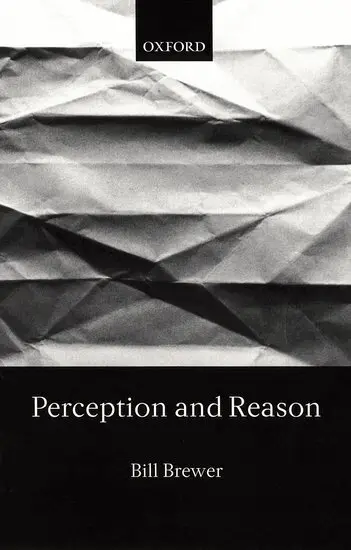
    Perception and Reason

    AvBill Brewer

    Häftad, Engelska, 2002

    831 kr

    Beställningsvara. Skickas inom 5-8 vardagar. Fri frakt över 249 kr.

    Beskrivning

    Bill Brewer sets out an original view of the role of conscious experience in the acquisition of empirical knowledge. Most epistemology of perception takes a person's possession of beliefs about the mind-independent world for granted and goes on to ask what further conditions these beliefs must meet if they are to be cases of knowledge. Brewer argues that this approach is completely mistaken. Perceptual experiences must provide reasons for empirical beliefs if there are to be any determinate beliefs at all about particular objects in the world. The crucial epistemological role of experience lies in its essential contribution to the subject's understanding of certain perceptual demonstrative contents, simply grasping which provides him with a reason to endorse them in belief. Brewer explains in detail how this is so, defends his position against a wide range of objections, and compares and contrasts it with a number of influential alternative views in the area. He brings out its connection with Russell's Principle of Acquaintance, and examines its conseqences for the compatibility of content externalism with an adequate account of self-knowledge. Perception and Reason offers a fresh approach to epistemology, turning away from the search for necessary and sufficient conditions for knowledge and working instead from a theory of understanding in a particular area.

    Produktinformation

    • Utgivningsdatum:2002-03-07
    • Mått:138 x 216 x 17 mm
    • Vikt:412 g
    • Format:Häftad
    • Språk:Engelska
    • Antal sidor:300
    • Förlag:OUP OXFORD
    • ISBN:9780199250455

    Utforska kategorier

    • Psykologiska teorier och skolor inom Psykologi och pedagogik
    • Filosofiska discipliner inom Filosofi och religion
    • Kognitiv psykologi inom Psykologi och pedagogik

    Mer om författaren

    Bill Brewer is Lecturer in Philosophy at the University of Oxford, and Tutorial Fellow of St Catherine's College, Oxford. He has held visiting positions at Brown University and at the University of California, Berkeley, and a three-year research fellowship at King's College, Cambridge. He is the co-editor of Spatial Representation (1993).

    Recensioner i media

    A review of this length cannot do Brewer's argument justice, and can only barely indicate the richness of his discussion. (I highly recommend chapter five, in which he puts a vigorous case against the widespread idea of nonconceptual content.) Whether or not one is persuaded of his main contentions, it is impossible to work through the book without at least defining and sharpening one's own views.

    Innehållsförteckning

    • 1. HISTORICAL-EPISTEMOLOGICAL CONTEXT ; 5. REASONS REQUIRE CONCEPTUAL CONTENTS