• Fri frakt över 249 kr
  • •
  • Snabba leveranser
  • •
  • Billiga böcker
Kundservice

Du är på sajten för privatpersoner.

Företag, bibliotek eller offentlig verksamhet?

Du handlar på classic.bokus.com, där alla dina funktioner finns intakta.
Till classic.bokus.com
Bokus logotyp. Gå till startsidan.
  • Erbjudanden
  • Nyheter
  • Student
  • Topplistor
  • Barn & ungdom
  • Bokus Play
  • E-böcker
  • Pocketböcker
  • Spel & pussel

Må bättre, för mindre! Upp till 50% rabatt på hälsoböcker

Sidfot

Mina sidor

    Hjälp

    • Kundservice
    • Vanliga frågor och svar
    • Frakt och leverans
    • Retur vid ångerrätt
    • Reklamera vara
    • Betalning
    • Köpvillkor
    • Allmänna villkor
    • Information om webbplatsens tillgänglighet

    Om Bokus

    • Om oss
    • Pressrum
    • För studenter
    • För företag
    • För bibliotek och offentlig verksamhet
    • För leverantörer
    • Hållbarhet

    Populärt

    • Aktuella erbjudanden
    • Presentkort
    • Studentlitteratur
    • Nya böcker
    • Topplistor
    • Signerade böcker
    • Engelska böcker

    Inspiration

    • Boktips
    • BookTok
    • Populära bokserier
    • Barnbokskaraktärer
    • Populära författare
    Logotyp för Bokus
    Följ oss på Facebook (extern länk)Följ oss på Instagram (extern länk)Följ oss på YouTube (extern länk)Följ oss på TikTok (extern länk)
    bokus @ CookiesAnpassa cookiesIntegritetspolicyKöpvillkor
    Till Citymail hemsida (extern länk)Till Budbee hemsida (extern länk)Till Postnord hemsida (extern länk)Till Schenker hemsida (extern länk)Till Early Bird hemsida (extern länk)Till Walleys hemsida (extern länk)
    1. Naturvetenskap och teknik
    2. Matematik och naturvetenskap
    3. Biologi
    4. Biovetenskap

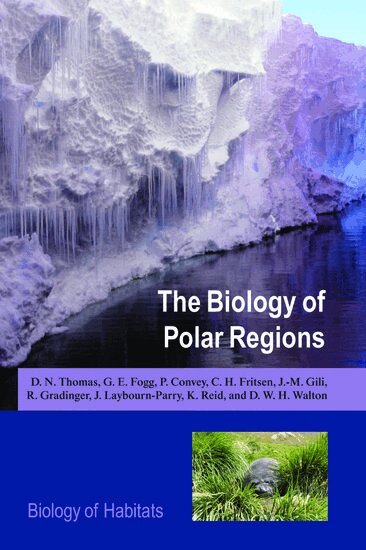
    The Biology of Polar Regions

    AvD.N. Thomas,G.E. Fogg

    Häftad, Engelska, 2008

    Del i serien Biology of Habitats Series

    952 kr

    Beställningsvara. Skickas inom 7-10 vardagar. Fri frakt över 249 kr.

    Fler format och utgåvor

    Inbunden

    2 453 kr

    Beskrivning

    There is now an increased awareness of the importance of polar regions in the Earth system, as well as their vulnerability to anthropogenic derived change, including of course global climate change. This new edition offers a concise but comprehensive introduction to polar ecology and has been thoroughly revised and updated throughout, providing expanded coverage of marine ecosystems and the impact of humans. It incorporates a detailed comparison of the Arctic and Antarctic systems, with a particular emphasis on the effects of climate change, and describes marine, freshwater, glacial, and terrestrial habitats. This breadth of coverage is unique in the polar biology literature.As with other titles in the Biology of Habitats Series, particular emphasis is placed on the organisms that dominate these extreme environments although pollution, conservation and experimental aspects are also considered. This accessible text is suitable for both senior undergraduate and graduate students taking courses in polar ecology, often as part of a wider marine biology degree programme. It will also be of value and use to the many professional ecologists and conservation biologists requiring a concise overview of the topic.

    Produktinformation

    • Utgivningsdatum:2008-03-20
    • Mått:156 x 234 x 20 mm
    • Vikt:644 g
    • Format:Häftad
    • Språk:Engelska
    • Serie:Biology of Habitats Series
    • Antal sidor:410
    • Upplaga:2
    • Förlag:OUP OXFORD
    • ISBN:9780199298136

    Utforska kategorier

    • Biovetenskap inom Naturvetenskap och teknik
    • Marinbiologi inom Naturvetenskap och teknik
    • Geografi inom Naturvetenskap och teknik

    Mer om författaren

    Dr. David N. Thomas is Professor in Marine Biology at the School of Ocean Sciences, University of Wales Bangor. Between 1989 and 1996 he held four research scientist posts in Germany at the University of Bremen, Alfred Wegener Institute, Bremerhaven, University of Oldenburg and Centre for Marine Tropical Ecology, Bremen. He was appointed to his position at the University of Wales-Bangor in July 1996. In 2001 to 2003 he held an Ocean and Climate Research Fellowship at the Hanse Institute for Advanced Study, Germany.G. E. Fogg was Professor Emeritus of Marine Biology, School of Ocean Sciences University of Wales, Bangor.Dr. Peter Convey is Research Scientist at the Biological Sciences Division of the British Antarctic Survey.Dr. Christian Fritsen is Assistant Research Professor in the Division of Earth and Ecosystem Sciences at the Desert Research Institute, Nevada, USA.Dr Josep-Maria Gili is of the Institut de Ciències del Mar, Spanish National Research CouncilDr Rolf Gradinger is Assistant Professor of Biological Oceanography at the School of Fisheries and Ocean Sciences, University of Alaska, FairbanksProf. Johanna Laybourn-Parry is Dean of Natural Sciences at Keele University. Her research interests centre around polar limnology, in particular carbon cycling, environmental microbiology, protozoan ecophysiology and biological processes on glaciers. Her Antarctic work is conducted with the Australian and US Antarctic programmes while her work in the Arctic is conducted in Svalbard. She has been funded by NERC, The Leverhulme Trust, EPSRC, Industry, the US National Science Foundation and the Australian Antarctic Science Advisory Committee (ASAC). She currently holds a grant from the Leverhulme Trust for work on protozoan feeding selectivity physiology and from ASAC for investigating bacterial biodiversity in Antarctic saline lakes. Dr. Keith Reid is an ecologist at the British Antarctic Survey.Professor David Walton is a chief scientist at the British Antarctic Survey.

    Recensioner i media

    Review from previous edition This is a masterful synthesis of information across many disciplines about the two polar regions giving, as intended, a readily accessible overview that deserves a long future role as the foundation to the teaching and understanding of polar biology.

    Innehållsförteckning

    • Preface ; 1. Introduction to the Polar Regions ; 2. Stress, Adaptation and Survival in Polar Regions ; 3. Periglacial and Terrestrial Habitats in Polar Regions ; 4. Glacial Habitats in Polar Regions ; 5. Inland Waters in Polar Regions ; 6. Open Oceans in Polar Regions ; 7. Frozen Oceans in Polar Regions ; 8. Marine Benthos in Polar Regions ; 9. Birds and Mammals in Polar Regions ; 10. Climate Change in Polar Regions ; 11. Human impacts on Polar Regions ; 12. Some Conclusions ; Further Reading & Web Resources ; References ; Index