• Fri frakt över 249 kr
  • •
  • Snabba leveranser
  • •
  • Billiga böcker
Kundservice

Du är på sajten för privatpersoner.

Företag, bibliotek eller offentlig verksamhet?

Du handlar på classic.bokus.com, där alla dina funktioner finns intakta.
Till classic.bokus.com
Bokus logotyp. Gå till startsidan.
  • Erbjudanden
  • Student
  • Topplistor
  • Barn & ungdom
  • Bokus Play
  • E-böcker
  • Ljudböcker
  • Pocketböcker
  • Spel och pussel

Pocketfynda! Hundratals böcker för 49 kr/st →

Sidfot

Mina sidor

    Hjälp

    • Kundservice
    • Vanliga frågor och svar
    • Frakt och leverans
    • Retur vid ångerrätt
    • Reklamera vara
    • Betalning
    • Köpvillkor
    • Allmänna villkor
    • Information om webbplatsens tillgänglighet

    Om Bokus

    • Om oss
    • Pressrum
    • För studenter
    • För företag
    • För bibliotek och offentlig verksamhet
    • För leverantörer
    • Hållbarhet

    Populärt

    • Aktuella erbjudanden
    • Presentkort
    • Studentlitteratur
    • Nya böcker
    • Topplistor
    • Signerade böcker
    • Engelska böcker

    Inspiration

    • Boktips
    • BookTok
    • Barnbokskaraktärer
    • Populära författare
    Logotyp för Bokus
    Följ oss på Facebook (extern länk)Följ oss på Instagram (extern länk)Följ oss på YouTube (extern länk)Följ oss på TikTok (extern länk)
    bokus @ CookiesAnpassa cookiesIntegritetspolicyKöpvillkor
    Till Citymail hemsida (extern länk)Till Budbee hemsida (extern länk)Till Postnord hemsida (extern länk)Till Schenker hemsida (extern länk)Till Early Bird hemsida (extern länk)Till Walleys hemsida (extern länk)
    1. Filosofi och religion
    2. Filosofi
    3. Filosofiska discipliner

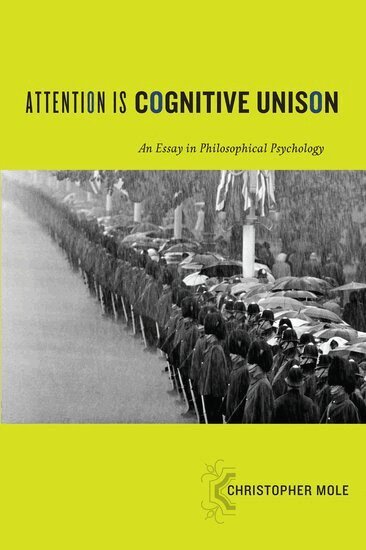
    Attention Is Cognitive Unison

    An Essay in Philosophical Psychology

    AvChristopher Mole

    Häftad, Engelska, 2013

    Del i serien Philosophy of Mind Series

    630 kr

    Beställningsvara. Skickas inom 5-8 vardagar. Fri frakt över 249 kr.

    Fler format och utgåvor

    E-bok

    411 kr

    Inbunden

    1 595 kr

    E-bok

    411 kr

    Beskrivning

    Some psychological phenomena can be explained by identifying and describing the processes that constitute them. Others cannot be explained in that way. In Attention is Cognitive Unison Christopher Mole gives a precise account of the metaphysical difference that divides these two categories and shows that, when current psychologists attempt to explain attention, they assign it to the wrong one. Having rejected the metaphysical approach taken by our existing theories of attention Mole then develops a new theory. According to this theory the question of whether someone is paying attention is not settled by the facts about which processes are taking place. It is settled by the facts about whether the processes that serve that person's task-- whichever processes those happen to be--are processes that operate in unison. This theory gives us a new account of the problems that have dogged debates about the psychology of attention since the middle of the twentieth century. It also gives us a new way to understand the explanatory importance of cognitive psychology's empirical findings. The book as whole shows that metaphysical questions have a foundational role to play in the explanatory project of cognitive psychology. This volume is of interest to anyone engaged in current debates in the philosophy of mind and perception, and in cognitive science generally.

    Produktinformation

    • Utgivningsdatum:2013-12-12
    • Mått:157 x 231 x 15 mm
    • Vikt:295 g
    • Format:Häftad
    • Språk:Engelska
    • Serie:Philosophy of Mind Series
    • Antal sidor:200
    • Förlag:OUP USA
    • ISBN:9780199330300

    Utforska kategorier

    • Filosofiska discipliner inom Filosofi och religion

    Mer om författaren

    Christopher Mole is Associate Professor in Philosophy at University of British Columbia, Vancouver.

    Recensioner i media

    Mole carefully and clearly makes his case, offering readers two different approaches to attention. Thorough and convincing, Mole links his theory to consciousness, intentionality, causation, and much else. This is an important book for professionals and graduate students of philosophy of mind and cognitive science. Highly Recommended.

    Innehållsförteckning

    • 1. Highlights of a Difficult History ; 1.1 The Preliminary Identification of Our Topic ; 1.2 Three Approaches ; 1.3 Bradley's Protest ; 1.4 James's Disjunctive Theory ; 1.5 The Source of Bradley's Dissatisfaction ; 1.6 Behaviourism and After ; 1.7 Heirs of Bradley in the Twentieth Century ; 2. The Underlying Metaphysical Issue ; 2.1 Explanatory Tactics ; 2.2 The Basic Distinction ; 2.3 Metaphysical Categories and Taxonomies ; 2.4 Adverbialism, Multiple Realizability, and Natural Kinds ; 2.5 Adverbialism and Levels of Explanation ; 2.6 Taxonomies and Supervenience Relations ; 3. Rejecting the Process First View ; 3.1 Supervenience-Failure ; 3.2 The Modal Commitments of The Process-First View ; 3.3 The Interference Argument - A Putative Problem for Adverbialist Accounts ; 3.4 Conclusion ; 4. Cognitive Unison ; 4.1 Introduction ; 4.2 The Problem with Attitude Based Adverbialism ; 4.3 Gilbert Ryle and Alan White ; 4.4 White's Argument Against Disposition-Based Adverbialism ; 4.5 The Cognitive Unison Theory ; 4.6 Tasks ; 4.7 Cognitive Processes ; 4.8 Potential Service of a Task ; 4.9 Superordinate Tasks ; 4.10 Some Features of the Theory ; 4.11 Divided Attention ; 4.12 Degrees of Attention and Merely Partial Attention ; 4.13 Summary ; 5. The Causal Life of Attention ; 5.1 Mental Causation ; 5.2 How to Respond to Mental Causation Objections ; 5.3 The Causal Role of Attention ; 5.4 Attention as an enabling condition ; 5.5 Counterfactuals ; 5.6 The Causal Relevance of Attention per se ; 5.7 Counterfactuals and Causally Relevant Properties ; 5.8 Objections to Counterfactual Analysis of Causation and of Causal Relevance ; 5.9 The Extrinsicness of Unison ; 5.10 The Privative Character of Unison and The Problem of Absence Causation ; 5.11 Causal Exclusion ; 5.12 Summary ; 6. Consequences for Cognitive Psychology ; 6.1 Psychology and Metaphysics ; 6.2 The Metaphysical Commitments of the Process-Identifying Project ; 6.3 The Diverse Explanatory Construals of Current Psychological Results ; 6.4 Reasons for Deflation ; 6.5 Inductively Unreliable Properties ; 6.6 Questions Without Answers ; 6.7 The Positive Payoff ; 7. Philosophical Work for The Theory of Attention ; 7.1 Putting Attention to Philosophical Work ; 7.2 Attention and Reference ; 7.3 Attention and Consciousness ; 7.4 Prospects for Optimism ; Notes ; References