• Fri frakt över 249 kr
  • •
  • Snabba leveranser
  • •
  • Billiga böcker
Kundservice

Du är på sajten för privatpersoner.

Företag, bibliotek eller offentlig verksamhet?

Du handlar på classic.bokus.com, där alla dina funktioner finns intakta.
Till classic.bokus.com
Bokus logotyp. Gå till startsidan.
  • Erbjudanden
  • Nyheter
  • Student
  • Topplistor
  • Barn & ungdom
  • Bokus Play
  • E-böcker
  • Pocketböcker
  • Spel & pussel

10% rabatt på allt med kod NYSTART10 →

Sidfot

Mina sidor

    Hjälp

    • Kundservice
    • Vanliga frågor och svar
    • Frakt och leverans
    • Retur vid ångerrätt
    • Reklamera vara
    • Betalning
    • Köpvillkor
    • Allmänna villkor
    • Information om webbplatsens tillgänglighet

    Om Bokus

    • Om oss
    • Pressrum
    • För studenter
    • För företag
    • För bibliotek och offentlig verksamhet
    • För leverantörer
    • Hållbarhet

    Populärt

    • Aktuella erbjudanden
    • Presentkort
    • Studentlitteratur
    • Nya böcker
    • Topplistor
    • Signerade böcker
    • Engelska böcker

    Inspiration

    • Boktips
    • BookTok
    • Populära bokserier
    • Barnbokskaraktärer
    • Populära författare
    Logotyp för Bokus
    Följ oss på Facebook (extern länk)Följ oss på Instagram (extern länk)Följ oss på YouTube (extern länk)Följ oss på TikTok (extern länk)
    bokus @ CookiesAnpassa cookiesIntegritetspolicyKöpvillkor
    Till Citymail hemsida (extern länk)Till Budbee hemsida (extern länk)Till Postnord hemsida (extern länk)Till Schenker hemsida (extern länk)Till Early Bird hemsida (extern länk)Till Walleys hemsida (extern länk)
    1. Medicin
    2. Medicin: allmänt
    3. Den medicinska professionen
    4. Medicinsk etik och läkaretik

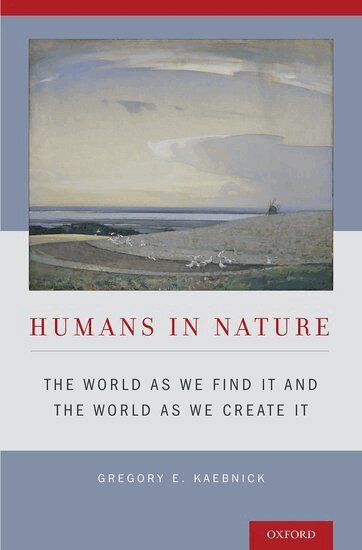
    Humans in Nature

    The World As We Find It and the World As We Create It

    AvGregory E. Kaebnick

    Inbunden, Engelska, 2014

    1 403 kr

    Beställningsvara. Skickas inom 5-8 vardagar. Fri frakt över 249 kr.

    Fler format och utgåvor

    E-bok

    750 kr

    E-bok

    752 kr

    Beskrivning

    Contemporary debates over issues as wide-ranging as the protection of wildernesses and endangered species, the spread of genetically modified organisms, the emergence of synthetic biology, and the advance of human enhancement, all of which seem to spin into deeper and more baffling questions with every change in the news cycle, often circle back to the same fundamental question: should there be limits to the human alteration of the natural world? A growing number of people view the human capacity to alter natural states of affairs -- from formerly wild spaces and things around us to crops and livestock to our own human nature -- as cause for moral alarm. That reaction raises a number of perplexing philosophical questions, however: Can we identify "natural" states of affairs at all? Does the idea of being morally concerned about the human relationship to nature make any sense? Should such a concern influence public policy and politics, or should government stay strenuously neutral on such matters?Through a study of moral debates about the environment, agricultural biotechnology, synthetic biology, and human enhancement, Gregory E. Kaebnick, a research scholar at The Hastings Center and editor of the Hastings Center Report, argues that concerns about the human alteration of nature can be legitimate and serious, but also that they are complex, contestable, and of limited political force.Kaebnick defends attempts to identify "natural" states of affairs by disentangling the nature/artifact distinction from metaphysical hoariness. Drawing on David Hume, he also defends moral standards for the human relationship to nature, arguing that they, and moral standards generally, should be understood as grounded in what Hume called the "passions." Yet what counts as "natural" can be delineated only roughly, he concludes, and moral standards for interaction with nature are less a matter of obligation than of ideals. Kaebnick also concludes, drawing on an interpretation of the liberal principle of neutrality, that government may support those standards but must be careful not to enforce them. Thus Kaebnick looks for a middle way on debates that have tended toward polarization."As differences between nature and artifact become steadily less substantial, problems about preservation run to the core of how people can make sense of themselves, of each other, and of our shared world. Kaebnick's solutions are creative and compelling, theoretically elegant and politically practical. Providing distinctive ways forward, when much academic and policy discussion seems exhausted, his book demands wide attention. In return, it inspires hope." - James Nelson, Michigan State University

    Produktinformation

    • Utgivningsdatum:2014-01-09
    • Mått:241 x 155 x 35 mm
    • Vikt:703 g
    • Format:Inbunden
    • Språk:Engelska
    • Antal sidor:224
    • Förlag:OUP USA
    • ISBN:9780199347216

    Utforska kategorier

    • Medicinsk etik och läkaretik inom Medicin
    • Klinisk medicin och internmedicin inom Medicin
    • Olycksfalls- och akutmedicin inom Medicin

    Mer om författaren

    Gregory E. Kaebnick is a scholar at The Hastings Center and editor of the Hastings Center Report. He has been coinvestigator of two research projects funded by the Alfred P. Sloan Foundation on the ethical issues of synthetic biology, principal investigator of a project funded by the National Endowment for the Humanities on appeals to nature in debates about biotechnology and the environment, coinvestigator in a National Institutes of Health-funded project on genetic paternity testing, and a participant in a series of other Hastings projects funded by the National Institutes of Health and the Rockefeller Foundation on issues concerning the application of medical technologies and agricultural biotechnology.

    Innehållsförteckning

    • Preface ; Chapter 1. The Nature of "Nature": What to Ask of a Concept ; Chapter 2. Perceptions of the Soul: The Nature of Morality ; Chapter 3. The "Call of the Wild": Ideals and Obligations ; Chapter 4. Space for Nature: Intrinsic Moral Values in Public Policy ; Chapter 5. Nature Naturalized: Wilderness and Wildlife ; Chapter 6. Nature on the Farm: Genetically Modified Plants and Animals ; Chapter 7. Nature in the Factory: Synthetic Biology ; Chapter 8: Nature in Us: Humanism and Transhumanism ; Bibliography