• Fri frakt över 249 kr
  • •
  • Snabba leveranser
  • •
  • Billiga böcker
Kundservice

Du är på sajten för privatpersoner.

Företag, bibliotek eller offentlig verksamhet?

Du handlar på classic.bokus.com, där alla dina funktioner finns intakta.
Till classic.bokus.com
Bokus logotyp. Gå till startsidan.
  • Erbjudanden
  • Nyheter
  • Student
  • Topplistor
  • Barn & ungdom
  • Bokus Play
  • E-böcker
  • Pocketböcker
  • Spel & pussel

10% rabatt på allt med kod NYSTART10 →

Sidfot

Mina sidor

    Hjälp

    • Kundservice
    • Vanliga frågor och svar
    • Frakt och leverans
    • Retur vid ångerrätt
    • Reklamera vara
    • Betalning
    • Köpvillkor
    • Allmänna villkor
    • Information om webbplatsens tillgänglighet

    Om Bokus

    • Om oss
    • Pressrum
    • För studenter
    • För företag
    • För bibliotek och offentlig verksamhet
    • För leverantörer
    • Hållbarhet

    Populärt

    • Aktuella erbjudanden
    • Presentkort
    • Studentlitteratur
    • Nya böcker
    • Topplistor
    • Signerade böcker
    • Engelska böcker

    Inspiration

    • Boktips
    • BookTok
    • Populära bokserier
    • Barnbokskaraktärer
    • Populära författare
    Logotyp för Bokus
    Följ oss på Facebook (extern länk)Följ oss på Instagram (extern länk)Följ oss på YouTube (extern länk)Följ oss på TikTok (extern länk)
    bokus @ CookiesAnpassa cookiesIntegritetspolicyKöpvillkor
    Till Citymail hemsida (extern länk)Till Budbee hemsida (extern länk)Till Postnord hemsida (extern länk)Till Schenker hemsida (extern länk)Till Early Bird hemsida (extern länk)Till Walleys hemsida (extern länk)
    1. Medicin
    2. Andra medicinska specialiteter
    3. Klinisk psykologi

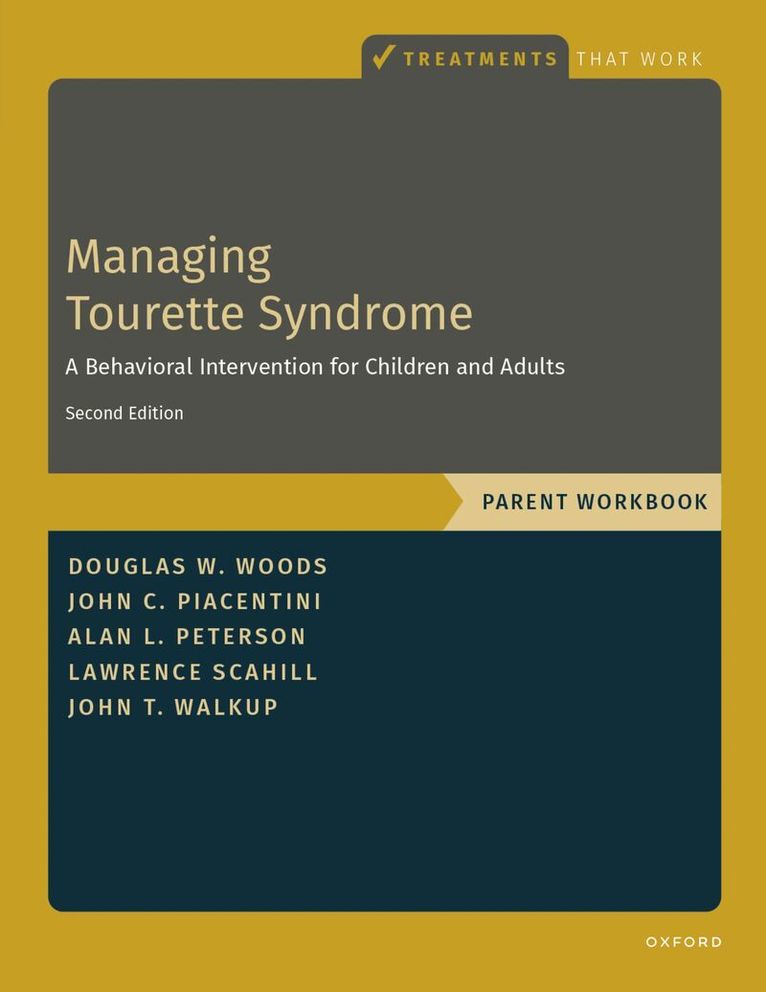
    Managing Tourette Syndrome

    A Behavioral Intervention for Children and Adults Parent Workbook

    AvDouglas W. Woods,John C. Piacentini

    Häftad, Engelska, 2025

    Del i serien Treatments That Work

    283 kr

    Beställningsvara. Skickas inom 5-8 vardagar. Fri frakt över 249 kr.

    Fler format och utgåvor

    Häftad

    653 kr

    Häftad

    977 kr

    Häftad

    583 kr

    Häftad

    665 kr

    Beskrivning

    This Parent Workbook addresses the treatment of Tourette syndrome (TS) in children and adults. The goal of this 11-session program is to teach the patient effective tic management skills rather than to cure the tic disorder. Children, alongside parents, will be taught how to become aware of tics, how to substitute other behaviors to manage tics when they start to appear, and how to avoid factors that may make tics worse, as well as relaxation techniques to reduce stress and relapse prevention strategies. The workbook provides user-friendly forms for tracking symptoms and monitoring tic severity.Now into its second edition, this well-established treatment protocol is recognized as a first-line treatment for tics in individuals across the world and outlines the protocol for the Comprehensive Behavioral Intervention for Tics (CBIT). Written by the treatment developers, this book provides not only the technical knowledge of how the treatment can be effectively implemented, but also includes the collected wisdom from nearly 20 years of treating patients with the protocol. This updated protocol is a must have for anyone trying to manage tic disorder.Also available is an updated and revised corresponding therapist guide, as well as the original workbook designed specifically for adolescent and adult clients.

    Produktinformation

    • Utgivningsdatum:2025-09-30
    • Mått:200 x 260 x 10 mm
    • Vikt:195 g
    • Format:Häftad
    • Språk:Engelska
    • Serie:Treatments That Work
    • Antal sidor:72
    • Upplaga:2
    • Förlag:OUP USA
    • ISBN:9780199363360

    Utforska kategorier

    • Klinisk psykologi inom Medicin

    Mer om författaren

    Douglas W. Woods, Ph.D. is Provost and Professor of Psychology at Loyola University Chicago. Dr. Woods is a recognized expert in the assessment and treatment of tic disorders and trichotillomania, and other obsessive-compulsive spectrum disorders. He has published more than 300 journal articles and book chapters on these and related topics. Dr. Woods is a member of the Tourette Association of America's Advisory Board, and his research has been funded by grants from the National Institutes of Health and the Tourette Association of America.John C. Piacentini, PhD, ABPP, is Professor of Psychiatry and Biobehavioral Sciences, and Director of the Child OCD, Anxiety, and Tic Disorders Program and Center for Child Anxiety, Resilience, Education and Support (CARES) in the Division of Child and Adolescent Psychiatry at the UCLA Semel Institute for Neuroscience and Human Behavior. Dr. Piacentini has led trainings on the treatment of tic disorder, OCD, and child anxiety across the United States and around the world, and has authored a number of treatment manuals in the Programs That Work™ series, including Overcoming Childhood OCD: a Therapist's Guide. He has received numerous research grants from NIH and other organizations to study the treatment of child and adolescent tic disorders, OCD, and anxiety and has authored close to 400 scientific papers and book chapters on child mental health.He is Co-chair of the Scientific Advisory Board of the Tourette Syndrome Association, Chair of the Board of Directors and Scientific Advisory Board of the Trichotillomania Learning Center, and holds board positions in several other mental health organizations.Alan L. Peterson, PhD, is a professor in the Department of Psychiatry and Behavioral Sciences at the University of Texas Health Science Center at San Antonio. In collaboration with Dr. Nathan Azrin, Dr. Peterson conducted several of the initial studies to develop and evaluate the treatment protocol for the use of habit reversal for the treatment of Tourette syndrome. He has more than 385 scientific publications to his credit. Dr. Peterson's research has been funded by grants from the National Institutes of Health, the Department of Defense, and the Tourette Syndrome Association.Lawrence D. Scahill, MSN, PhD, is Professor of Pediatrics at Emory University School of Medicine and Director of Clinical Trials at the Marcus Autism Center in Atlanta. Prior joining the faculty at Emory, he was professor at the Yale University School Nursing and the Yale Child Study Center. At Yale, Dr. Scahill was part of several NIH-funded multisite networks focused on developing and testing new treatments for children with autism and children with tic disorders. Dr. Scahill served on the Medical Advisory Board of the Tourette Association of America from 1994 to 2012. He remains actively involved in the Tourette Association Behavioral Sciences Consortium. This consortium developed and tested Comprehensive Behavioral Intervention for Tics (CBIT). Dr.Scahill is the author or co-author of 300 publications on Tourette syndrome, autism, ADHD, and obsessive-compulsive disorder.John T. Walkup, MD, is Chair of the Pritzker Department of Psychiatry and Behavioral Health at Ann and Robert H. Lurie Children's Hospital of Chicago and Professor of Psychiatry at Northwestern Feinberg School of Medicine. Dr. Walkup's work covers three main areas of innovation and investigation. His work with movement disorders, specifically Tourette syndrome, uniquely spans psychiatry, child psychiatry and neurology. His expertise in child and adolescent psychiatry clinical trials focuses on the development and evaluation of psychopharmacological and psychosocial treatments and lastly, he has been involved in developing and evaluating interventions to reduce the large mental health disparities facing Native American youth, specifically drug use and suicide prevention.He is currently involved in the Lurie Children's and Northwestern Feinberg School of Medicine Tourette Association of America Center of Excellence and also receives funding to support efforts to reduce mental health disparities among minoritized youth in Chicago.

    Innehållsförteckning

    • Chapter 1: CBIT Program Overview for Parents and Other CaregiversChapter 2: Session 1Chapter 3: Session 2Chapter 4: Remaining SessionsChapter 5: Relaxation TrainingChapter 6: Relapse Prevention