E-bok, Engelska, 2015
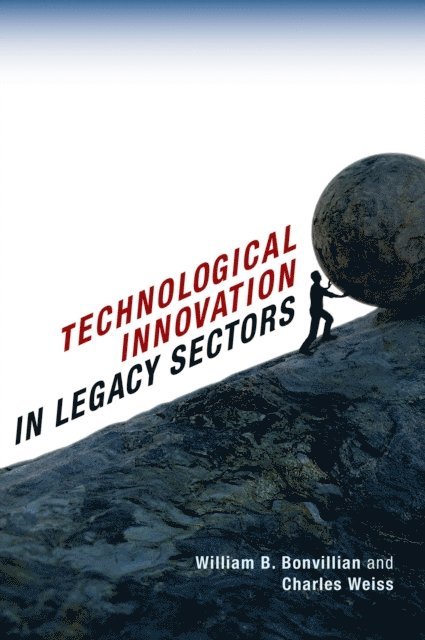
Technological Innovation in Legacy Sectors
Av Charles Weiss, William B. Bonvillian
1076 kr
Läs direkt i Bokus Reader – eller ladda ned till din enhet
Beskrivning
The American economy faces two deep problems: expanding innovation and raising the rate of quality job creation. Both have roots in a neglected problem: the resistance of Legacy economic sectors to innovation. While the U.S. has focused its policies on breakthrough innovations to create new economic frontiers like information technology and biotechnology, most of its economy is locked into Legacy sectors defended by technological/ economic/ political/ social paradigms that block competition from disruptive innovations that could challenge their models. Americans like to build technology "covered wagons" and take them "out west" to open new innovation frontiers; we don''t head our wagons "back east" to bring innovation to our Legacy sectors. By failing to do so, the economy misses a major opportunity for innovation, which is the bedrock of U.S. competitiveness and its standard of living.Technological Innovation in Legacy Sectors uses a new, unifying conceptual framework to identify the shared features underlying structural obstacles to innovation in major Legacy sectors: energy, air and auto transport, the electric power grid, buildings, manufacturing, agriculture, health care delivery and higher education, and develops approaches to understand and transform them. It finds both strengths and obstacles to innovation in the national innovation environments - a new concept that combines the innovation system and the broader innovation context - for a group of Asian and European economies.Manufacturing is a major Legacy sector that presents a particular challenge because it is a critical stage in the innovation process. By increasingly offshoring production, the U.S. is losing important parts of its innovation capacity. "Innovate here, produce here," where the U.S. took all the gains of its strong innovation system at every stage, is being replaced by "innovate here, produce there," which threatens to lead to "produce there, innovate there."To bring innovation to Legacy sectors, authors William Bonvillian and Charles Weiss recommend that policymakers focus on all stages of innovation from research through implementation. They should fill institutional gaps in the innovation system and take measures to address structural obstacles to needed disruptive innovations. In the specific case of advanced manufacturing, the production ecosystem can be recreated to reverse "jobless innovation" and add manufacturing-led innovation to the U.S.''s still-strong, research-oriented innovation system.
Produktinformation
- Utgivningsdatum: 2015-08-18
- Språk: Engelska
- Filformat: EPUB
- Kopieringsskydd: LCP
- ISBN: 9780199374533
- Förlag: Oxford University Press
Utforska kategorier
Betyg & recensioner
0 recensioner
Inga recensioner tillgängliga.