• Fri frakt över 249 kr
  • •
  • Snabba leveranser
  • •
  • Billiga böcker
Kundservice

Du är på sajten för privatpersoner.

Företag, bibliotek eller offentlig verksamhet?

Du handlar på classic.bokus.com, där alla dina funktioner finns intakta.
Till classic.bokus.com
Bokus logotyp. Gå till startsidan.
  • Erbjudanden
  • Student
  • Topplistor
  • Barn & ungdom
  • Bokus Play
  • E-böcker
  • Ljudböcker
  • Pocketböcker
  • Spel och pussel

5% studentrabatt – använd koden KURSBOK27 →

Sidfot

Mina sidor

    Hjälp

    • Kundservice
    • Vanliga frågor och svar
    • Frakt och leverans
    • Retur vid ångerrätt
    • Reklamera vara
    • Betalning
    • Köpvillkor
    • Allmänna villkor
    • Information om webbplatsens tillgänglighet

    Om Bokus

    • Om oss
    • Pressrum
    • För studenter
    • För företag
    • För bibliotek och offentlig verksamhet
    • För leverantörer
    • Hållbarhet

    Populärt

    • Aktuella erbjudanden
    • Presentkort
    • Studentlitteratur
    • Nya böcker
    • Topplistor
    • Signerade böcker
    • Engelska böcker

    Inspiration

    • Boktips
    • BookTok
    • Barnbokskaraktärer
    • Populära författare
    Logotyp för Bokus
    Följ oss på Facebook (extern länk)Följ oss på Instagram (extern länk)Följ oss på YouTube (extern länk)Följ oss på TikTok (extern länk)
    bokus @ CookiesAnpassa cookiesIntegritetspolicyKöpvillkor
    Till Citymail hemsida (extern länk)Till Budbee hemsida (extern länk)Till Postnord hemsida (extern länk)Till Schenker hemsida (extern länk)Till Early Bird hemsida (extern länk)Till Walleys hemsida (extern länk)
    1. Juridik
    2. Internationell rätt
    3. Folkrätt

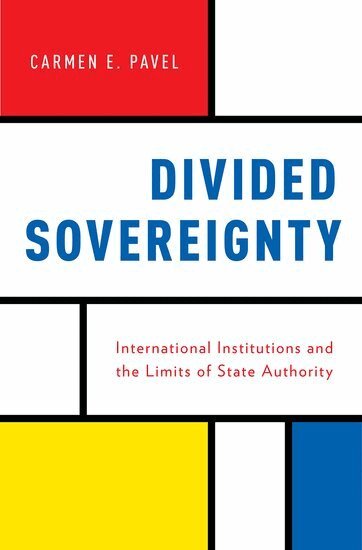
    Divided Sovereignty

    International Institutions and the Limits of State Authority

    AvCarmen Pavel

    Inbunden, Engelska, 2014

    1 856 kr

    Beställningsvara. Skickas inom 5-8 vardagar. Fri frakt över 249 kr.

    Fler format och utgåvor

    Häftad

    618 kr

    E-bok

    409 kr

    Beskrivning

    Divided Sovereignty explores new institutional solutions to the old question of how to constrain states when they commit severe abuses against their own citizens. The book argues that coercive international institutions can stop these abuses and act as an insurance scheme against the possibility of states failing to fulfill their most basic sovereign responsibilities. It thus challenges the long standing assumption that collective grants of authority from the citizens of a state should be made exclusively for institutions within the borders of that state. Despite worries that international institutions such as the International Criminal Court could undermine domestic democratic control, citizens can divide sovereign authority between state and international institutions consistent with their right of democratic self-governance.States are imperfect, incomplete political forms. They presuppose a monopoly of coercive power and final jurisdictional authority over their territory. These twin elements of sovereignty and authority can be used by state leaders and political representatives in ways that stray significantly from the interests of citizens. In the most extreme cases, when citizens become inconvenient obstacles in the pursuit of the self-serving ambitions of their leaders, state power turns against them. Genocide, torture, displacement, and rape are often the means of choice by which the inconvenient are made to suffer or vanish. The book defends universal, principled limits on state authority based on jus cogens norms, a special category of norms in international law that prohibit violations of basic human rights. Against skeptics, it argues that many of the challenges of building an additional layer of institutions can be met if we pay attention to the conditions of institutional success, which require (1) experimentation with different institutional forms, (2) limitations on the scope of authority for coercive international institutions through clear, narrow, well defined mandates, and (3) understanding the limits of existing knowledge on institutional design, which should make us suspicious of proposals for grand institutional schemes, such as global democracy.

    Produktinformation

    • Utgivningsdatum:2014-12-11
    • Mått:236 x 160 x 22 mm
    • Vikt:508 g
    • Format:Inbunden
    • Språk:Engelska
    • Antal sidor:240
    • Förlag:OUP USA
    • ISBN:9780199376346

    Utforska kategorier

    • Folkrätt inom Juridik
    • Statsvetenskap och politisk teori inom Samhälle och politik
    • Internationella relationer inom Samhälle och politik

    Mer om författaren

    Associate Director & Research Professor, University of Arizona Center for Philosophy and Freedom

    Recensioner i media

    Divided Sovereignty is a lucid piece of work that makes a coherent argument in favor of a pluralist conception of multilateral institutions, which would serve as the agents of peoples and, as a last result, protect peoples against fundamental violations of human rights.

    Innehållsförteckning

    • Introduction ; 1. Why Divided Sovereignty? ; 2. Method and Justification ; 3. Outline of the Book ; Chapter 1 Sovereignty, the Social Contract, and the Incompleteness of the State System ; 1. The Institutions of the Social Contract ; 2. On Sovereignty and Delegation of Authority ; 3. Problems of Institutional Design ; 4. Conceptual and practical Hurdles to Divided Sovereignty ; 5. Conclusion ; Chapter 2 Divided Sovereignty: the Principal-Agent Model ; 1. Sovereignty Limiting Norms and their Current Effects ; 2. Divided Sovereignty: The Principal-Agent Model ; 2.1 The Origins of the Model ; 2.2 The Principle-Agent Model for International Institutions ; 2.3 Delegation ; 2.4 The Role of Consent ; 3. Agency Costs at the International Level ; 4. Why Use Principal-Agent Theory? ; 5. Conclusion ; Chapter 3 Domestic and International Implications: Slavery, Genocide and Civil War ; 1. The Scope and Limits of International Authority ; 2. Constitutional Interpretation and Change ; 3. Slavery ; 4. Genocide ; 5. Civil Wars and Failed States ; 6. Conclusion ; Chapter 4 Theories and Institutional Facts ; 1. One Step Theorizing: Cosmopolitan Justice ; 2. Two Step Theorizing: The Case of Humanitarian Intervention ; 3. Objections ; 4. Conclusion ; Chapter 5 Romanticizing Institutions ; 1. Cosmopolitan Global Democracy ; 2. Rule of Law Experiments ; 3. Rule of Law for Global Democracy ; 4. Institutional Assumptions and Bureaucratic Pathologies ; 5. Conclusion ; Chapter 6 Institutional Pluralism ; 1. Institutions in International Criminal Law ; 2. Fragmentation and Conflict ; 3. The Benefits of a Pluralist System ; 4. Complex Social Orders ; 5. A Hobbesian Challenge ; 6. Conclusion ; Chapter 7 The Possibility of Rule-Governed Behavior in International Politics ; 1. Cooperation under Anarchy ; 2. Assumptions and Implications of International Relations Theorizing ; 3. Self-Preservation as the Dominant State Preference ; 4. The Possibility of a Rule-Governed Order ; Conclusion