• Fri frakt över 249 kr
  • •
  • Snabba leveranser
  • •
  • Billiga böcker
Kundservice

Du är på sajten för privatpersoner.

Företag, bibliotek eller offentlig verksamhet?

Du handlar på classic.bokus.com, där alla dina funktioner finns intakta.
Till classic.bokus.com
Bokus logotyp. Gå till startsidan.
  • Erbjudanden
  • Nyheter
  • Student
  • Topplistor
  • Barn & ungdom
  • Bokus Play
  • E-böcker
  • Pocketböcker
  • Spel & pussel

10% rabatt på allt med kod: NYSTART10 →

Sidfot

Mina sidor

    Hjälp

    • Kundservice
    • Vanliga frågor och svar
    • Frakt och leverans
    • Retur vid ångerrätt
    • Reklamera vara
    • Betalning
    • Köpvillkor
    • Allmänna villkor
    • Information om webbplatsens tillgänglighet

    Om Bokus

    • Om oss
    • Pressrum
    • För studenter
    • För företag
    • För bibliotek och offentlig verksamhet
    • För leverantörer
    • Hållbarhet

    Populärt

    • Aktuella erbjudanden
    • Presentkort
    • Studentlitteratur
    • Nya böcker
    • Topplistor
    • Signerade böcker
    • Engelska böcker

    Inspiration

    • Boktips
    • BookTok
    • Populära bokserier
    • Barnbokskaraktärer
    • Populära författare
    Logotyp för Bokus
    Följ oss på Facebook (extern länk)Följ oss på Instagram (extern länk)Följ oss på YouTube (extern länk)Följ oss på TikTok (extern länk)
    bokus @ CookiesAnpassa cookiesIntegritetspolicyKöpvillkor
    Till Citymail hemsida (extern länk)Till Budbee hemsida (extern länk)Till Postnord hemsida (extern länk)Till Schenker hemsida (extern länk)Till Early Bird hemsida (extern länk)Till Walleys hemsida (extern länk)
    1. Ekonomi och Ledarskap
    2. Nationalekonomi
    3. Internationell ekonomi

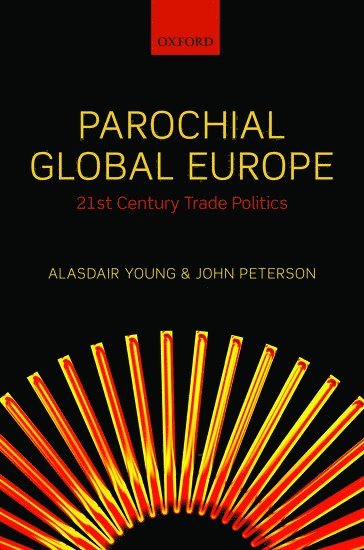
    Parochial Global Europe

    21st Century Trade Politics

    AvAlasdair R. Young,John Peterson

    Inbunden, Engelska, 2014

    2 061 kr

    Beställningsvara. Skickas inom 5-8 vardagar. Fri frakt över 249 kr.

    Beskrivning

    Europe's trade policies matter in global politics. Despite the recent focus on Brazil, India, and particularly China, the European Union remains the world's largest market and trader. Despite its recent economic troubles, Europe remains in a powerful position to shape how globalization is governed. We know surprisingly little about how its trade policy is actually made, because previous works have focused on individual trade policy decisions to the detriment of the 'big picture' of the Union as a trade power. Parochial Global Europe argues that trade policy is composed of multiple, distinct policies. Each presents a distinctive constellation of mobilized societal preferences, pattern of political institutions, and range of government preferences. The balance of economic power between the EU and its trade partner(s) affects the stakes involved. Together these four factors define trade policy sub-systems, which help explain both the EU's objectives and whether it realizes them. The authors advance this argument by analysing the EU's role in the demise of the Doha Round, its use of anti-dumping and pursuit of market access, the trade effects of its single market programme and efforts at regulatory diplomacy, including the launch of the Transatlantic Trade and Investment Partnership negotiations. Parochial Global Europe thus focuses centrally on modern, 21st century trade policy. It also sheds light on the EU as a global actor by analysing its use of trade policy as a tool of foreign policy from promoting development, to encouraging human rights and environmental protection, to punishing security threats.

    Produktinformation

    • Utgivningsdatum:2014-04-17
    • Mått:162 x 240 x 25 mm
    • Vikt:604 g
    • Format:Inbunden
    • Språk:Engelska
    • Antal sidor:292
    • Förlag:OUP OXFORD
    • ISBN:9780199579907

    Utforska kategorier

    • Internationell ekonomi inom Ekonomi och Ledarskap
    • Ekonomisk politik inom Ekonomi och Ledarskap
    • Folkrätt inom Juridik

    Mer om författaren

    Alasdair Young is co-director of the Center for European and Transatlantic Studies. He is vice-chair of the European Union Studies Association (2013-15). Before joining Georgia Tech he taught at the University of Glasgow for 10 years and held research posts at the European University Institute and the University of Sussex. He has written two previous books and edited seven others, including the forthcoming seventh edition of Policy-Making in the European Union, with Mark Pollack and Helen Wallace. He has published and a dozen articles -- including in Global Environmental Politics, the Journal of Common Market Studies, the Journal of European Public Policy, the Review of International Political Economy, and World Politics -- and written 30 book chapters. He is Associate Professor and Jean Monnet Chair in the Sam Nunn School of International Affairs at the Georgia Institute of Technology.John Peterson has authored or edited 18 books, including Multilateralism in the 21st Century (2013, with Caroline Bouchard and Nathalie Tocci), The European Commission of the 21st Century (2013, with an international research team), The Institutions of the European Union (2012, with Michael Shackleton) and The European Union: How Does it Work? (with Elizabeth Bomberg and Richard Corbett). He is a former editor of the Journal of Common Market Studies and previously held posts at the Universities of Glasgow, York, Essex, Oxford, California and the College of Europe, Bruges. He is Professor of International Politics at the University of Edinburgh.

    Recensioner i media

    John Peterson and Alasdair Young do a masterful job of exposing the secret ingredients of Europes trade policy sausage a fascinating blend of commercial interests, reciprocal bargaining and foreign objectives come together as the European Union uses its considerable heft to shape global policy.

    Innehållsförteckning

    • 1. The Importance of the EU to Trade and Trade to the EU ; 2. Analyzing EU Trade Politics: A Policy Sub-Systems Approach ; 3. The Origins and Development of EU Trade Policy ; 4. The Multilateral Trading System: The (False?) Promise of Reciprocity ; 5. Non-Reciprocal Trade Policies: The Sword and the Shield ; 6. Incidental Trade Policy: The Single European Market ; 7. Limited Liberalization Through Regulatory Cooperation ; 8. Trade Policy as Foreign Policy ; 9. Conclusions: 21st Century European Trade Politics ; References