• Fri frakt över 249 kr
  • •
  • Snabba leveranser
  • •
  • Billiga böcker
Kundservice

Du är på sajten för privatpersoner.

Företag, bibliotek eller offentlig verksamhet?

Du handlar på classic.bokus.com, där alla dina funktioner finns intakta.
Till classic.bokus.com
Bokus logotyp. Gå till startsidan.
  • Erbjudanden
  • Student
  • Topplistor
  • Barn & ungdom
  • Bokus Play
  • E-böcker
  • Ljudböcker
  • Pocketböcker
  • Spel och pussel

Pocketfynda! Hundratals böcker för 49 kr/st →

Sidfot

Mina sidor

    Hjälp

    • Kundservice
    • Vanliga frågor och svar
    • Frakt och leverans
    • Retur vid ångerrätt
    • Reklamera vara
    • Betalning
    • Köpvillkor
    • Allmänna villkor
    • Information om webbplatsens tillgänglighet

    Om Bokus

    • Om oss
    • Pressrum
    • För studenter
    • För företag
    • För bibliotek och offentlig verksamhet
    • För leverantörer
    • Hållbarhet

    Populärt

    • Aktuella erbjudanden
    • Presentkort
    • Studentlitteratur
    • Nya böcker
    • Topplistor
    • Signerade böcker
    • Engelska böcker

    Inspiration

    • Boktips
    • BookTok
    • Barnbokskaraktärer
    • Populära författare
    Logotyp för Bokus
    Följ oss på Facebook (extern länk)Följ oss på Instagram (extern länk)Följ oss på YouTube (extern länk)Följ oss på TikTok (extern länk)
    bokus @ CookiesAnpassa cookiesIntegritetspolicyKöpvillkor
    Till Citymail hemsida (extern länk)Till Budbee hemsida (extern länk)Till Postnord hemsida (extern länk)Till Schenker hemsida (extern länk)Till Early Bird hemsida (extern länk)Till Walleys hemsida (extern länk)
    1. Naturvetenskap och teknik
    2. Geovetenskap
    3. Miljövetenskap och miljöpolitik

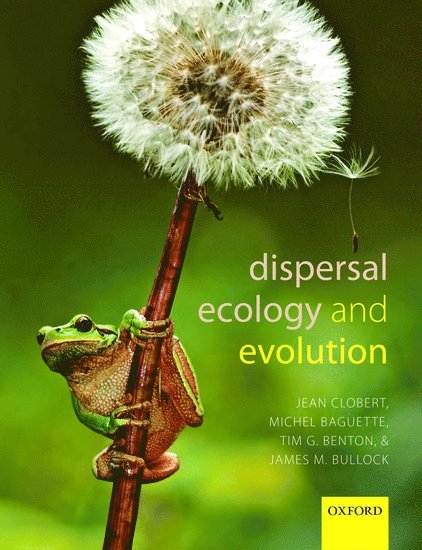
    Dispersal Ecology and Evolution

    AvJean Clobert,Michel Baguette

    Häftad, Engelska, 2012

    1 245 kr

    Beställningsvara. Skickas inom 7-10 vardagar. Fri frakt över 249 kr.

    Beskrivning

    Now that so many ecosystems face rapid and major environmental change, the ability of species to respond to these changes by dispersing or moving between different patches of habitat can be crucial to ensuring their survival. Understanding dispersal has become key to understanding how populations may persist. Dispersal Ecology and Evolution provides a timely and wide-ranging overview of the fast expanding field of dispersal ecology, incorporating the very latest research. The causes, mechanisms, and consequences of dispersal at the individual, population, species, and community levels are considered. Perspectives and insights are offered from the fields of evolution, behavioural ecology, conservation biology, and genetics. Throughout the book theoretical approaches are combined with empirical data, and care has been taken to include examples from as wide a range of species as possible - both plant and animal.

    Produktinformation

    • Utgivningsdatum:2012-09-27
    • Mått:189 x 245 x 27 mm
    • Vikt:956 g
    • Format:Häftad
    • Språk:Engelska
    • Antal sidor:498
    • Förlag:OUP OXFORD
    • ISBN:9780199608904

    Utforska kategorier

    • Miljövetenskap och miljöpolitik inom Naturvetenskap och teknik
    • Biovetenskap inom Naturvetenskap och teknik
    • Växtböcker inom Djur och Natur

    Mer om författaren

    Jean Clobert is Research Director at the CNRS and is currently heading the "Station d'Ecologie Exéprimentale du CNRS à Moulis". He is also director of the Infrastructure ANAEE-S grouping all experimental research stations of the CNRS and INRA in France. Having published more than 250 regular papers in peer-reviewed journals and book chapters, he has been elected in the Academia Europaea in 2011.Michel Baguette is particularly interested by the role of dispersal in metapopulations and metacommunities. His objective is to seek how individual variability in dispersal moulds metapopulations and metacommunities and drives their dynamics and evolution, and what this means for biological diversity. His current research projects focus on (1) the genomic of dispersal phenotypic variation, and its consequences on metapopulation dynamics using artificial selection and experiments in mesocosms, and (2) the modelling of dispersal in fragmented landscapes.Tim Benton is a population ecologist with a particular interest in the mechanism by which environmental change impacts on population dynamics by affecting organisms' life histories. Much of his work has been conducted using a laboratory model organism, coupled with theoretical approaches. However, he has also applied his ideas to understanding biodiversity in agricultural landscapes. In addition to research, he has been head of department and Research Dean. He is currently working across the UK government, coordinating research on food and farming as "Champion" for the UK's Global Food Security programme.James Bullock is an applied ecologist. In his work he aims to use a fundamental understanding of the spatial ecology of populations and communities - especially of plants - to inform biodiversity conservation and environmental sustainability. He has particular interests in ecosystem services, ecological restoration and climate change. James works at the UK Centre for Ecology and Hydrology, which is the UK's Centre of Excellence for integrated research in terrestrial and freshwater ecosystems, and atmospheric science.

    Recensioner i media

    This book has great value for ecological theorists wishing to see modern work and examples from around the world on how dispersal ecology is studied, modelled, and now understood Steven N. Handel, Ecological Restoration This will be of interest to a broad readership, both as a reference text and as a source of stand alone examples for biogeographers, ecologists, evolutionary biologists and geneticists alike, whether they be working on theory or generating empirical data Frontiers of Biogeography A thoughtful synthesis of a broad range of literature, incorporating both empirical and theoretical studies. Sara L. Goodacre, Frontiers of Biogeography.

    Innehållsförteckning

    • PART 1. THE MULTIPLE CAUSES OF THE DISPERSAL PROCESS; PART 2. THE GENETICS OF DISPERSAL; PART 3. THE ASSOCIATION OF DISPERSAL WITH OTHER LIFE HISTORY TRAITS; PART 5. DISTRIBUTION OF DISPERSAL DISTANCES: DISPERSAL KERNELS; PART 5. DISPERSAL AND POPULATION SPATIAL DYNAMICS; PART 6. DISPERSAL AND CLIMATE CHANGE; PART 7. DISPERSAL AND HABITAT FRAGMENTATION; CONCLUSION