• Fri frakt över 249 kr
  • •
  • Snabba leveranser
  • •
  • Billiga böcker
Kundservice

Du är på sajten för privatpersoner.

Företag, bibliotek eller offentlig verksamhet?

Du handlar på classic.bokus.com, där alla dina funktioner finns intakta.
Till classic.bokus.com
Bokus logotyp. Gå till startsidan.
  • Erbjudanden
  • Nyheter
  • Student
  • Topplistor
  • Barn & ungdom
  • Bokus Play
  • E-böcker
  • Pocketböcker
  • Spel & pussel

10% rabatt på allt med kod NYSTART10 →

Sidfot

Mina sidor

    Hjälp

    • Kundservice
    • Vanliga frågor och svar
    • Frakt och leverans
    • Retur vid ångerrätt
    • Reklamera vara
    • Betalning
    • Köpvillkor
    • Allmänna villkor
    • Information om webbplatsens tillgänglighet

    Om Bokus

    • Om oss
    • Pressrum
    • För studenter
    • För företag
    • För bibliotek och offentlig verksamhet
    • För leverantörer
    • Hållbarhet

    Populärt

    • Aktuella erbjudanden
    • Presentkort
    • Studentlitteratur
    • Nya böcker
    • Topplistor
    • Signerade böcker
    • Engelska böcker

    Inspiration

    • Boktips
    • BookTok
    • Populära bokserier
    • Barnbokskaraktärer
    • Populära författare
    Logotyp för Bokus
    Följ oss på Facebook (extern länk)Följ oss på Instagram (extern länk)Följ oss på YouTube (extern länk)Följ oss på TikTok (extern länk)
    bokus @ CookiesAnpassa cookiesIntegritetspolicyKöpvillkor
    Till Citymail hemsida (extern länk)Till Budbee hemsida (extern länk)Till Postnord hemsida (extern länk)Till Schenker hemsida (extern länk)Till Early Bird hemsida (extern länk)Till Walleys hemsida (extern länk)
    1. Data och IT
    2. Systemvetenskap och AI

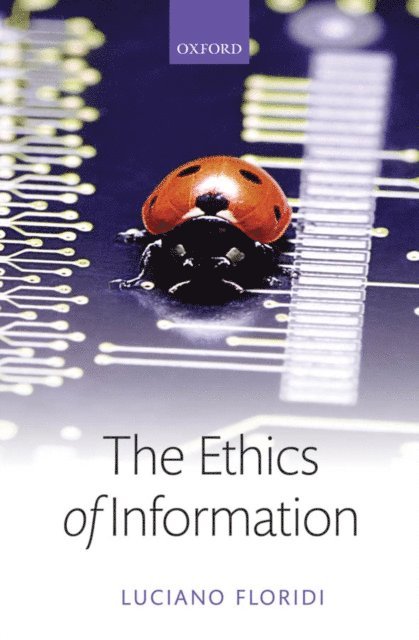
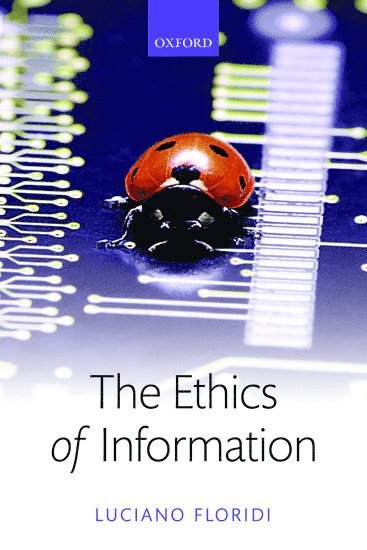
    The Ethics of Information

    AvLuciano Floridi

    Inbunden, Engelska, 2013

    1 686 kr

    Beställningsvara. Skickas inom 3-6 vardagar. Fri frakt över 249 kr.

    Fler format och utgåvor

    Häftad

    547 kr

    Beskrivning

    Luciano Floridi develops an original ethical framework for dealing with the new challenges posed by Information and Communication Technologies (ICTs). ICTs have profoundly changed many aspects of life, including the nature of entertainment, work, communication, education, health care, industrial production and business, social relations, and conflicts. They have had a radical and widespread impact on our moral lives and on contemporary ethical debates. Privacy, ownership, freedom of speech, responsibility, technological determinism, the digital divide, and pornography online are only some of the pressing issues that characterise the ethical discourse in the information society. They are the subject of Information Ethics (IE), the new philosophical area of research that investigates the ethical impact of ICTs on human life and society.Since the seventies, IE has been a standard topic in many curricula. In recent years, there has been a flourishing of new university courses, international conferences, workshops, professional organizations, specialized periodicals and research centres. However, investigations have so far been largely influenced by professional and technical approaches, addressing mainly legal, social, cultural and technological problems. This book is the first philosophical monograph entirely and exclusively dedicated to it.Floridi lays down, for the first time, the conceptual foundations for IE. He does so systematically, by pursuing three goals: a) a metatheoretical goal: it describes what IE is, its problems, approaches and methods;b) an introductory goal: it helps the reader to gain a better grasp of the complex and multifarious nature of the various concepts and phenomena related to computer ethics;c) an analytic goal: it answers several key theoretical questions of great philosophical interest, arising from the investigation of the ethical implications of ICTs.Although entirely independent of The Philosophy of Information (OUP, 2011), Floridi's previous book, The Ethics of Information complements it as new work on the foundations of the philosophy of information.

    Produktinformation

    • Utgivningsdatum:2013-10-10
    • Mått:162 x 236 x 28 mm
    • Vikt:728 g
    • Format:Inbunden
    • Språk:Engelska
    • Antal sidor:380
    • Förlag:OUP OXFORD
    • ISBN:9780199641321

    Utforska kategorier

    • Systemvetenskap och AI inom Data och IT
    • Referensverk och tvärvetenskap inom Samhälle och politik
    • Filosofiska discipliner inom Filosofi och religion

    Mer om författaren

    Luciano Floridi is Professor of Philosophy and Ethics of Information at the University of Oxford, Senior Research Fellow at the Oxford Internet Institute, and Fellow of St Cross College, Oxford. Among his recognitions, he has been appointed the Gauss Professor by the Academy of Sciences in Göttingen, and is recipient of the APA's Barwise Prize, the IACAP's Covey Award, and the INSEIT's Weizenbaum Award. He is an AISB and BCS Fellow, Editor in Chief of Philosophy & Technology and of the Synthese Library, and was Chairman of EU Commission's 'Onlife' research group. His most recent books are: The Philosophy of Information (OUP, 2011), Information: A Very Short Introduction (OUP, 2010), and The Cambridge Handbook of Information and Computer Ethics (CUP, 2010).

    Recensioner i media

    In this groundbreaking work, Luciano Floridi builds the foundations of Information Ethics (IE) by arguing that an informational interpretation of reality is required due to our increased reliance on information and communication technologies (ICTs) for our well-being and success.

    Innehållsförteckning

    • PREFACE ; 1. ETHICS AFTER THE INFORMATION REVOLUTION ; 2. WHAT IS INFORMATION ETHICS? ; 3. THE METHOD OF ABSTRACTION ; 4. INFORMATION ETHICS AS E-NVIRONMENTAL ETHICS ; 5. INFORMATION ETHICS AND THE FOUNDATIONALIST DEBATE ; 6. THE INTRINSIC VALUE OF THE INFOSPHERE ; 7. THE MORALITY OF ARTIFICIAL AGENTS ; 8. THE CONSTRUCTIONIST VALUES OF HOMO POIETICUS ; 9. ARTIFICIAL EVIL ; 10. THE TRAGEDY OF THE GOOD WILL ; 11. THE INFORMATIONAL NATURE OF SELVES ; 12. THE ONTOLOGICAL INTERPRETATION OF INFORMATIONAL PRIVACY ; 13. DISTRIBUTED MORALITY ; 14. INFORMATION BUSINESS ETHICS ; 15. GLOBAL INFORMATION ETHICS ; 16. A DEFENCE OF INFORMATION ETHICS ; EPILOGUE ; REFERENCES ; INDEX