• Fri frakt över 249 kr
  • •
  • Snabba leveranser
  • •
  • Billiga böcker
Kundservice

Du är på sajten för privatpersoner.

Företag, bibliotek eller offentlig verksamhet?

Du handlar på classic.bokus.com, där alla dina funktioner finns intakta.
Till classic.bokus.com
Bokus logotyp. Gå till startsidan.
  • Erbjudanden
  • Nyheter
  • Student
  • Topplistor
  • Barn & ungdom
  • Bokus Play
  • E-böcker
  • Pocketböcker
  • Spel & pussel

10% rabatt på allt med kod NYSTART10 →

Sidfot

Mina sidor

    Hjälp

    • Kundservice
    • Vanliga frågor och svar
    • Frakt och leverans
    • Retur vid ångerrätt
    • Reklamera vara
    • Betalning
    • Köpvillkor
    • Allmänna villkor
    • Information om webbplatsens tillgänglighet

    Om Bokus

    • Om oss
    • Pressrum
    • För studenter
    • För företag
    • För bibliotek och offentlig verksamhet
    • För leverantörer
    • Hållbarhet

    Populärt

    • Aktuella erbjudanden
    • Presentkort
    • Studentlitteratur
    • Nya böcker
    • Topplistor
    • Signerade böcker
    • Engelska böcker

    Inspiration

    • Boktips
    • BookTok
    • Populära bokserier
    • Barnbokskaraktärer
    • Populära författare
    Logotyp för Bokus
    Följ oss på Facebook (extern länk)Följ oss på Instagram (extern länk)Följ oss på YouTube (extern länk)Följ oss på TikTok (extern länk)
    bokus @ CookiesAnpassa cookiesIntegritetspolicyKöpvillkor
    Till Citymail hemsida (extern länk)Till Budbee hemsida (extern länk)Till Postnord hemsida (extern länk)Till Schenker hemsida (extern länk)Till Early Bird hemsida (extern länk)Till Walleys hemsida (extern länk)
    1. Filosofi och religion
    2. Religion och tro
    3. Religion: allmänt

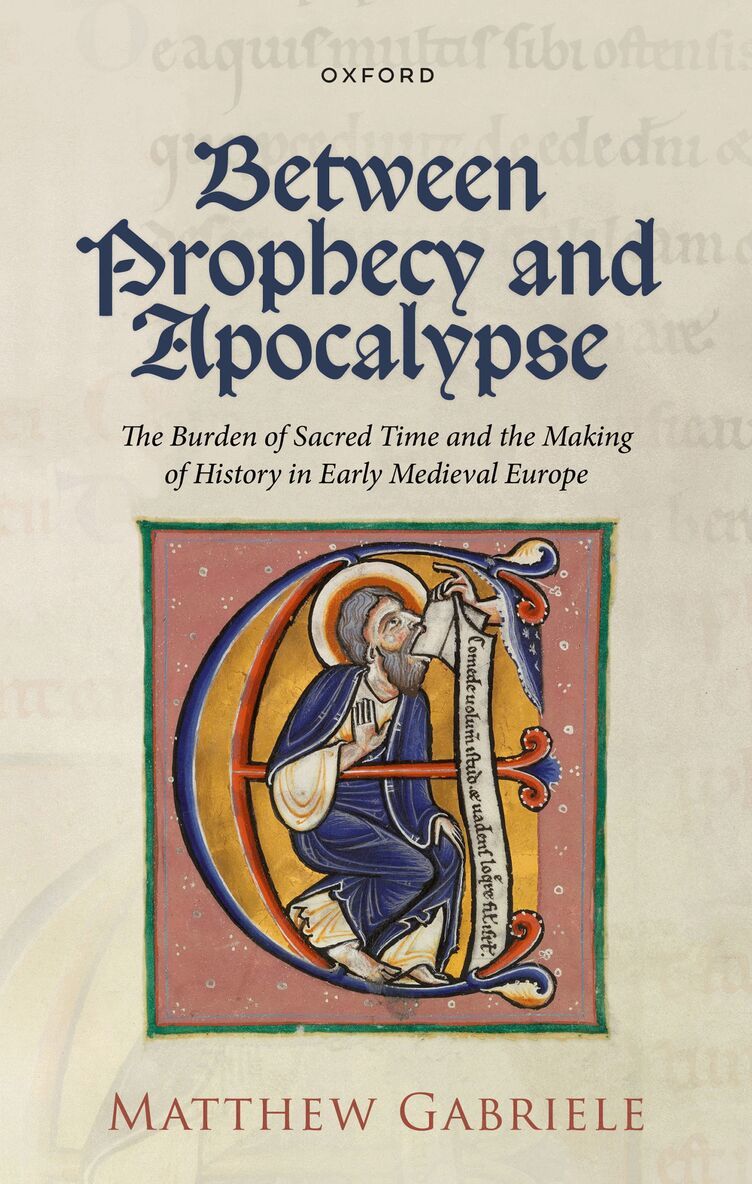
    Between Prophecy and Apocalypse

    The Burden of Sacred Time and the Making of History in Early Medieval Europe

    AvGabriele

    Inbunden, Engelska, 2024

    764 kr

    Beställningsvara. Skickas inom 3-6 vardagar. Fri frakt över 249 kr.

    Beskrivning

    The tenth and eleventh centuries in medieval Europe are commonly seen as a time of uncertainty and loss: an age of lawless aristocrats, of weak political authority, of cultural decline and dissolute monks, and of rampant superstition. It is a period often judged from its margins, compared (mostly negatively) to what came before and what would follow. We impose upon it both a sense of nostalgia and a teleology, as they somehow knowingly foreshadow what is to come.Seeking to complicate this mischaracterisation, which is primarily the invention of nineteenth and early twentieth century historiography, this book maps the movement between two intellectual stances: a shift from prophetic to apocalyptic thinking. Although the roots of this change lay in Late Antiquity, the fulcrum of this transition lies in the tenth and eleventh centuries. Biblical commentators in the fourth and fifth centuries enforced a particular understanding of sacred time that held until the ninth century, when exegetes of the ninth century found in their commentaries a different plan for God's new chosen people. This came into stark relief as the new kingdom of Israel (the Frankish empire under the Carolingians) had splintered in the 840s. God was manifesting his displeasure with the chosen people by fire and sword. What was perhaps unforeseen was that these commentaries that were written in the specific context of the Carolingian Civil War would be heavily copied and read for the next 200 years. Ideas that formed in a world that actively lamented the loss of empire had to be translated to a world that could only dream of that empire. As they spread across Europe, these ideas became the basis for monastic educational practices, and bled into other types of textual production, such as supposedly "secular" histories.Between Prophecy and Apocalypse charts an intellectual transformation triggered when the prescriptions laid out towards the end of the Carolingian empire began to be "realized" in subsequent centuries. Nostalgia entwined with an attentiveness to possible futures and spun together so tightly as to become a double helix. Ultimately, this book will offer a way to understand the central Middle Ages, a period of dynamic intellectual ferment when ideas could inspire action and (seemingly banal) conceptions of time and history could inspire moments of dramatic transformation and horrific violence.

    Produktinformation

    • Utgivningsdatum:2024-03-21
    • Mått:145 x 223 x 15 mm
    • Vikt:338 g
    • Format:Inbunden
    • Språk:Engelska
    • Antal sidor:160
    • Förlag:OUP OXFORD
    • ISBN:9780199642557

    Utforska kategorier

    • Religion: allmänt inom Filosofi och religion
    • Medeltiden inom Historia och arkeologi

    Mer om författaren

    Matthew Gabriele is a professor of medieval studies at Virginia Tech. He has also been a visiting fellow at Westfälische Wilhelms Üniversität-Münster as well as at the University of St. Andrews, UK. He has published widely (for both academic and wider audiences) on religion, violence, nostalgia, and apocalypse, whether manifested in the European Middle Ages or modern world. Most recently, he co-authored with David M. Perry, The Bright Ages: A New History of Medieval Europe and is working with Perry on Oathbreakers: The Carolingian Civil War and the Collapse of an Empire in the Middle Ages.

    Recensioner i media

    In this book, Matthew Gabriele provides a concise but carefully and persuasively argued discussion of the different ways medieval thinkers interpreted their contemporary events from the perspective of sacred time, with its primary focus the Carolingian and post-Carolingian kingdoms of the ninth through eleventh centuries…. [it] makes an important contribution to the history of medieval thought, not only for the Frankish realms of the tenth and eleventh centuries, but especially by adding necessary nuance to the conception of thinking with the Bible in the Middle Ages.

    Innehållsförteckning

    • Introduction 1: The Weight of Tradition at the Beginning of the European Middle Ages 2: Watchmen over the Apocalyptic Ninth Century 3: The End of the Augustinian Atemporality around the Turn of the First Millennium Epilogue: Making a New World