• Fri frakt över 249 kr
  • •
  • Snabba leveranser
  • •
  • Billiga böcker
Kundservice

Du är på sajten för privatpersoner.

Företag, bibliotek eller offentlig verksamhet?

Du handlar på classic.bokus.com, där alla dina funktioner finns intakta.
Till classic.bokus.com
Bokus logotyp. Gå till startsidan.
  • Erbjudanden
  • Nyheter
  • Student
  • Topplistor
  • Barn & ungdom
  • Bokus Play
  • E-böcker
  • Pocketböcker
  • Spel & pussel

10% rabatt på allt med kod: NYSTART10 →

Sidfot

Mina sidor

    Hjälp

    • Kundservice
    • Vanliga frågor och svar
    • Frakt och leverans
    • Retur vid ångerrätt
    • Reklamera vara
    • Betalning
    • Köpvillkor
    • Allmänna villkor
    • Information om webbplatsens tillgänglighet

    Om Bokus

    • Om oss
    • Pressrum
    • För studenter
    • För företag
    • För bibliotek och offentlig verksamhet
    • För leverantörer
    • Hållbarhet

    Populärt

    • Aktuella erbjudanden
    • Presentkort
    • Studentlitteratur
    • Nya böcker
    • Topplistor
    • Signerade böcker
    • Engelska böcker

    Inspiration

    • Boktips
    • BookTok
    • Populära bokserier
    • Barnbokskaraktärer
    • Populära författare
    Logotyp för Bokus
    Följ oss på Facebook (extern länk)Följ oss på Instagram (extern länk)Följ oss på YouTube (extern länk)Följ oss på TikTok (extern länk)
    bokus @ CookiesAnpassa cookiesIntegritetspolicyKöpvillkor
    Till Citymail hemsida (extern länk)Till Budbee hemsida (extern länk)Till Postnord hemsida (extern länk)Till Schenker hemsida (extern länk)Till Early Bird hemsida (extern länk)Till Walleys hemsida (extern länk)
    1. Djur och Natur
    2. Naturböcker
    3. Växtböcker

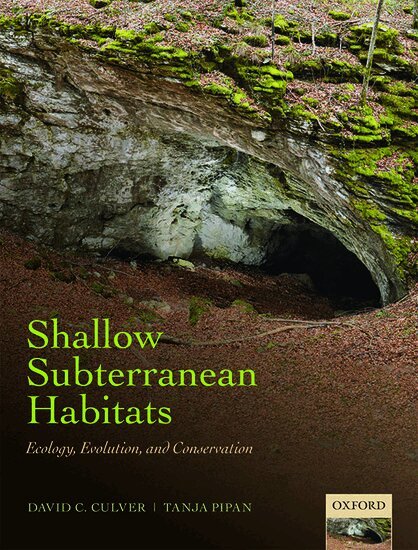
    Shallow Subterranean Habitats

    Ecology, Evolution, and Conservation

    AvDavid C. Culver,Tanja Pipan

    Inbunden, Engelska, 2014

    1 346 kr

    Beställningsvara. Skickas inom 5-8 vardagar. Fri frakt över 249 kr.

    Beskrivning

    Shallow subterranean habitats (SSHs) are areas of habitable space that are less than 10 m in depth from the surface. These range from large areas such as shallow caves and lava tubes, to tiny areas such as cracks in ceilings, or spaces in soil. Whilst being very different in many ways, they are often bound together by shared characteristics of the habitats and their faunas, and their study can help us to understand subterranean habitats in general. This book concentrates on the more typical SSHs of intermediate size (seepage springs, spaces between rocks, cracks in lava etc.), describing the habitats, their fauna, and the ecological and evolutionary questions posed. Similarities and differences between the habitats are considered and discussed in a broader ecological and evolutionary context. The book is mainly aimed at students and researchers in the field of subterranean biology, but will also be of interest to a wider range of ecologists, evolutionary biologists, freshwater biologists, and conservationists. There will also be an audience of environmental professionals.

    Produktinformation

    • Utgivningsdatum:2014-06-05
    • Mått:195 x 249 x 19 mm
    • Vikt:784 g
    • Format:Inbunden
    • Språk:Engelska
    • Antal sidor:288
    • Förlag:OUP OXFORD
    • ISBN:9780199646173

    Utforska kategorier

    • Växtböcker inom Djur och Natur
    • Botanik inom Naturvetenskap och teknik
    • Miljövetenskap och miljöpolitik inom Naturvetenskap och teknik

    Mer om författaren

    David C. Culver received his Ph.D. in 1970 in Biology from Yale University. He is currently Professor of Biology at American University in Washington, DC, with broad research interests in subterranean biology, especially biodiversity, biogeography, and ecosystem function. He has active research projects on U.S. subterranean biodiversity databases, spatial statistical patterns of obligate subterranean animals, the obligate subterranean animals in seeps in the Washington, DC area and Slovenia, diversity and biogeography of epikarst invertebrates in the Appalachians and Slovenia, organic carbon flux in caves, large scale subterranean biodiversity patterns, and regional scale subterranean biodiversity patterns and protection in West Virginia. Culver is Comptroller of the Karst Waters Institute, a fellow of the American Association for the Advancement of Science, and an Honorary Life Member of the National Speleological Society.Tanja Pipan received her Ph.D. in 2003 in Biology from University of Ljubljana. She is currently Research Advisor at the Karst Research Institute ZRC SAZU and Assistant Professor of Biology at the University of Nova Gorica, Slovenia, with research interests in the ecology, biology, and systematics of the subterranean copepod fauna, especially in the epikarst. Pipan is country coordinator for the Slovenian Long Term Ecological Research program. She received the grant for the most significant young researcher from ZRC SAZU for scientific work in 2003, the 2004 award from the International Society for Subterranean Biology for best presentation at the meeting in Raipur, India and an award in 2005 for best paper at the International Association of Hydrogeology meeting in Kotar, Montenegro. She is biology editor of the International Journal of Speleology.

    Recensioner i media

    Pioneering is uncommon in any area of contemporary science, and that has skillfully been completed by Culver and Pipan's book. They harmoniously succeed in a thorough presentation in never-overwhelming details of the Shallow Subterraneous Habitats ... This is a fine, illustrated work that offers a broad perspective about a vast new world, the fascinating SSH, never treated as exclusively as deserved, and as they were in this excellent book, entirely dedicated to them.

    Innehållsförteckning

    • 1. The shallow subterranean domain ; 2. Seepage springs and the hypotelminorheic habitat ; 3. Epikarst: the soil-rock interface in karst ; 4. Intermediate-sized terrestrial shallow subterranean habitats ; 5. Calcrete aquifers ; 6. Interstitial habitats along rivers and streams ; 7. Soil ; 8. Lava tubes ; 9. The role of light in shallow subterranean habitats ; 10. Environmental fluctuations and stresses in shallow subterranean habitats ; 11. Organic carbon and nutrients in shallow subterranean habitats ; 12. Evolution of morphology in shallow subterranean habitats ; 13. Colonization and dispersal in shallow subterranean habitats ; 14. Phylogeny in shallow subterranean habitats ; 15. Conservation and protection of shallow subterranean habitats ; 16. Epilogue and prospects