• Fri frakt över 249 kr
  • •
  • Snabba leveranser
  • •
  • Billiga böcker
Kundservice

Du är på sajten för privatpersoner.

Företag, bibliotek eller offentlig verksamhet?

Du handlar på classic.bokus.com, där alla dina funktioner finns intakta.
Till classic.bokus.com
Bokus logotyp. Gå till startsidan.
  • Erbjudanden
  • Student
  • Topplistor
  • Barn & ungdom
  • Bokus Play
  • E-böcker
  • Ljudböcker
  • Pocketböcker
  • Spel & pussel

Upp till 25% på utvalda nyheter →

Sidfot

Mina sidor

    Hjälp

    • Kundservice
    • Vanliga frågor och svar
    • Frakt och leverans
    • Retur vid ångerrätt
    • Reklamera vara
    • Betalning
    • Köpvillkor
    • Allmänna villkor
    • Information om webbplatsens tillgänglighet

    Om Bokus

    • Om oss
    • Pressrum
    • För studenter
    • För företag
    • För bibliotek och offentlig verksamhet
    • För leverantörer
    • Hållbarhet

    Populärt

    • Aktuella erbjudanden
    • Presentkort
    • Studentlitteratur
    • Nya böcker
    • Topplistor
    • Signerade böcker
    • Engelska böcker

    Inspiration

    • Boktips
    • BookTok
    • Populära bokserier
    • Barnbokskaraktärer
    • Populära författare
    Logotyp för Bokus
    Följ oss på Facebook (extern länk)Följ oss på Instagram (extern länk)Följ oss på YouTube (extern länk)Följ oss på TikTok (extern länk)
    bokus @ CookiesAnpassa cookiesIntegritetspolicyKöpvillkor
    Till Citymail hemsida (extern länk)Till Budbee hemsida (extern länk)Till Postnord hemsida (extern länk)Till Schenker hemsida (extern länk)Till Early Bird hemsida (extern länk)Till Walleys hemsida (extern länk)
    1. Naturvetenskap och teknik
    2. Matematik och naturvetenskap
    3. Biologi
    4. Biokemi

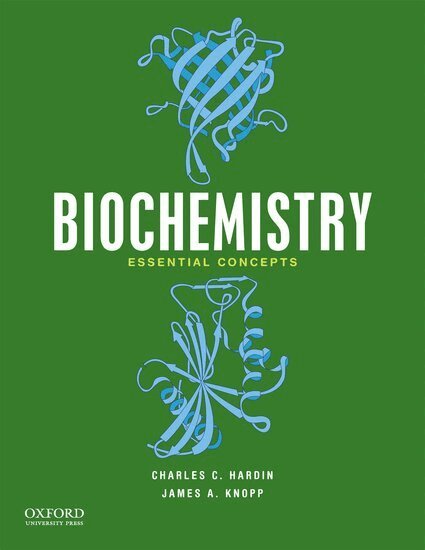
    Biochemistry

    Essential Concepts

    AvCharles Hardin,James Knopp

    Häftad, Engelska, 2026

    1 696 kr

    Beställningsvara. Skickas inom 3-6 vardagar. Fri frakt över 249 kr.

    Beskrivning

    One-semester biochemistry courses are notorious for overwhelming students with the magnitude of material covered in their texts and lectures. Biochemistry: Essential Concepts distills the basic ideas covered in a one-semester course without the extraneous details that burden most texts.Authors Charles Hardin and James Knopp demonstrate the core concepts of biochemistry - including cell biology, amino acids, metabolism, and DNA - in a variety of real-world contexts. With the last forty percent of the text devoted to review questions and practice tests, Biochemistry: Essential Concepts equips students for success in the one-semester biochemistry course and prepares them for their future studies and careers.

    Produktinformation

    • Utgivningsdatum:2026-06-12
    • Mått:277 x 213 x 15 mm
    • Vikt:839 g
    • Format:Häftad
    • Språk:Engelska
    • Antal sidor:336
    • Förlag:OUP USA
    • ISBN:9780199765621

    Utforska kategorier

    • Biokemi inom Naturvetenskap och teknik
    • Kemi inom Naturvetenskap och teknik

    Mer om författaren

    Hardin, Charles C., Associate Professor, North Carolina State University (Ph.D. in Biochemistry, Spectroscopy, computational chemistry from Iowa State University)Knopp, James A., Associate Professor, North Carolina State University (Ph.D. in Biophysical Chemistry from University of Illinois at Urbana)

    Recensioner i media

    "Biochemistry: Essential Concepts fills an important void in the repertoire of biochemistry textbooks. As a supplement it is perfect!"--Ales Vancura, St. John's University"An excellent supplement to traditional one-semester biochemistry texts. It distills the essential elements of biochemistry into short segments, allowing students to get the major points without getting bogged down."--Christine Hrycyna, Purdue University"I am certain that my students will benefit greatly from having Biochemistry: Essential Concepts as a study guide."--S. Madhavan, University of Nebraska Lincoln

    Innehållsförteckning

    • Brief Contents ; Preface ; Acknowledgement ; Chapter 1. Biochemistry: Subject Overview ; 1.1 Central Themes ; 1.2 Central Dogma of Molecular Biology ; Chapter 2. Cell Biology Review ; 2.1 The Animal Cell ; 2.2 The Plant Cell ; 2.3 Selected Organelles ; 2.4 The Cell Cycle: Mitotic Cell Division ; 2.5 Viruses ; Chapter 3. Chemistry Review ; 3.1 Organic Compounds ; 3.2 Chirality ; 3.3 Chemical Reactions ; 3.4 Physical Chemistry Concepts ; 3.5 Buffering of Blood: The Bicarbonate System ; Chapter 4. Amino Acids ; 4.1 Basic Structures ; 4.2 Amino acid 'R Groups' ; 4.3 Ionization Properties ; 4.4 Drawing Peptide Titration Plots ; 4.5 Factors That Influence the pKa of Protonatable/Deprotonatable Groups in Proteins ; Chapter 5. Proteins ; 5.1 Peptide Bonds ; 5.2 Purification and Characterization of Proteins ; Chapter 6. Protein Structure ; 6.1 Conformation ; 6.2 Classification of Substructure ; 6.3 Alpha (?) Helices ; 6.4 Beta Sheets ; 6.5 U-Turns ; 6.6 Ramachandran Plot ; 6.7 Stabilizing Factors ; 6.8 Thermodynamics of Protein Folding: The Hydrophobic Effect ; 6.8.1 Temperature-Dependant Denaturation ; 6.9 Chaotropes and The Hofmeister Series ; 6.10 Sodium Dodecyl Sulfate (SDS): Chaotrope Action ; 6.11 Visualizing the Energy Landscape ; 6.12 Protein Maturation ; Chapter 7. Ligand Binding and Functional Control ; 7.1 Oxygen Transport in Blood ; 7.2 Hemoglobin Oxygen Binding: Cooperativity ; 7.3 Antibodies: Immunological Recognition ; Chapter 8. Enzymes ; 8.1 Enzymes are Biological Catalysts ; 8.2 Enzyme Function: Activity Assays and Enzyme Kinetics ; 8.3 Requirements for Catalysis ; 8.4 Comparing Enzymes and Relative Efficiency of Use of Substrates ; 8.5 Drug Design ; 8.6 Enzyme Inhibitors ; 8.7 Allosterism ; 8.8 Phosphorylation and Dephosphorylation ; Chapter 9. Metabolic Enzyme Action ; 9.1 Enzyme Mechanisms ; 9.2 Modes of Catalysis ; 9.3 The Reaction Coordinate ; 9.4 Induced Fit Revisited ; 9.5 Acid-Base Catalysis ; 9.6 Covalent Group Transfer ; 9.7 The Serine Protease Catalytic Triad Mechanism ; 9.8 The Active Site of Tyrosyl-tRNA Synthetase ; Chapter 10. Coenzymes ; 10.1 Classification ; 10.2 Survey of the Coenzymes ; 10. 3 Metals ; 10.4. Carbohydrates-Based Cofactors ; 10.5 Fat Soluble Vitamins ; Chapter 11. Carbohydrates and Glycoconjugates ; 11.1 Carbohydrates: Definition ; 11.2 Monosaccharides: Aldoses ; 11.3 Monosaccharides: Ketoses ; 11.4 Structural Features ; 11.5 Intramolecular Cyclization ; 11.6 Conformations: Sugar Puckers ; 11.7 Sugar Derivatives ; 11.8 Disaccharides ; 11.9 Polysaccharides ; 11.10 Carbohydrate-Protein Conjugates ; 11.11 Synthesis and Structural Characterization ; Chapter 12. Lipids ; 12.1 Structural Overview ; 12.2 Saturated and Unsaturated Fatty Acids ; 12.3 Functions ; 12.4 Diacylglycerol Lipid Derivatives ; 12.5 Structural Motifs ; 12.6 Assembly ; 12.7 Structural and Dynamic Characterization ; 12.8 Eicosanoids ; 12.9 Phospholipases ; 12.10 Phosphoinositides ; 12.11 Steroids ; 12.12 A Potpourrie of Lipids ; Chapter 13. Membranes ; 13.1 The Fluid Mosaic Model ; 13.2 Detergents ; 13.3 Distribution of Lipids in Biological Membranes ; 13.4 The Hydropathicity Scale ; 13.5 Lipid-Anchored Membrane Proteins ; 13.6 The Erythrocyte Cytoskeleton ; Chapter 14. Transport Through Membranes ; 14.1 The Transmembrane Potential ; 14.2 Active Transport ; 14.3 Ionophores ; 14.4 The Acetylcholine Receptor Ion Channel ; 14.5 Lactose Permease and Secondary Active Transport ; 14.6 Mechanism of Transport by Na+, K+ ATPase ; 14.7 Ion Channel Blockers ; Chapter 15. Signal Transduction ; 15.1 Signaling Pathways: Hormones, GTPases, Second Messengers and Intracellular Regulation .. 120 ; 15.2 The Adenylate Cyclase Signaling Pathway ; 15.3 The Inositol-Phospholipid Signaling Pathway ; 15.4 Phorbol Myristyl Acetate ; 15.5 The Insulin Receptor ; 15.6 Glucagon ; 15.7 G-Proteins ; Chapter 16. Nucleic Acids: DNA ; 16.1 DNA and RNA ; 16.2 Physical Properties ; 16.3 Secondary Structure ; 16.4 Backbone Structure ; 16.5 Counterions ; 16.6 Chemical Synthesis ; 16.7 Watson-Crick Base Pairs ; 16.8 Structural Modifications ; 16.9 Three-Dimensional Structures ; 16.10 Recognition of Sequences ; 16.11 Genetic Mutations and Antisense Nucleic Acids ; 16.12 Unusual DNA ; 16.13 Stabilization of Nucleic Acids ; 16.14 Secondary Structure Predictions ; 16.15 Chromosomes ; 16.16 Some Protein Nucleic Acid Binding Motifs ; 16.17 Recombination ; Chapter 17. RNA ; 17.1 Cells Contain a Variety of Types of RNA ; 17.2 RNAs Have Stable Secondary Structure ; 17.3 Tertiary Structure: Transfer RNA ; 17.4 Messenger RNA (mRNA) ; 17.5 Eukaryotic Messenger RNA ; 17.6 Alkaline Hydrolysis of RNA ; 17.7 Small Interfering RNA ; Chapter 18. Biotechnology ; 18.1 Restriction Endonucleases ; 18.2 Cloning in a Nutshell ; 18.3 DNA Preparation: Phenol-Chloroform Extraction ; 18.4 Polymerase Chain Reaction ; 18.5 Probe DNA ; Chapter 19. Metabolism ; 19.1 Overview ; 19.2 Metabolic Pathway Types ; 19.3 Energy Conservation ; 19.4 Key Pathways/Reactions ; Chapter 20. Bioenergetics ; 20.1 Reaction Equilibria: Standard and Actual Free Energies ; 20.2 Metabolically Irreversible and Near Equilibrium Reactions ; 20.3 Energies and Regulation of Glycolysis ; Chapter 21. Bioelectrochemistry ; 21.1 Redox Reaction Principles ; 21.2 Redox Energetics: The Nernst Equation ; 21.3 Electron Transport Chains ; Chapter 22. Glycolysis ; 22.1 Reactions 1 Through 10 ; 22.2 Regulation: Activation and Inhibition ; 22.3 Four Fates of Pyruvate ; Chapter 23. The Krebs Cycle ; 23.1 Pathway ; 23.2 Reactions ; 23.3 Yields ; 23.4 Cellular Redox Potential ; 23.5 Regulation ; Chapter 24. Gluconeogenesis ; 24.1 Reactions ; 24.2 Regulation ; 24.3 Sources Used to Produce Glucose ; Chapter 25. Electron Transport and Oxidative Phosphorylation ; 25.1 Mitochondria in Red and White Muscle ; 25.2 Overall Process ; 25.3 Chemical and Potential Energies That Drive Proton Transport ; 25.4 Mitochondrial Electron Transport ; 25.5 Electron Transfer and Proton Flow in Complexes I through IV ; 25.6 Oxidative Phosphorylation ; Chapter 26. The Malate-Aspartate Shuttle and Proteomics ; 26.1 Getting NADH Into the Mitochondrion: Isozymes ; 26.2 Isozymes and Proteomics ; 26.3 Characterization by Two-dimensional Gel Electrophoresis ; 26.4 Mass Spectrometry and Proteomics ; Chapter 27. Degradation and Synthesis of Lipids ; 27.1 Beta Oxidation of Saturated Fatty Acids ; 27.2 Biosynthesis of Fatty Acids ; 27.3 Length Determination of Fatty Acids ; 27.4 Synthesis of Acidic Phospholipids ; 27.5 Cholesterol Biosynthesis ; 27.6 Regulating Cholesterol Levels ; Chapter 28. Photosynthesis ; 28.1 Light and Dark Reactions ; 28.2 Photo-Gathering Pigments ; 28.3 Photosynthetic Electron Transport Pathway (Z scheme) ; Chapter 29. The Calvin Cycle ; 29.1 The Dark Reactions: Carbon Fixation ; 29.2 Biosynthesis of Ribose-5-phosphate ; 29.3 RuBisCO Mechanism ; 29.4 The C4 and CAM Pathways ; Chapter 30. The Urea Cycle ; 30.1 Purpose and Reactions ; 30.2 Regulation ; 30.3 Comparative Nitrogen Excretion ; 30.4 Protein Degradation and Programmed Cell Death ; STUDY GUIDE ; Review Session for Chapters 1 - 3 ; Review Session for Chapter 4 ; Review Session for Chapters 5 and 6 ; Review Session for Chapters 7 - 8.6 ; Review Sessions for Chapters 8.7 - 8.8 ; Review Session for Chapter 9 ; Review Session for Chapters 10 - 11.4 ; Review Session for Chapters 10 - 11.4: Key ; Review Session for Chapters 11.5 - 12.5 ; Review Session for Chapters 11.5 - 12.5: Key ; Review Session for Chapters 13 - 14.7 ; Review Session for Chapters 13 - 14.7: Key ; Review Session for Chapters 16.2 - 17.6 ; Review Session for Chapters 16.2 - 17.6: Key ; Review Session for Chapters 19 - 20 ; Review Session for Chapters 19 - 20: Key ; Review Session for Chapters 21 - 25 ; Review Session for Chapters 21 - 25: Key ; Review Session for Chapter 27 ; Review Session for Chapter 27: Key ; Practice Exam 1, Key ; Practice Exam 2, Key ; Practice Exam 3, Key ; Practice Exam 4, Key ; Final Test Review ; Final Test Review (with answers)