• Fri frakt över 249 kr
  • •
  • Snabba leveranser
  • •
  • Billiga böcker
Kundservice

Du är på sajten för privatpersoner.

Företag, bibliotek eller offentlig verksamhet?

Du handlar på classic.bokus.com, där alla dina funktioner finns intakta.
Till classic.bokus.com
Bokus logotyp. Gå till startsidan.
  • Erbjudanden
  • Nyheter
  • Student
  • Topplistor
  • Barn & ungdom
  • Bokus Play
  • E-böcker
  • Pocketböcker
  • Spel & pussel

10% rabatt på allt med kod NYSTART10 →

Sidfot

Mina sidor

    Hjälp

    • Kundservice
    • Vanliga frågor och svar
    • Frakt och leverans
    • Retur vid ångerrätt
    • Reklamera vara
    • Betalning
    • Köpvillkor
    • Allmänna villkor
    • Information om webbplatsens tillgänglighet

    Om Bokus

    • Om oss
    • Pressrum
    • För studenter
    • För företag
    • För bibliotek och offentlig verksamhet
    • För leverantörer
    • Hållbarhet

    Populärt

    • Aktuella erbjudanden
    • Presentkort
    • Studentlitteratur
    • Nya böcker
    • Topplistor
    • Signerade böcker
    • Engelska böcker

    Inspiration

    • Boktips
    • BookTok
    • Populära bokserier
    • Barnbokskaraktärer
    • Populära författare
    Logotyp för Bokus
    Följ oss på Facebook (extern länk)Följ oss på Instagram (extern länk)Följ oss på YouTube (extern länk)Följ oss på TikTok (extern länk)
    bokus @ CookiesAnpassa cookiesIntegritetspolicyKöpvillkor
    Till Citymail hemsida (extern länk)Till Budbee hemsida (extern länk)Till Postnord hemsida (extern länk)Till Schenker hemsida (extern länk)Till Early Bird hemsida (extern länk)Till Walleys hemsida (extern länk)
    1. Naturvetenskap och teknik
    2. Geovetenskap
    3. Miljövetenskap och miljöpolitik

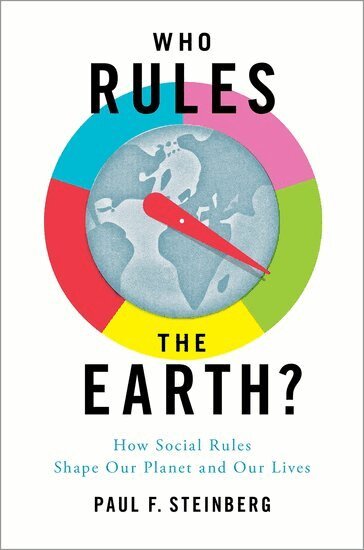
    Who Rules the Earth?

    How Social Rules Shape Our Planet and Our Lives

    AvPaul F. Steinberg

    Inbunden, Engelska, 2015

    490 kr

    Beställningsvara. Skickas inom 3-6 vardagar. Fri frakt över 249 kr.

    Fler format och utgåvor

    E-bok

    229 kr

    Häftad

    488 kr

    E-bok

    229 kr

    Beskrivning

    Humanity is confronted with an alarming number of environmental problems that seem to grow worse by the day. We hear a steady stream of news reports about climate change, water shortages, and rampant deforestation. We learn of toxic chemicals in our food supply and garbage filling our oceans, and wonder: Why do these problems persist, and what can be done to set society on a more sustainable course?In Who Rules the Earth?, Paul F. Steinberg, one of America's leading scholars on the politics of environmentalism, explains that there is room for hope, and draws from the latest social science research to explain why. Green consumer choices and changes in personal lifestyles are important, but they are not nearly enough. Lasting social change requires modifying the very rules that guide human behavior and shape the ways we interact with the Earth. We know these rules by familiar names like city ordinances, product design standards, purchasing agreements, public policies, cultural norms, or national constitutions. Though these rules are largely invisible to us, their impact across the world has been dramatic. By changing the rules, the Canadian province of Ontario cut the levels of pesticides in its waterways in half. The city of Copenhagen has adopted new planning codes that will reduce its carbon footprint to zero by 2025. In the United States, a handful of industry mavericks designed new rules to promote greener buildings, and transformed the world's largest industry into a more sustainable enterprise.Steinberg takes the reader on a series of journeys, from a familiar walk on the beach to a remote village deep in the jungles of Peru, helping the reader to 'see' the social rules that pattern our physical reality and showing why these are the big levers that will ultimately determine the health of our planet. By unveiling the influence of social rules at all levels of society-from private property to government policy, and from the rules governing our oceans to the dynamics of innovation and change within corporations and communities, Who Rules the Earth? will be essential reading for anyone interested in bringing about real environmental change.

    Produktinformation

    • Utgivningsdatum:2015-04-02
    • Mått:165 x 236 x 33 mm
    • Vikt:658 g
    • Format:Inbunden
    • Språk:Engelska
    • Antal sidor:352
    • Förlag:OUP USA
    • ISBN:9780199896615

    Utforska kategorier

    • Miljövetenskap och miljöpolitik inom Naturvetenskap och teknik
    • Folkrätt inom Juridik
    • Statsvetenskap och politisk teori inom Samhälle och politik

    Mer om författaren

    Paul Steinberg is the Malcolm Lewis Professor of Sustainability and Society and Professor of Political Science and Environmental Policy at Harvey Mudd College. He has spent the past 20 years studying biodiversity conservation and the human dimensions of global environmental problems. He is the author of three books: Who Rules the Earth? (Oxford University Press), Comparative Environmental Politics (MIT Press), and Environmental Leadership in Developing Countries (MIT Press), which won the Harold and Margaret Sprout Award for the best book in international environmental affairs. He is the director of the Social Rules Project, a multi-media initiative designed to raise public awareness about the importance of changing policies and other binding rules to promote sustainability.

    Recensioner i media

    Revealing the hidden architecture of rules that must be changed to protect our planet, Steinberg offers a fresh perspective on how to achieve a sustainable future. Who Rules the Earth? will be a source of inspiration for anyone who wonders what more we can do to overcome our most daunting environmental challenges.

    Innehållsförteckning

    • I. Searching for Solutions ; 1 Recycling Is Not Enough ; 2 Strings Attached ; 3 Feasible Worlds ; II. Who Owns the Earth? ; 4 A Perilous Journey ; 5 The Big Trade ; 6 A Planet of Nations ; III. Transformations ; 7 Scaling Up ; 8 Scaling Down ; 9 Keep the Change ; IV. Leverage ; 10 Super Rules ; 11 Paper, Plastic, or Politics?