• Fri frakt över 249 kr
  • •
  • Snabba leveranser
  • •
  • Billiga böcker
Kundservice

Du är på sajten för privatpersoner.

Företag, bibliotek eller offentlig verksamhet?

Du handlar på classic.bokus.com, där alla dina funktioner finns intakta.
Till classic.bokus.com
Bokus logotyp. Gå till startsidan.
  • Erbjudanden
  • Nyheter
  • Student
  • Topplistor
  • Barn & ungdom
  • Bokus Play
  • E-böcker
  • Pocketböcker
  • Spel & pussel

10% rabatt på allt med kod NYSTART10 →

Sidfot

Mina sidor

    Hjälp

    • Kundservice
    • Vanliga frågor och svar
    • Frakt och leverans
    • Retur vid ångerrätt
    • Reklamera vara
    • Betalning
    • Köpvillkor
    • Allmänna villkor
    • Information om webbplatsens tillgänglighet

    Om Bokus

    • Om oss
    • Pressrum
    • För studenter
    • För företag
    • För bibliotek och offentlig verksamhet
    • För leverantörer
    • Hållbarhet

    Populärt

    • Aktuella erbjudanden
    • Presentkort
    • Studentlitteratur
    • Nya böcker
    • Topplistor
    • Signerade böcker
    • Engelska böcker

    Inspiration

    • Boktips
    • BookTok
    • Populära bokserier
    • Barnbokskaraktärer
    • Populära författare
    Logotyp för Bokus
    Följ oss på Facebook (extern länk)Följ oss på Instagram (extern länk)Följ oss på YouTube (extern länk)Följ oss på TikTok (extern länk)
    bokus @ CookiesAnpassa cookiesIntegritetspolicyKöpvillkor
    Till Citymail hemsida (extern länk)Till Budbee hemsida (extern länk)Till Postnord hemsida (extern länk)Till Schenker hemsida (extern länk)Till Early Bird hemsida (extern länk)Till Walleys hemsida (extern länk)
    1. Psykologi och pedagogik
    2. Psykologi
    3. Socialpsykologi och gruppsykologi

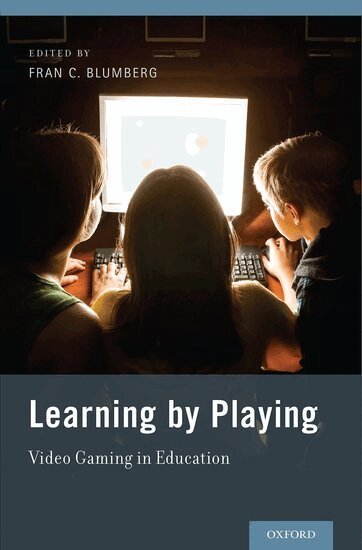
    Learning by Playing

    Video Gaming in Education

    AvFran C. Blumberg

    Inbunden, Engelska, 2014

    1 917 kr

    Beställningsvara. Skickas inom 5-8 vardagar. Fri frakt över 249 kr.

    Beskrivning

    There is a growing recognition in the learning sciences that video games can no longer be seen as impediments to education, but rather, they can be developed to enhance learning. Educational and developmental psychologists, education researchers, media psychologists, and cognitive psychologists are now joining game designers and developers in seeking out new ways to use video game play in the classroom. In Learning by Playing, a diverse group of contributors provide perspectives on the most current thinking concerning the ramifications of leisure video game play for academic classroom learning. The first section of the text provides foundational understanding of the cognitive skills and content knowledge that children and adolescents acquire and refine during video game play. The second section explores game features that captivate and promote skills development among game players. The subsequent sections discuss children and adolescents' learning in the context of different types of games and the factors that contribute to transfer of learning from video game play to the classroom. These chapters then form the basis for the concluding section of the text: a specification of the most appropriate research agenda to investigate the academic potential of video game play, particularly using those games that child and adolescent players find most compelling. Contributors include researchers in education, learning sciences, and cognitive and developmental psychology, as well as instructional design researchers.

    Produktinformation

    • Utgivningsdatum:2014-05-15
    • Mått:157 x 236 x 35 mm
    • Vikt:635 g
    • Format:Inbunden
    • Språk:Engelska
    • Antal sidor:384
    • Förlag:OUP USA
    • ISBN:9780199896646

    Utforska kategorier

    • Socialpsykologi och gruppsykologi inom Psykologi och pedagogik
    • Kognitiv psykologi inom Psykologi och pedagogik

    Mer om författaren

    Fran Blumberg is Associate Professor of Psychological and Educational Services at Fordham University,

    Innehållsförteckning

    • Part I. Introduction and Overview ; Chapter 1. Academic Lessons from Video Game Learning ; Fran C. Blumberg, Debby Almonte, Yishai Barkhardori, & Andrew Leno ; Part II. Theoretical and Cognitive Perspectives: How Should We Think About Learning in Video Games? ; Chapter 2. Virtual to Real Life: Assessing Transfer of Learning from Video Games ; Susan M. Barnett ; Chapter 3. The Perceptual and Cognitive Effects of Action Video Game Experience ; C. Shawn Green ; Chapter 4. Relations between Video Gaming and Children's Executive Functioning ; John R. Best ; Chapter 5. Developing Scientific Thinking in the Context of Video Games: Where to Next? ; Corinne Zimmerman ; Chapter 6. Do Video Games Provide Motivation to Learn? ; Akane Zusho, Jared S. Anthony, Naoko Hashimoto, and Gerard Robertson ; Chapter 7. What We Know About How Experts Attain Their Superior Performance: ; Implications for the Use of Video Games and Game Training in Schools ; K. Anders Ericsson, Jong Sung Yoon, and Walter R. Boot ; Chapter 8. Media Effects, Communication, and Complexity Science Insights on Game Learning ; John L. Sherry ; Chapter 9. The General Learning Model: Unveiling the Teaching Potential of Video Games ; Douglas A. Gentile, Chris Groves, and J. Ronald Gentile ; Part III. Game Design Perspectives: How Should We Design Educational Video Games? ; Chapter 10. Toward a Playful and Usable Education ; Celia Hodent ; Chapter 11. Educational Video Games: Two Tools for Research and Development ; Matthew Gaydos ; Chapter 12. Formative Research for Game Design ; James Bachhuber ; Chapter 13. Transfer of Learning from Video Game Play to the Classroom ; Debra A. Lieberman, Erica Biely, Chan L.Thai, and Susana Peinado ; Part IV. Learning in practice: How Should We Study Learning in Video Games For Transfer To Academic Tasks? ; Chapter 14. Cross-Platform Learning: How Do Children Learn from Multiple Media? ; Shalom M. Fisch, Richard Lesh, Elizabeth Motoki, Sandra Crespo, and Vincent Melfi ; Chapter 15. Electronic Game Changers for the Obesity Crisis ; Sandra L. Calvert, Bradley J. Bond, and Amanda E. Staiano ; Chapter 16. Tug-of-War: Seeking Help while Playing an Educational Card Game ; Osvaldo Jimenez, Ugochi Acholonu, and Dylan Arena ; Chapter 17. Scientific Inquiry in Digital Games ; Jodi Asbell-Clarke and Elizabeth Rowe ; Chapter 18. Computer Games and Education: A Multi-Dimensional Relationship ; Keith Roe and Anne Dickmeis ; Chapter 19. Video Games, Motivation, and Learning ; Michael A. Evans, Brett D. Jones, and Jennifer Biedler ; Chapter 20. John B. Black, Saadia A. Khan, Shih-Chieh Doug Huang ; Chapter 21. Evaluating the Specificity of Effects of Video-game Training ; Kasey L. Powers and Patricia J. Brooks ; Part V. Conclusion ; Chapter 22. Games in a Digital Age: Supporting a New Ecology of Learning ; Michael E. Levine, Lori Takeuchi, and Sarah E. Vaala