Fran C. Blumberg – författare
696 kr
Skickas inom 10-15 vardagar
Cognitive Development in Digital Contexts investigates the impact of screen media on key aspects of children and adolescents' cognitive development. Highlighting how screen media impact cognitive development, the book addresses a topic often neglected amid societal concerns about pathological media use and vulnerability to media effects, such as aggression, cyber-bullying and Internet addiction. It addresses children and adolescents' cognitive development involving their interactions with parents, early language development, imaginary play, attention, memory, and executive control, literacy and academic performance.
Covers the impact of digital from both theoretical and practical perspectives Investigates effects of digital media on attention, memory, language and executive functioning Examines video games, texting, and virtual reality as contexts for learning Explores parent-child interactions around media Considers the development of effective educational media Addresses media literacy and critical thinking about media Considers social policy for increasing access to high quality education media and the Internet Provides guidance for parents on navigating children's technology usage984 kr
Läs direkt efter köp
1 199 kr
Skickas inom 5-8 vardagar
665 kr
Skickas inom 5-8 vardagar
608 kr
Skickas inom 10-15 vardagar
327 kr
Läs direkt efter köp
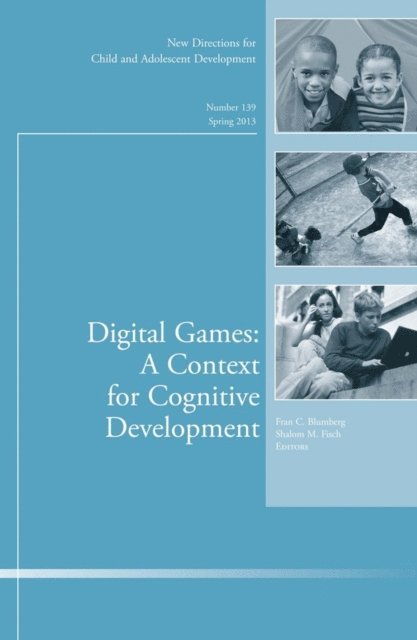
In the United States and in many other countries around the world, digital games have become an integral part of children’s lives. Discussions of research on youth and digital games often focus solely on negative effects (e.g., of violent video games), but this is far from the whole story. As natural problem-solving activities, digital games provide a rich context for applied cognition.
This volume explores topics such as:
The benefits of digital games for children and adolescents’ cognitive skills The nature of their learning from educational media The influence of developmental factors on their interactions with digital games The use of developmental research and established educational practice to create effective educational games that they will play.This is the 139th volume in this series. Its mission is to provide scientific and scholarly presentations on cutting edge issues and concepts in child and adolescent development. Each volume focuses on a specific new direction or research topic and is edited by experts on that topic.
327 kr
Läs direkt efter köp
In the United States and in many other countries around the world, digital games have become an integral part of children’s lives. Discussions of research on youth and digital games often focus solely on negative effects (e.g., of violent video games), but this is far from the whole story. As natural problem-solving activities, digital games provide a rich context for applied cognition.
This volume explores topics such as:
The benefits of digital games for children and adolescents’ cognitive skills The nature of their learning from educational media The influence of developmental factors on their interactions with digital games The use of developmental research and established educational practice to create effective educational games that they will play.This is the 139th volume in this series. Its mission is to provide scientific and scholarly presentations on cutting edge issues and concepts in child and adolescent development. Each volume focuses on a specific new direction or research topic and is edited by experts on that topic.
662 kr
Läs direkt efter köp
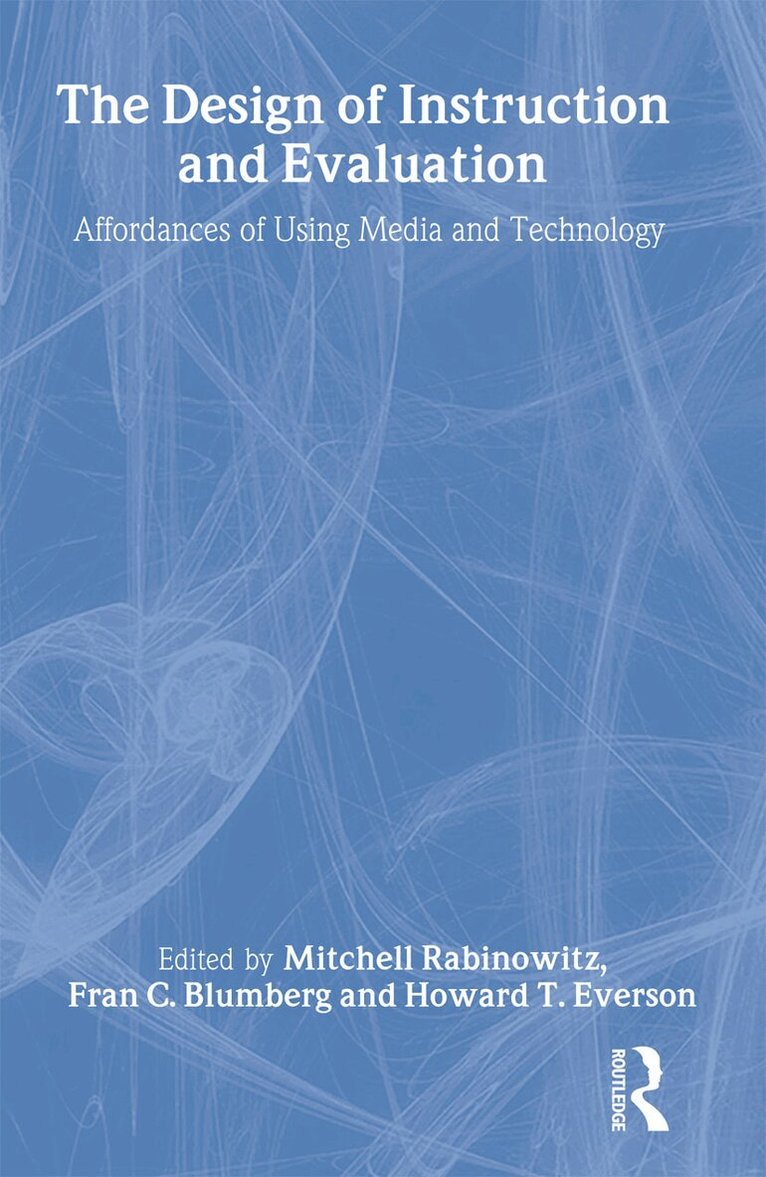
This book is about empirically tested knowledge and principles that inform the design of instructional and evaluation systems, and the use and promise of media and technology within such systems. Historically, psychology has informed the design of instructional and evaluation systems in different ways. A behavioral perspective emphasizes the role of the environment in determining behavior--a factor external to the learner. A cognitive perspective focuses on the role of cognitive processing and constraints in determining learning--factors that are internal to the learner. This volume presents the affordances approach--which addresses how the environment and the affordances within it interact with cognitive processes to determine learning. Insights into this interaction are presented. It is the book''s contention that the affordance approach represents an advancement over the behavioral and cognitive perspectives; it is an evolution within the cognitive approach--not an alternative to it. The Design of Instruction and Evaluation: Affordances of Using Media and Technology is intended for education practitioners responsible for the implementation of media and technology in classrooms, for researchers and faculty, and for use as a text in courses on media and technology use in educational settings, instructional design, and psychology of learning.
668 kr
Läs direkt efter köp
This book is about empirically tested knowledge and principles that inform the design of instructional and evaluation systems, and the use and promise of media and technology within such systems. Historically, psychology has informed the design of instructional and evaluation systems in different ways. A behavioral perspective emphasizes the role of the environment in determining behavior--a factor external to the learner. A cognitive perspective focuses on the role of cognitive processing and constraints in determining learning--factors that are internal to the learner. This volume presents the affordances approach--which addresses how the environment and the affordances within it interact with cognitive processes to determine learning. Insights into this interaction are presented. It is the book''s contention that the affordance approach represents an advancement over the behavioral and cognitive perspectives; it is an evolution within the cognitive approach--not an alternative to it. The Design of Instruction and Evaluation: Affordances of Using Media and Technology is intended for education practitioners responsible for the implementation of media and technology in classrooms, for researchers and faculty, and for use as a text in courses on media and technology use in educational settings, instructional design, and psychology of learning.