• Fri frakt över 249 kr
  • •
  • Snabba leveranser
  • •
  • Billiga böcker
Kundservice

Du är på sajten för privatpersoner.

Företag, bibliotek eller offentlig verksamhet?

Du handlar på classic.bokus.com, där alla dina funktioner finns intakta.
Till classic.bokus.com
Bokus logotyp. Gå till startsidan.
  • Erbjudanden
  • Student
  • Topplistor
  • Barn & ungdom
  • Bokus Play
  • E-böcker
  • Ljudböcker
  • Pocketböcker
  • Spel & pussel

10% rabatt på allt med kod NYSTART10 →

Sidfot

Mina sidor

    Hjälp

    • Kundservice
    • Vanliga frågor och svar
    • Frakt och leverans
    • Retur vid ångerrätt
    • Reklamera vara
    • Betalning
    • Köpvillkor
    • Allmänna villkor
    • Information om webbplatsens tillgänglighet

    Om Bokus

    • Om oss
    • Pressrum
    • För studenter
    • För företag
    • För bibliotek och offentlig verksamhet
    • För leverantörer
    • Hållbarhet

    Populärt

    • Aktuella erbjudanden
    • Presentkort
    • Studentlitteratur
    • Nya böcker
    • Topplistor
    • Signerade böcker
    • Engelska böcker

    Inspiration

    • Boktips
    • BookTok
    • Populära bokserier
    • Barnbokskaraktärer
    • Populära författare
    Logotyp för Bokus
    Följ oss på Facebook (extern länk)Följ oss på Instagram (extern länk)Följ oss på YouTube (extern länk)Följ oss på TikTok (extern länk)
    bokus @ CookiesAnpassa cookiesIntegritetspolicyKöpvillkor
    Till Citymail hemsida (extern länk)Till Budbee hemsida (extern länk)Till Postnord hemsida (extern länk)Till Schenker hemsida (extern länk)Till Early Bird hemsida (extern länk)Till Walleys hemsida (extern länk)
    1. Psykologi och pedagogik
    2. Psykologi
    3. Socialpsykologi och gruppsykologi

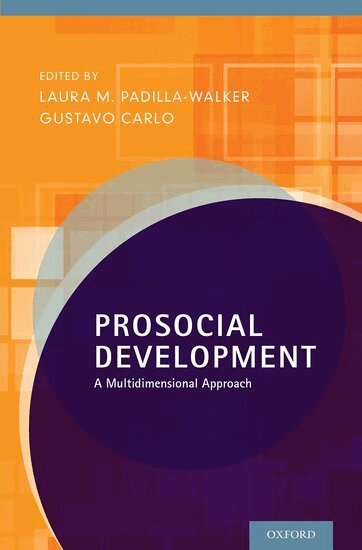
    Prosocial Development

    A Multidimensional Approach

    AvPADILLA-WALKER,Padilla-Walker

    Inbunden, Engelska, 2014

    2 084 kr

    Beställningsvara. Skickas inom 5-8 vardagar. Fri frakt över 249 kr.

    Beskrivning

    Prosocial behavior-broadly defined as voluntary action intended to help or benefit another-has been associated with positive outcomes across the lifespan. Children with a more prosocial orientation are better liked and trusted by their peers, have a higher status in peer groups, are better at maintaining friendships, demonstrate better self regulation, empathy, and social cognitive skills, and excel in academics. Researchers have shown that prosocial behaviors correlate to lower rates of school suspension and drop-out, teen pregnancy, substance use, aggression, and delinquency. These positive effects speak to the value of prosocial behavior during formative years.Prosocial Development examines a variety of biological, socialization, and contextual influences on prosocial development from infancy through early adulthood. While the definition of prosocial behavior may seem straightforward, recent research has highlighted its multifaceted nature. This volume specifically focuses on the multidimensionality of prosocial development, examining different contexts, motivations, types, and targets of prosocial behavior that are differentially predicted by socialization and dispositional characteristics. Skillfully edited by Drs. Padilla-Walker and Carlo, each chapter in this volume highlights some aspect of multidimensionality in regard to prosocial behavior and meaningful avenues for future research. This volume will be an important tool for scholars, researchers, and practitioners who are interested in prosocial, moral, and positive youth development. The organization and focus of this volume are also well-suited for use as a text for graduate courses in moral development, child and adolescent development, social psychology, sociology, anthropology, and family studies.

    Produktinformation

    • Utgivningsdatum:2014-04-17
    • Mått:236 x 168 x 43 mm
    • Vikt:780 g
    • Format:Inbunden
    • Språk:Engelska
    • Antal sidor:496
    • Förlag:OUP USA
    • ISBN:9780199964772

    Utforska kategorier

    • Socialpsykologi och gruppsykologi inom Psykologi och pedagogik
    • Barnpsykologi och utvecklingspsykologi inom Psykologi och pedagogik

    Mer om författaren

    Laura Padilla-Walker is an Associate Professor in the School of Family Life at Brigham Young University. Her research focuses on the parent-child relationship as it relates to prosocial and moral development during adolescence and emerging adulthood. Dr. Padilla-Walker has published over 50 peer-reviewed articles and book chapters.Gustavo Carlo is the Millsap Professor of Diversity and Multicultural Studies in Human Development and Family Studies at the University of Missouri. His primary interests are the parenting, personality, and sociocultural correlates of prosocial and moral behaviors. Dr. Carlo has published well over 100 peer-reviewed articles and book chapters, and has co-edited several volumes.

    Recensioner i media

    "This important and comprehensive volume is a 'must read' for anyone interested in learning about the emergence and development of prosocial behavior. The chapters in this book, written by leading scholars in the field, highlight recent advances across a range of disciplines in understanding prosocial behavior as a multidimensional construct. This book will be a valuable resource for graduate students and professionals interested in better understandingprosociality, which is an essential aspect of human flourishing." -Judi Smetana, PhD, Department of Clinical & Social Sciences in Psychology, University of Rochester"This edited volume is a major achievement that will have a galvanizing effect on the next frontier of research on prosocial development. It features cutting edge, integrative research by the leading scholars in developmental science, and will be required reading for some time to come." -Daniel Lapsley, Ph.D., Professor and Chair, Department of Psychology, University of Notre Dame"Our success and survival as a species rests on our ability to act on behalf of others. This comprehensive volume on the complexities of these positive human potentials is both scholarly and accessible to a wide audience. It paves the way for developing a richer, more nuanced understanding of why and how we care for others, as well as for fostering these qualities for the sake of future generations."-Carolyn Zahn-Waxler, PhD, Research Scientist, Center forInvestigating Health Minds at the Waisman Center, and Center for Child and Family Well-being, University of Wisconsin-Madison"Organizing research on the development of prosocial behavior can be a daunting task because, as Padilla-Walker and Carlo note, different forms of prosocial action are frequently treated as though they had the same underlying characteristics. This edited book is a tremendously valuable resource, bringing together experts in the field whose chapters provide a comprehensive overview of the development of prosocial behavior as well as the opportunity to understandsome of the complexities of its multidimensional nature." -Joan Grusec, PhD, Professor Emerita of Psychology, University of Toronto

    Innehållsförteckning

    • About the Editors ; Contributors ; Section 1: Overview of Prosocial Behavior ; Chapter 1: The Study of Prosocial Behavior: Past, Present, and Future ; Laura M. Padilla-Walker and Gustavo Carlo ; Chapter 2: Multidimensionality of Prosocial Behavior: Re-thinking the Conceptualization and Development of Prosocial Behavior ; Nancy Eisenberg and Tracy L. Spinrad ; Section 2: Biological Perspectives ; Chapter 3: Evolution, Prosocial Behavior, and Altruism: A Roadmap for Understanding Where the Proximate Meets the Ultimate ; Patricia H. Hawley ; Chapter 4: Parental and Genetic Contributions to Prosocial Behavior during Childhood ; Keren Fortuna and Ariel Knafo ; Chapter 5: The Prosocial Brain: Perceiving Others in Need, and Acting on It ; Alek Chakroff and Liane Young ; Chapter 6: Autonomic regulation, Polyvagal Theory, and Children's Prosocial Development ; Paul D. Hastings and Jonas G. Miller ; Section 3: Socialization Perspectives ; Chapter 7: Parental Socialization of Prosocial Behavior: A Multidimensional Approach ; Laura M. Padilla-Walker ; Chapter 8: Sweetness on the Screen: A Multidimensional View of Prosocial Behavior in ; Media ; Sarah M. Coyne and Nathan J. Smith ; Chapter 9: Prosocial Behavior and Peer Relations in Adolescence ; Kathryn R. Wentzel ; Chapter 10: Linking Grandparent Involvement with the Development of Prosocial Behavior in Adolescents ; Jeremy B. Yorgason and Kathryn B. Gustafson ; Section 4: Cultural and Contextual Perspectives ; Chapter 11: The Cultural Contexts of Children's Prosocial Behaviors ; Maria Rosario T. de Guzman, Anh Do, and Car Mun Kok ; Chapter 12: Predicting Prosocial Tendencies Among Mexican American Youth: The Intersection of Cultural Values, Social Cognitions, and Social Emotions ; Gustavo Carlo, George P. Knight, Camille D. Basilio, and Alexandra Davis ; Chapter 13: Cross-Cultural Evidence of Multidimensional Prosocial Behaviors: An Examination of the Prosocial Tendencies Measure (PTM) ; Meredith McGinley, Deanna Opal, Maria Cristina Richaud, and Belen Mesurado ; Chapter 14: Educating Students to be Prosocial at School ; Christi Bergin ; Section 5: Specific Targets and Types of Prosocial Behavior ; Chapter 15: Parents as Recipients of Adolescent Prosocial Behavior ; Mary B. Eberly Lewis ; Chapter 16: Prosocial Behaviors Toward Siblings and Grandparents ; Asiye Kumru and Bilge Yagmurlu ; Chapter 17: Prosocial Behaviors in Early Childhood: Helping Others, Responding to the Distress of Others, and Working with Others ; Deborah Laible and Erin Karahuta ; Chapter 18: Adopting a Multidimensional Perspective on College Students' Prosocial Behaviors ; Brandy A. Randall and Jennifer R. Wenner ; Chapter 19: The Social Construction of Volunteering ; Daniel Hart and Michael Sulik ; Chapter 20: Early Generativity and Types of Civic Engagement in Adolescence and Emerging Adulthood ; Michael W. Pratt and Heather L. Lawford ; Chapter 21: Prosocial Exemplarity in Adolescence and Adulthood ; Lawrence J. Walker ; Index