• Fri frakt över 249 kr
  • •
  • Snabba leveranser
  • •
  • Billiga böcker
Kundservice

Du är på sajten för privatpersoner.

Företag, bibliotek eller offentlig verksamhet?

Du handlar på classic.bokus.com, där alla dina funktioner finns intakta.
Till classic.bokus.com
Bokus logotyp. Gå till startsidan.
  • Erbjudanden
  • Nyheter
  • Student
  • Topplistor
  • Barn & ungdom
  • Bokus Play
  • E-böcker
  • Pocketböcker
  • Spel & pussel

10% rabatt på allt med kod: NYSTART10 →

Sidfot

Mina sidor

    Hjälp

    • Kundservice
    • Vanliga frågor och svar
    • Frakt och leverans
    • Retur vid ångerrätt
    • Reklamera vara
    • Betalning
    • Köpvillkor
    • Allmänna villkor
    • Information om webbplatsens tillgänglighet

    Om Bokus

    • Om oss
    • Pressrum
    • För studenter
    • För företag
    • För bibliotek och offentlig verksamhet
    • För leverantörer
    • Hållbarhet

    Populärt

    • Aktuella erbjudanden
    • Presentkort
    • Studentlitteratur
    • Nya böcker
    • Topplistor
    • Signerade böcker
    • Engelska böcker

    Inspiration

    • Boktips
    • BookTok
    • Populära bokserier
    • Barnbokskaraktärer
    • Populära författare
    Logotyp för Bokus
    Följ oss på Facebook (extern länk)Följ oss på Instagram (extern länk)Följ oss på YouTube (extern länk)Följ oss på TikTok (extern länk)
    bokus @ CookiesAnpassa cookiesIntegritetspolicyKöpvillkor
    Till Citymail hemsida (extern länk)Till Budbee hemsida (extern länk)Till Postnord hemsida (extern länk)Till Schenker hemsida (extern länk)Till Early Bird hemsida (extern länk)Till Walleys hemsida (extern länk)
    1. Psykologi och pedagogik
    2. Psykologi
    3. Socialpsykologi och gruppsykologi

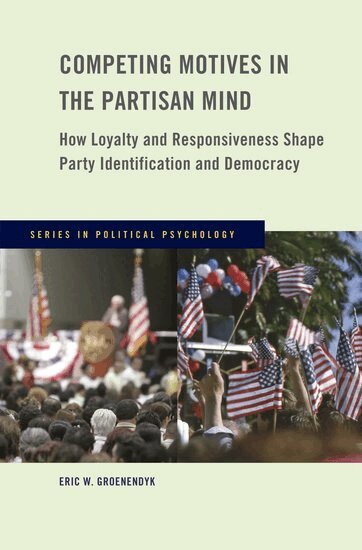
    Competing Motives in the Partisan Mind

    How Loyalty and Responsiveness Shape Party Identification and Democracy

    AvEric Groenendyk

    Inbunden, Engelska, 2013

    Del i serien Series in Political Psychology

    1 675 kr

    Beställningsvara. Skickas inom 5-8 vardagar. Fri frakt över 249 kr.

    Fler format och utgåvor

    E-bok

    426 kr

    Beskrivning

    Party identification may be the single most powerful predictor of voting behavior, yet scholars continue to disagree whether this is good or bad for democracy. Some argue that party identification functions as a highly efficient information shortcut, guiding voters to candidates that represent their interests. Others argue that party identification biases voters' perceptions, thereby undermining accountability. Competing Motives in the Partisan Mind provides a framework for understanding the conditions under which each of the characterizations is most apt. The answer hinges on whether a person has sufficient motivation and ability to defend her party identity or whether norms of good citizenship motivate her to adjust her party identity to reflect her disagreements.A series of surveys and experiments provide a window into the partisan mind during times of conflict between party identity and political attitudes. These studies show that individuals devote cognitive resources to defending their party identities against dissonant thoughts, often resorting to elaborate justifications. However, when cognitive resources are insufficient, these defenses break down and partisans are forced to adjust their identities to reflect disagreements. In addition, thoughts of civic duty can stimulate responsiveness motivation to the point that it overwhelms partisan motivation, leading individuals to adjust their identities to reflect their disagreements.In demonstrating the influence of competing motives, this book reconciles the two dominant theories of party identification. Rather than characterizing party identification as either a highly stable affective attachment or a running tally of political evaluations, it suggests that the nature of party identification hinges on the interplay between the motivations that underlie it. Perhaps even more importantly, this book shifts the discussion away from partisan change versus stability to the normative implications of party identification. While the polarization of American politics may be exacerbating partisan biases, there is plenty of reason for hope. By simply making citizens' widespread feelings of civic duty salient to them, these biases may be overcome.

    Produktinformation

    • Utgivningsdatum:2013-09-05
    • Mått:236 x 163 x 22 mm
    • Vikt:434 g
    • Format:Inbunden
    • Språk:Engelska
    • Serie:Series in Political Psychology
    • Antal sidor:224
    • Förlag:OUP USA
    • ISBN:9780199969807

    Utforska kategorier

    • Socialpsykologi och gruppsykologi inom Psykologi och pedagogik
    • Politisk aktivism inom Samhälle och politik
    • Statsvetenskap och politisk teori inom Samhälle och politik

    Mer om författaren

    Eric Groenendyk is Assistant Professor of Political Science at the University of Memphis. He received his Ph.D. in political science from the University of Michigan in 2009. His research investigates the motivations and emotions underlying public opinion and political behavior. His work has appeared in Journal of Politics, Political Behavior, Political Psychology, Communication Research, and Emotion Review.

    Recensioner i media

    Groenendyk's book is an example of what political psychology looks like at its best: theoretically elegant, attuned to the realities of human cognition, and methodologically diverse. For students of mass politics, it is a must-read.

    Innehållsförteckning

    • Introduction ; 1. A Dual Motivations Theory ; 2. Identity Justification: Identifying with the "Lesser of Two Evils" ; 3. Identity Justification: Issue Reprioritization ; 4. Cognitive Resources and Resistance to Identity Change ; 5. Motivation and Measurement Error ; 6. The Paradox of Partisan Responsiveness ; 7. Motivation and Democracy ; References