• Fri frakt över 249 kr
  • •
  • Snabba leveranser
  • •
  • Billiga böcker
Kundservice

Du är på sajten för privatpersoner.

Företag, bibliotek eller offentlig verksamhet?

Du handlar på classic.bokus.com, där alla dina funktioner finns intakta.
Till classic.bokus.com
Bokus logotyp. Gå till startsidan.
  • Erbjudanden
  • Nyheter
  • Student
  • Topplistor
  • Barn & ungdom
  • Bokus Play
  • E-böcker
  • Pocketböcker
  • Spel & pussel

10% rabatt på allt med kod NYSTART10 →

Sidfot

Mina sidor

    Hjälp

    • Kundservice
    • Vanliga frågor och svar
    • Frakt och leverans
    • Retur vid ångerrätt
    • Reklamera vara
    • Betalning
    • Köpvillkor
    • Allmänna villkor
    • Information om webbplatsens tillgänglighet

    Om Bokus

    • Om oss
    • Pressrum
    • För studenter
    • För företag
    • För bibliotek och offentlig verksamhet
    • För leverantörer
    • Hållbarhet

    Populärt

    • Aktuella erbjudanden
    • Presentkort
    • Studentlitteratur
    • Nya böcker
    • Topplistor
    • Signerade böcker
    • Engelska böcker

    Inspiration

    • Boktips
    • BookTok
    • Populära bokserier
    • Barnbokskaraktärer
    • Populära författare
    Logotyp för Bokus
    Följ oss på Facebook (extern länk)Följ oss på Instagram (extern länk)Följ oss på YouTube (extern länk)Följ oss på TikTok (extern länk)
    bokus @ CookiesAnpassa cookiesIntegritetspolicyKöpvillkor
    Till Citymail hemsida (extern länk)Till Budbee hemsida (extern länk)Till Postnord hemsida (extern länk)Till Schenker hemsida (extern länk)Till Early Bird hemsida (extern länk)Till Walleys hemsida (extern länk)
    1. Psykologi och pedagogik
    2. Psykologi
    3. Psykologi: känslor

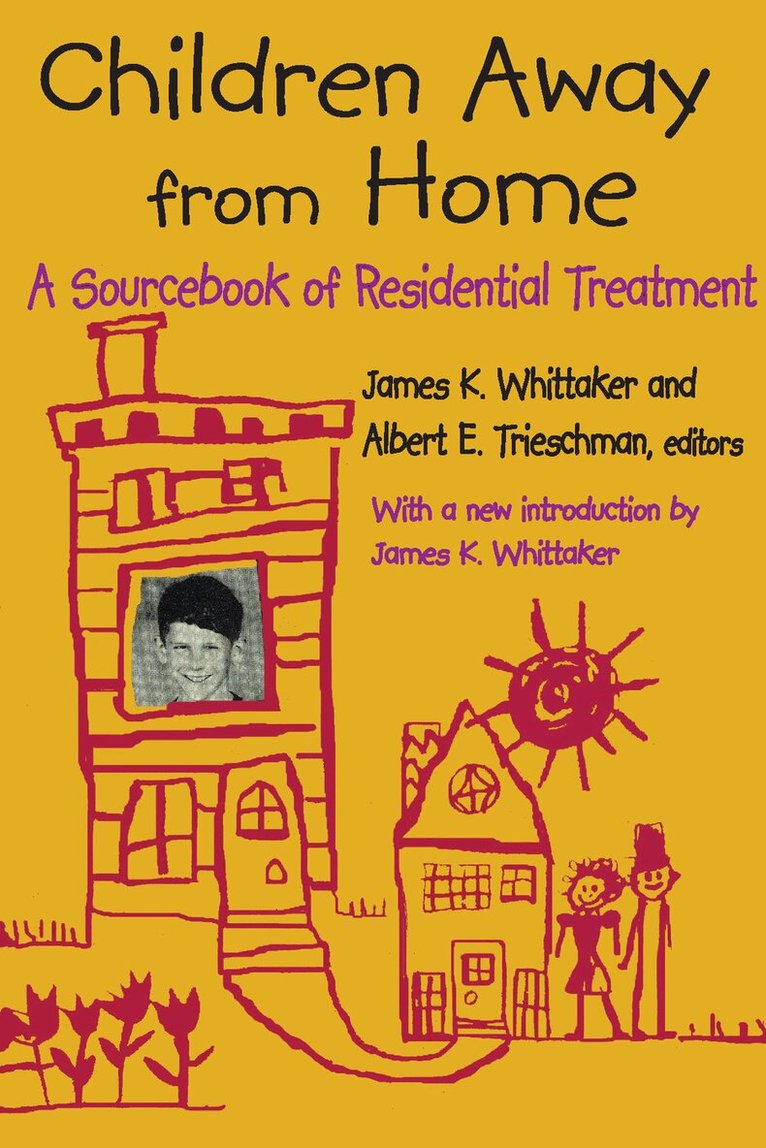
    Children Away from Home

    A Sourcebook of Residential Treatment

    AvAlbert E. Trieschman

    Häftad, Engelska, 2009

    771 kr

    Beställningsvara. Skickas inom 10-15 vardagar. Fri frakt över 249 kr.

    Beskrivning

    The editors of this volume are committed to the philosophy of treating emotionally disturbed children in the life milieu. Both have been intensely involved in training "online" therapists--child care workers. They are convinced that there is no one "right way" in milieu treatment, and propose a electric model for treatment.Like many of the other writers included in this book, Whittaker and Trieschman conceive of treatment as a total life experience. Th ey do not see the individual versus the group, but the individual within the group situation. They also do not see permissiveness versus limitations, professional staff versus nonprofessional staff , or the institution versus an outside of the community.The book is divided into two sections: the fi rst is a dialogue between the editors on current issues in residential treatment and problems in treating children. The second is a collection of readings. This is one of the first sourcebooks covering the therapeutic milieu for children in residential treatment centers, specifi cally emotionally disturbed children. It is also an excellent text for courses on the emotionally disturbed child, milieu treatment, and child welfare.

    Produktinformation

    • Utgivningsdatum:2009-02-15
    • Mått:152 x 229 x 29 mm
    • Vikt:635 g
    • Format:Häftad
    • Språk:Engelska
    • Antal sidor:466
    • Förlag:Taylor & Francis Inc
    • ISBN:9780202362748

    Utforska kategorier

    • Psykologi: känslor inom Psykologi och pedagogik
    • Sociala grupper och identitet inom Samhälle och politik

    Mer om författaren

    James K. Whittaker is The Charles O. Cressey Endowed Professor Emeritus at the University of Washington School of Social Work, Seattle where he has served as a member of senior faculty since 1970. His research and teaching interests encompass child and family policy and services including residential treatment, and the integration of evidence-based practices into contemporary child & family services. He is also series editor of Modern Applications of Social Work for Transaction Publishers.

    Innehållsförteckning

    • Dialogue; Introduction; 2: Current Issues and Problems in Residential Treatment for Emotionally Disturbed Children; Readings; Introduction; I: What Is Milieu Therapy?; 1: Introduction to New Staff; 2: The Concept of a “Therapeutic Milieu”; 3: A Therapeutic Milieu; 4: Changing Delinquent Subcultures: A Social-Psychological Approach; 5: Developing a Unified Theory of Residential Treatment; II: Individual Treatment in a Therapeutic Milieu; 6: Helping Children Learn to Deal with Sadness; 7: The Role of Psychotherapy in Residential Treatment; 8: Some Aspects of Psychotherapy in a Residential Treatment Center; 9: The Concept of “Parental Force”; 10: Some Aspects of Residential Casework with Children; III: Group Treatment in a Therapeutic Milieu; 11: The Social Group Work Method and Residential Treatment; 12: The Therapeutic Ingredients in the Group Work Program In a Residential Treatment Center for Children; 13: The Role of the Group in Residential Treatment; 14: Group Therapy and Casework with Ego-Disturbed Children; 15: Summer Camping in the Treatment of Ego-Defective Children; IV: The Nature of Cottage Life and Strategies for Therapeutic Intervention; 16: Physical Illness in the Residential Treatment Center; 17: Observations on the Loss of a Housemother; 18: Characteristics and Resolution of Scapegoating; 19: The Life-Space Interview; 20: Life-Space Management of Behavioral Crises; V: Staffing and Personnel in a Therapeutic Milieu; 21: The Child Care Worker; 22: The Parental Figures in Residential Treatment; 23: Communication and Cottage Parent Supervision in a Residential Treatment Center; 24: How Child Care Workers Are Trained in Europe; 25: Training Child Care Staff: Pitfalls and Promises; VI: The Place of Activities in a Therapeutic Milieu; 26: Prestructuring Group Content; 27: The Impact of Game Ingredients on Children’s Play Behavior; 28: Spontaneous Play in Resolution of Problems: A Brief Example; 29: Therapeutic Recreation for Aggressive Children in Residential Treatment; 30: Pets: A Special Technique in Child Psychotherapy; VII: Working with the Families; 31: Parent-Child Separation: Its Significance to Parents; 32: The Separation Phenomenon in Residential Treatment; 33: The Study and Treatment of Families that Produce Multiple Acting-Out Boys; 34: Disturbed Families and Conjoint Family Counseling; 35: Group Therapy with Parents of Children in a Residential Treatment Center