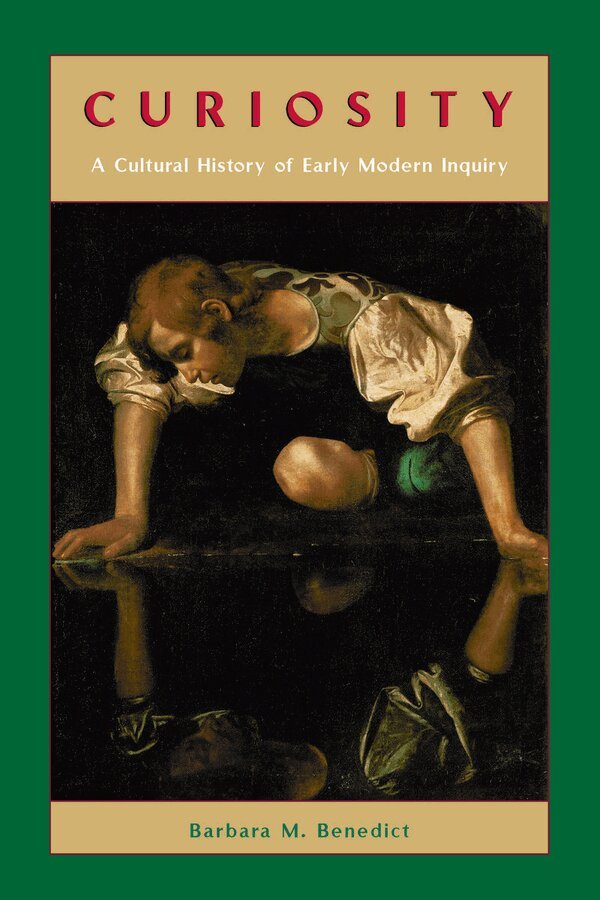
Curiosity – A Cultural History of Early Modern Inquiry
437 kr
Beställningsvara. Skickas inom 5-8 vardagar. Fri frakt över 249 kr.
Du är på sajten för privatpersoner.
437 kr
Beställningsvara. Skickas inom 5-8 vardagar. Fri frakt över 249 kr.
Barbara M. Benedict is professor in and chair of the English department at Trinity College, Connecticut. She is the author of Making the Modern Reader and Framing Feeling.
"Robinson Crusoe told us that his head was always filled 'with rembling Thoughts.' That is how he got into such trouble, but it is also the way he survived. Rambling thoughts, as Benedict shows in this exuberant study, were at the center of English literary and cultural experience from the late seventeenth to the early nineteenth centuries. Transgressive, uncontrollable, hopelessly vulgar and at the same time exalted and ennobling, the passion of curiosity was the key that unlocked the sensibility of modernity in its great formative age." - Stephen Greenblatt, author of Marvelous Possessions: The Wonder of the New World "Benedict assembles her own gorgeous literary curiosity cabinet crammed with excerpts from novels, poems, journalism, travel narratives, trial transcripts and pornography.... The book is teeming with big questions and fine distinctions." - Ian Sansom, The Guardian "Pithy and wide-ranging.... This study provides a fresh new lens through which to reinvestigate the whole of early modern English literature." - Library Journal
Du är på sajten för privatpersoner.
437 kr
Beställningsvara. Skickas inom 5-8 vardagar. Fri frakt över 249 kr.
Barbara M. Benedict is professor in and chair of the English department at Trinity College, Connecticut. She is the author of Making the Modern Reader and Framing Feeling.
"Robinson Crusoe told us that his head was always filled 'with rembling Thoughts.' That is how he got into such trouble, but it is also the way he survived. Rambling thoughts, as Benedict shows in this exuberant study, were at the center of English literary and cultural experience from the late seventeenth to the early nineteenth centuries. Transgressive, uncontrollable, hopelessly vulgar and at the same time exalted and ennobling, the passion of curiosity was the key that unlocked the sensibility of modernity in its great formative age." - Stephen Greenblatt, author of Marvelous Possessions: The Wonder of the New World "Benedict assembles her own gorgeous literary curiosity cabinet crammed with excerpts from novels, poems, journalism, travel narratives, trial transcripts and pornography.... The book is teeming with big questions and fine distinctions." - Ian Sansom, The Guardian "Pithy and wide-ranging.... This study provides a fresh new lens through which to reinvestigate the whole of early modern English literature." - Library Journal
Du är på sajten för privatpersoner.
437 kr
Beställningsvara. Skickas inom 5-8 vardagar. Fri frakt över 249 kr.
Barbara M. Benedict is professor in and chair of the English department at Trinity College, Connecticut. She is the author of Making the Modern Reader and Framing Feeling.
"Robinson Crusoe told us that his head was always filled 'with rembling Thoughts.' That is how he got into such trouble, but it is also the way he survived. Rambling thoughts, as Benedict shows in this exuberant study, were at the center of English literary and cultural experience from the late seventeenth to the early nineteenth centuries. Transgressive, uncontrollable, hopelessly vulgar and at the same time exalted and ennobling, the passion of curiosity was the key that unlocked the sensibility of modernity in its great formative age." - Stephen Greenblatt, author of Marvelous Possessions: The Wonder of the New World "Benedict assembles her own gorgeous literary curiosity cabinet crammed with excerpts from novels, poems, journalism, travel narratives, trial transcripts and pornography.... The book is teeming with big questions and fine distinctions." - Ian Sansom, The Guardian "Pithy and wide-ranging.... This study provides a fresh new lens through which to reinvestigate the whole of early modern English literature." - Library Journal