• Fri frakt över 249 kr
  • •
  • Snabba leveranser
  • •
  • Billiga böcker
Kundservice

Du är på sajten för privatpersoner.

Företag, bibliotek eller offentlig verksamhet?

Du handlar på classic.bokus.com, där alla dina funktioner finns intakta.
Till classic.bokus.com
Bokus logotyp. Gå till startsidan.
  • Erbjudanden
  • Student
  • Topplistor
  • Barn & ungdom
  • Bokus Play
  • E-böcker
  • Ljudböcker
  • Pocketböcker
  • Spel och pussel

5% studentrabatt – använd koden KURSBOK27 →

Sidfot

Mina sidor

    Hjälp

    • Kundservice
    • Vanliga frågor och svar
    • Frakt och leverans
    • Retur vid ångerrätt
    • Reklamera vara
    • Betalning
    • Köpvillkor
    • Allmänna villkor
    • Information om webbplatsens tillgänglighet

    Om Bokus

    • Om oss
    • Pressrum
    • För studenter
    • För företag
    • För bibliotek och offentlig verksamhet
    • För leverantörer
    • Hållbarhet

    Populärt

    • Aktuella erbjudanden
    • Presentkort
    • Studentlitteratur
    • Nya böcker
    • Topplistor
    • Signerade böcker
    • Engelska böcker

    Inspiration

    • Boktips
    • BookTok
    • Barnbokskaraktärer
    • Populära författare
    Logotyp för Bokus
    Följ oss på Facebook (extern länk)Följ oss på Instagram (extern länk)Följ oss på YouTube (extern länk)Följ oss på TikTok (extern länk)
    bokus @ CookiesAnpassa cookiesIntegritetspolicyKöpvillkor
    Till Citymail hemsida (extern länk)Till Budbee hemsida (extern länk)Till Postnord hemsida (extern länk)Till Schenker hemsida (extern länk)Till Early Bird hemsida (extern länk)Till Walleys hemsida (extern länk)
    1. Skönlitteratur
    2. Litteraturvetenskap
    3. Litteraturvetenskap

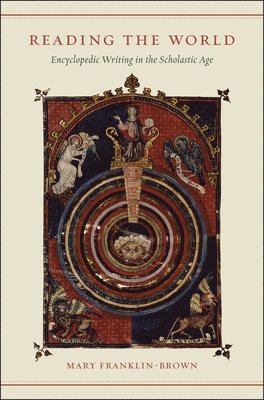
    Reading the World

    Encyclopedic Writing in the Scholastic Age

    AvMary Franklin-Brown

    Inbunden, Engelska, 2012

    Del i serien Emersion: Emergent Village resources for communities of faith

    647 kr

    Beställningsvara. Skickas inom 5-8 vardagar. Fri frakt över 249 kr.

    Fler format och utgåvor

    E-bok

    1 435 kr

    Beskrivning

    The thirteenth century saw such a proliferation of new encyclopedic texts that more than one scholar has called in the "century of the encyclopedias." Variously referred to as a speculum, thesaurus, or imago mundi - the term encyclopedia was not commonly applied to such books until the eighteenth century - these texts were organized in such a way that a reader could easily locate a collection of authoritative statements on any given topic. Because they reproduced, rather than simply summarized, parts of prior texts, these compilations became libraries in miniature. In this groundbreaking study, Mary Franklin-Brown examines writings in Latin, Catalan, and French that are connected to the encyclopedic movement: Vincent of Beauvais' "Speculum Maius", Ramon Llull's "Arbor Scientiae" and Libre de meravelles, and Jean de Meun's "Continuation of the Roman de la Rose". Franklin-Brown analyzes the order of knowledge in these challenging texts; the diverse discourses that they absorb from preexisting classical, patristic, and medieval writing; and the ways in which the juxtaposition of those discourses alters their interplay.In doing so, she suggests revisions to our understanding of scholastic literary and intellectual practices, and a more nuanced view of medieval reading as an activity that involved evaluating, harmonizing, or even overlooking some passages in order to adjudicate meaning.

    Produktinformation

    • Utgivningsdatum:2012-09-01
    • Mått:16 x 24 x 4 mm
    • Vikt:794 g
    • Format:Inbunden
    • Språk:Engelska
    • Serie:Emersion: Emergent Village resources for communities of faith
    • Antal sidor:424
    • Förlag:The University of Chicago Press
    • ISBN:9780226260686

    Utforska kategorier

    • Litteraturvetenskap inom Skönlitteratur
    • Historia inom Historia och arkeologi

    Mer om författaren

    Mary Franklin-Brown is assistant professor in the Department of French and Italian at the University of Minnesota.

    Recensioner i media

    "Mary Franklin-Brown has taken on the very difficult task of making the medieval encyclopedia accessible as literature and developed an original and very effective method for doing so. It has required the powers of a sophisticated literary critic together with an art historian's ability to interpret manuscript illustrations and a codicologist's understanding of the layout of the manuscript page. The result is a tour de force." (Winthrop Wetherbee, Cornell University)"